
 AS/RS Racking System & Automated Warehouse Solutions | Zithunzi za STTC Intelligence

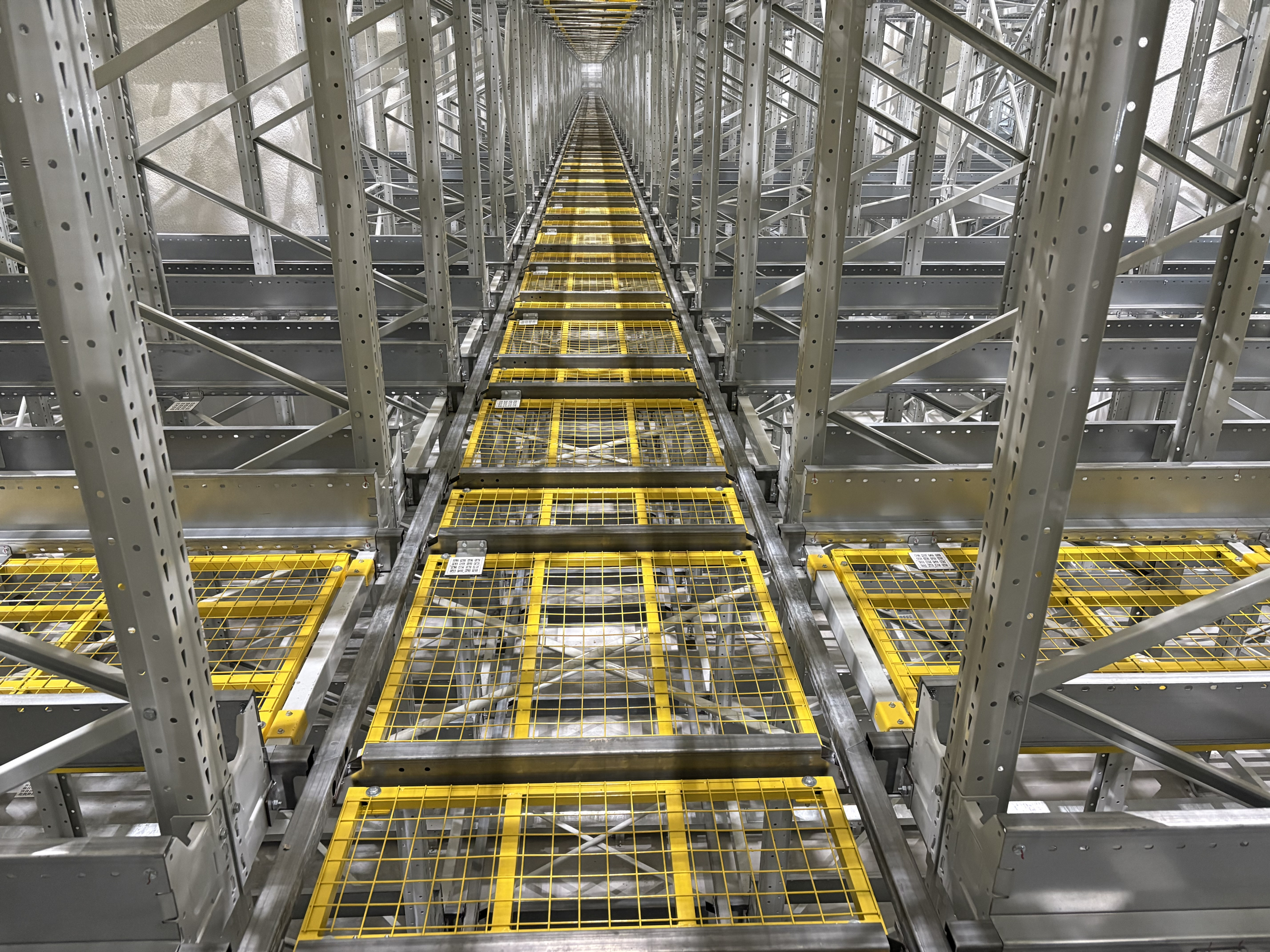
Why choose a 4-way shuttle over another type of equipment?
4-way shuttles can store pallets more densely than a crane-based AS/RS or a 2-way shuttle system, and they’re more adaptable to your existing layout. Because they deliver such high throughput, they’re best suited for high volume operations.
| Criteria | 4-Way Pallet Shuttle | Crane-Based AS/RS | Automated / Autonomous Forklifts | Traditional Pallet Shuttle |
|---|---|---|---|---|
| Kachulukidwe Kosungirako |  Very high |  High |  Low to moderate | High |
| SKU Flexibility |  Moderate | Low to moderate, works best for high volumes of repetitive pallets | Very high | Low to moderate |
| Kupititsa patsogolo | High | High per aisle (but limited by the number of cranes) | Moderate | Moderate |
| Labor Reduction | High (minimal personnel required inside storage zone) | High (minimal personnel required inside storage zone) | Moderate | Moderate (forklift drivers still required) |
| Capital Cost | High | Very high | Low (depending on fleet size) | Moderate |
| Scalability | High | Moderate (you can add aisles and cranes, but the cost will be high) | High | Moderate (you can add shuttles, but layout is usually fixed) |
| Best Use Cases | High-density, high-throughput pallet storage; great for cold storage and batch movement | Very tall, high-volume pallet storage with predictable flows; heavy loads | Varied SKU mix and fast-changing operations; retrofit sites; phased automation | Deep-lane, high pallets per SKU; cost-effective density upgrade vs. drive-in; moderate throughput needs. |
| Key Limitations | Higher controls complexity; best when pallets per SKU are fairly high | Highest cost; aisle can sometimes pose a bottleneck; less flexible | Lower storage density; throughput depends on travel distance and fleet size; possible traffic conflicts | Requires forklift usage, limiting throughput; lane access limits SKU flexibility |