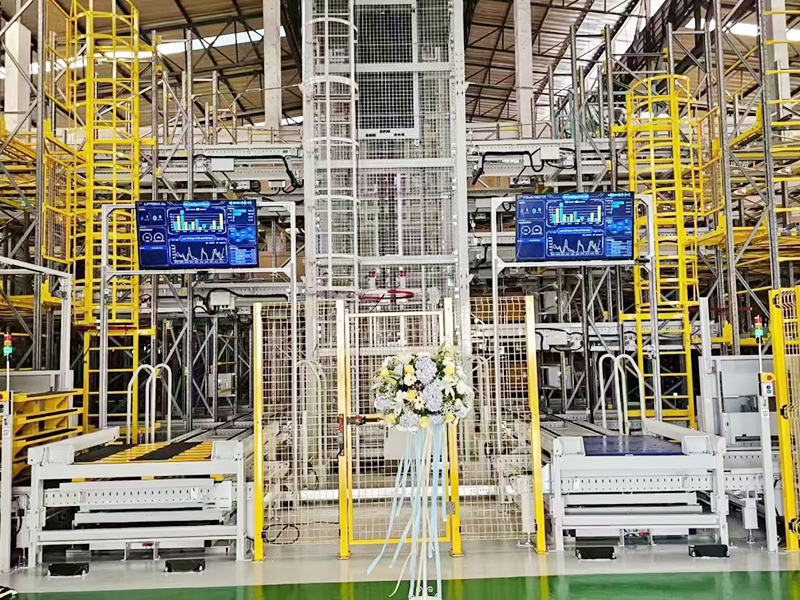
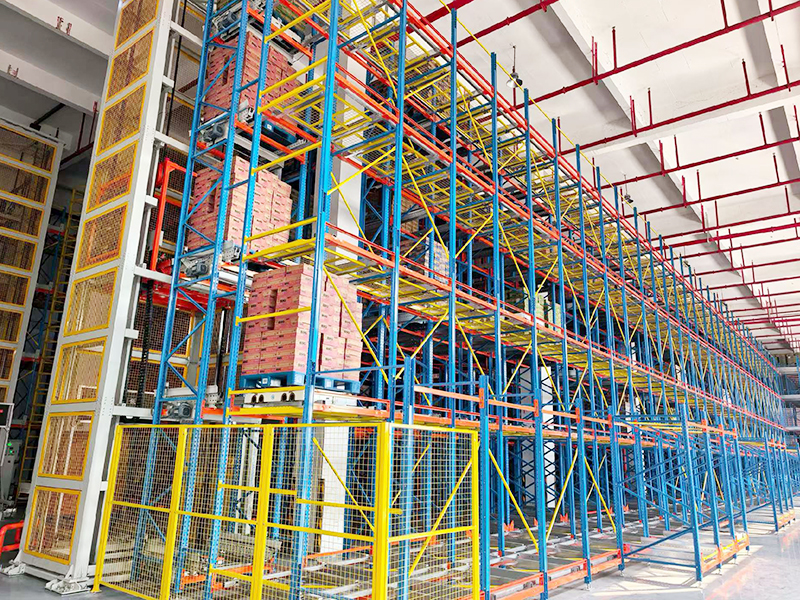
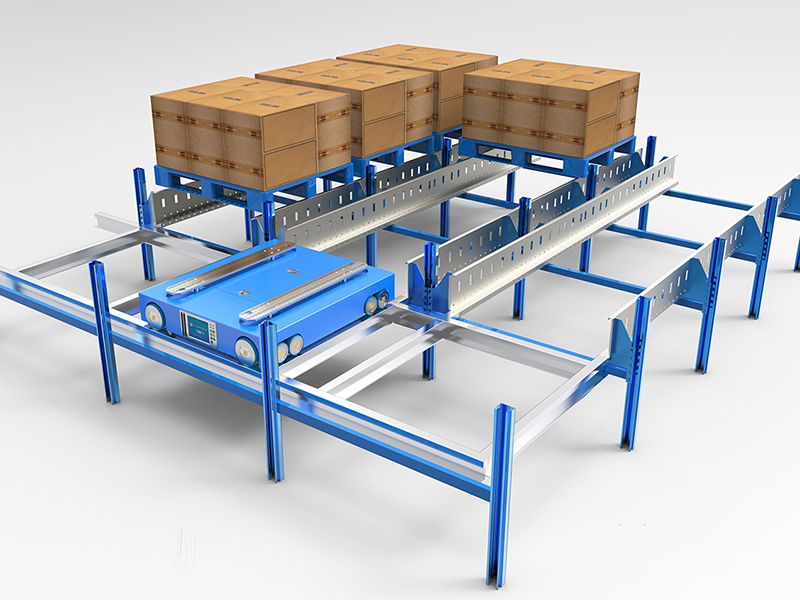
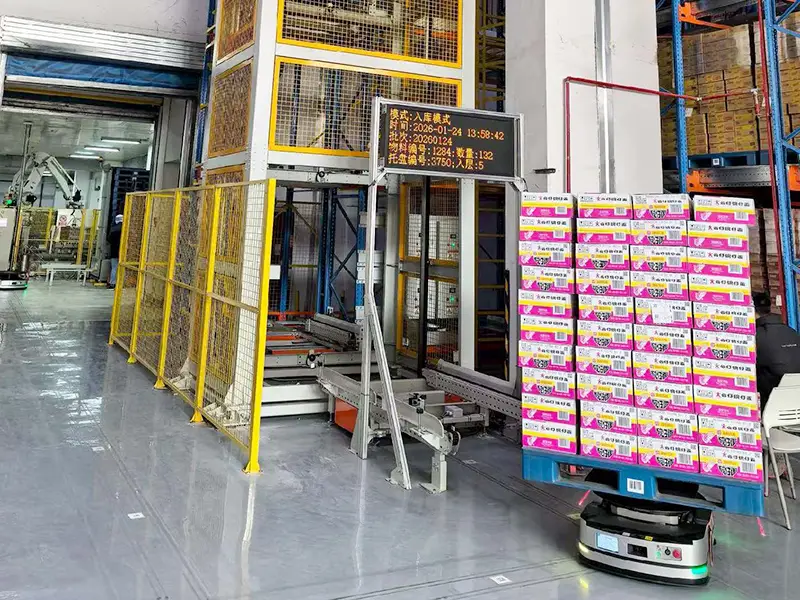
5. Case Study: Transforming a Mexican Personal Care Giant
– Client Profile:
Industry: Personal Care Manufacturing
Challenges: 40% space utilization, 20% labor cost overruns.
– Solution Deployed:
Customized Racking: Earthquake-resistant design (1.5-ton capacity per layer).
Energy-Safe Shuttles: Reduced power consumption by 30% via smart standby modes.
– Results:
Storage Density: Increased from 4,000 naar 6,000 pallets (+150%).
Doorvoer: 500 pallets/day with 80% fewer workers.
ROI Achieved: 2.5 jaren.
Client Feedback:
“The system not only solved our space crunch but also set a benchmark for our global operations.”
Post-implementation warehouse layout
Source: Client-provided data, 2023.
6. Future Outlook and Emerging Trends
The four-way shuttle system is poised to evolve with:
6.1 Hydrogen Energy Integration
Benefit: Zero-emission operations, critical for EU sustainability mandates.
6.2 5G-Enabled IoT Coordination
Impact: Latency reduced to <1ms, enabling real-time inventory updates.
6.3 Predictive Analytics
– Example: AI forecasting seasonal demand spikes, pre-positioning goods autonomously.
– Market Projections:
By 2030, the global shuttle system market will reach $12.7B (CAGR 9.8%, Allied Market Research).
6.4 Cross-Industry Adoption
– Food & Beverage: A European dairy company reduced spoilage by 40% through AI-driven FIFO (First-In-First-Out) shuttle prioritization.
– Aerospace: Boeing’s parts warehouse achieved 99.8% retrieval accuracy using 5G-enabled shuttles.
7. Conclusie
The four-way shuttle rack system is not merely a tool but a strategic asset for modern logistics. From slashing labor costs to enabling sustainable operations, its impact is profound and far-reaching. As industries grapple with rising consumer expectations and ESG pressures, adopting this technology will be pivotal in building resilient, future-ready supply chains.

 AS/RS-reksysteem & Geautomatiseerde magazijnoplossingen | SSTC-inlichtingendienst