Nhà cung cấp sản xuất chuyên nghiệp các giải pháp lưu trữ mật độ cao ở Trung Quốc


| Hệ thống lưu trữ và truy xuất tự động SSTC vận hành tại kho chứa hóa chất, nguyên liệu tiên tiến hiện đạiTiếng Trung/CN

Tối ưu hóa hậu cần hóa chất: 4-Way Pallet Shuttle Storage Solutions | SSTC

Tối ưu hóa hậu cần hóa chất: Cách lưu trữ con thoi pallet 4 chiều giải quyết các thách thức về lưu kho mật độ cao

Implementing an advanced 4-Way Pallet Shuttle Storage for chemical industry warehousing has transitioned from an experimental automation upgrade into an essential engineering mandate for chemical producers, polymer manufacturers, and hazardous material distributors operating in today’s high-stakes industrial environment. The global chemical manufacturing sector is governed by rigorous regulatory compliance, strict safety mandates, high inventory turnover, and, frequently, complex environmental controls. Unlike standard consumer goods or dry-bulk distribution, chemical raw materials, industrial resins, packaged precursors, and finished polymer compounds carry inherent safety hazards, strict batch traceability requirements, and zero-tolerance thresholds for structural mishandling. For decades, chemical warehousing relied on conventional wide-aisle selective racking, manual forklift navigation, and basic block-stacking methods. Today, that legacy operational framework is failing under the compound pressures of soaring industrial real estate acquisition costs, chronic labor shortages in hazardous manufacturing hubs, and unrelenting demands for maximum space utilization and supply chain resilience. To overcome these structural roadblocks, forward-thinking chemical enterprises are transitioning toward fully automated, multi-directional intelligent storage systems. At Công nghệ thông minh SSTC, our engineering divisions specialize in engineering robust, high-performance automated solutions tailored explicitly to resolve the complex intralogistics bottlenecks unique to the chemical industry. This technical white paper and corporate news analysis examines the structural mechanics, economic justifications, safety protocols, and transformative impacts of deploying modern multi-directional shuttle architectures across contemporary chemical supply chains.

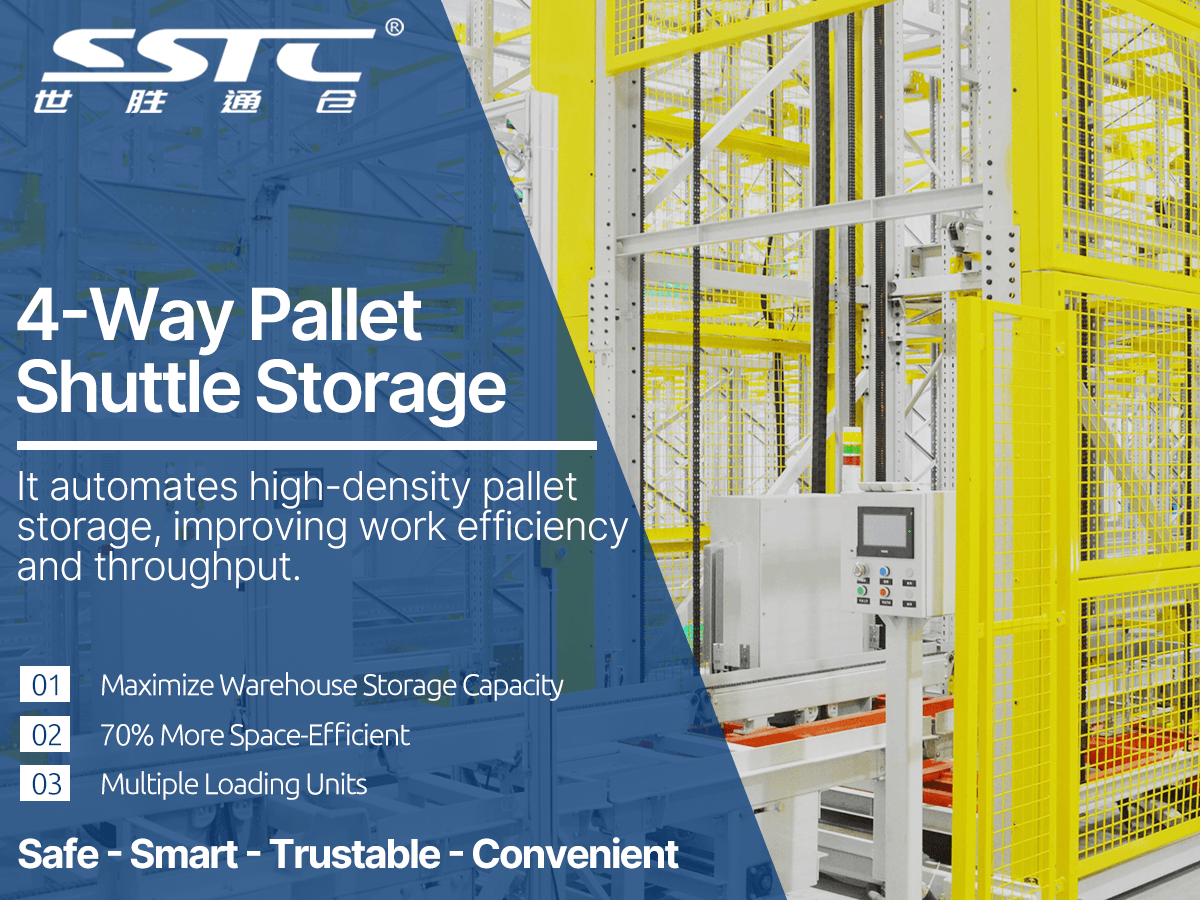
Hệ thống lưu kho pallet 4 chiều tự động SSTC vận hành trong kho sản xuất hóa chất mật độ cao

The Intralogistics Crisis in Chemical Manufacturing and Distribution

Before evaluating the technical mechanics of automated engineering solutions, it is essential to dissect the primary operational friction points that plague facility managers, plant directors, and supply chain executives in the chemical sector on a daily basis.

  • The Inforgiving Reality of Hazardous Safety Compliance and Human Risk

In chemical warehousing, inventory safety is inextricably linked to human and environmental protection. Whether managing flammable organic compounds, corrosive acids, toxic reagents, or moisture-sensitive powder polymers, maintaining strict safety protocols is mandatory. Traditional manual handling via human-operated forklifts places operators in close, continuous proximity to hazardous goods. A single forklift miscalculation, minor impact on a racking upright, or dropped chemical pallet can trigger catastrophic environmental spills, severe workplace injuries, and devastating plant shutdowns. Regulatory frameworks outlined by industrial safety bodies such as the OSHA Chemical Hazards and Toxic Substances Guidelines emphasize that minimizing human intervention in active storage zones is the foundational step toward achieving zero-accident manufacturing facilities.

  • The Absolute Imperative of Batch Traceability and FIFO/LIFO Compliance

Chemical synthesis and formulation processes require absolute precision. Raw materials must be strictly tracked by lot number, production date, and chemical compatibility class. Maintaining accurate FIFO (First-In, First-Out) or specialized LIFO inventory rotation is vital to prevent raw material degradation, shelf-life expiration, and costly batch contamination. Manual record-keeping and legacy warehouse management systems are highly vulnerable to human error, often resulting in misplaced inventory, buried stock, and severe production line halts that cost enterprises millions of dollars in downtime.

  • Volumetric Space Constraints and Special Environmental Controls

Real estate within modern chemical industrial parks is exceptionally scarce and expensive. Furthermore, many specialized chemical compounds require tightly regulated environmental parameters, including explosion-proof (Ex-proof) electrical classifications, controlled ventilation, or temperature-regulated zones. Wasting valuable cubic meters on wide forklift maneuvering aisles means paying exorbitant operational and utility costs to condition empty air. Chemical plant directors are under constant pressure to maximize every square inch of vertical and horizontal storage capacity without compromising structural safety or operational throughput.


Technological Architecture: What is 4-Way Pallet Shuttle Storage?

To address these compounding industrial pressures, intralogistics engineering has evolved past single-axis automation. Traditional radio shuttles can travel back and forth within a single storage lane, but they require heavy forklifts or specialized transfer cranes to move between different lanes and tiers, introducing mechanical complexity and workflow bottlenecks.

The 4-Way Pallet Shuttle Storage system completely shatters these limitations through advanced multi-directional robotics.

  • Multi-Directional Mobility and Modular Grid Design

A four-way shuttle is an autonomous robotic vehicle engineered with dual sets of driving wheels that enable it to travel seamlessly in all four directions—forward, backward, left, and right—across a modular rail grid. By operating independently in both longitudinal and lateral directions on any given storage tier, the shuttle navigates complex rack layouts without human intervention. When a pallet needs to be relocated from a deep storage channel onto a transversal transfer channel, the shuttle executes the transition instantly, eliminating the need for manual repositioning.

  • Vertical Integration and High-Speed Elevators

To move inventory between vertical tiers of a high-bay warehouse, the shuttle system integrates with high-speed vertical lifts (conveying units). The four-way shuttle drives onto the lift platform holding its pallet cargo, ascends or descends to the target level, and travels outward into the designated storage lane with microsecond precision.

  • Comprehensive Software Synchronization (WMS/WCS)

Hardware agility requires intelligent software control. SSTC’s proprietary Warehouse Management Systems (WMS) and Warehouse Control Systems (WCS) govern the entire shuttle fleet, optimizing routing, managing slotting algorithms, and executing complex inventory management protocols with absolute accuracy. To explore the deep engineering specifications of this technology, review our detailed guide on SSTC’s Four-Way Pallet Shuttle Solution.

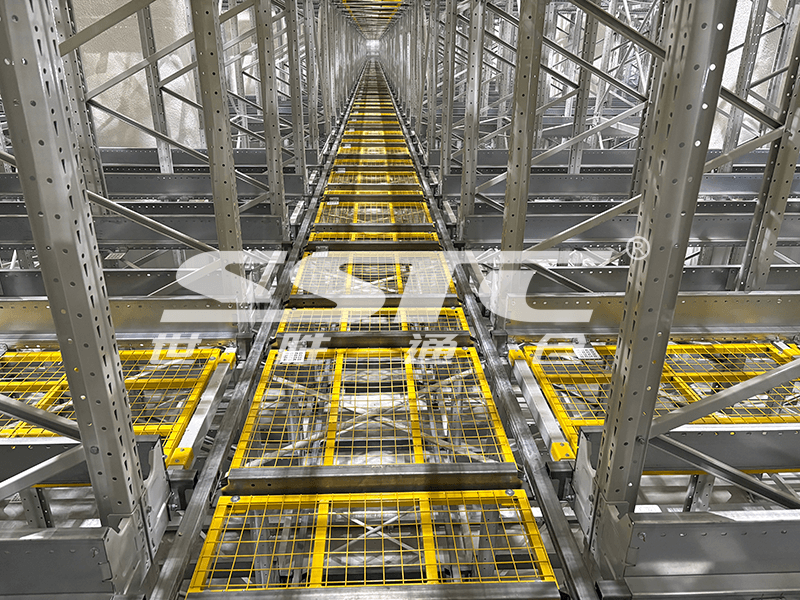
High-density multi-directional pallet storage grid handling specialized polymer containers safely

Why Chemical Facilities Demand 4-Way Pallet Shuttle Automation

Deploying a multi-directional shuttle system offers distinct operational advantages specifically tailored to the rigorous demands of chemical manufacturing plants and distribution hubs.

  • Maximum Cubic Space Utilization (Up to 95%)

By eliminating all wide forklift operational aisles and utilizing every square inch of available floor plan and vertical height, SSTC four-way shuttle systems achieve up to 95% volumetric space utilization. This volumetric compression allows chemical enterprises to store significantly more raw materials and finished products within their existing facility footprint, eliminating the need for costly real estate expansion or external warehouse leasing. Additional engineering insights published by industry platforms such as Chemical Processing Magazine consistently highlight that high-density automated storage is the most effective strategy for mitigating rising industrial real estate overhead.

  • Radical Isolation of Human Operators from Hazardous Zones

Because human workers and heavy manual forklifts never enter the high-density storage lanes, the risk of structural collisions and chemical exposure is virtually eliminated. Racking structures remain pristine, workplace safety reaches an unprecedented standard, and compliance with strict industrial safety audits is effortlessly maintained.

  • High Systemic Redundancy and Scalability

Unlike rigid legacy automation where a single machine failure can shut down an entire high-bay zone, a four-way shuttle network offers built-in redundancy. If a specific shuttle encounters a maintenance requirement, it can be easily bypassed, or another shuttle within the grid can assume its operational duties. Furthermore, as chemical plant throughput demands increase, scaling the system requires only the deployment of additional robotic shuttle units rather than structural facility modifications.

Special Engineering Considerations for Chemical Warehousing

Operating automated machinery in chemical and polymer manufacturing environments demands specialized metallurgical, electrical, and structural design standards far exceeding standard commercial warehouses.

  • Corrosion-Resistant Metallurgy and Surface Treatments

Chemical vapors, moisture, and mild acidic residues present in chemical plants can rapidly corrode standard structural steel and electronic components. SSTC engineers chemical-grade AS/RS racking and shuttle chassis using high-tensile structural steel coated with specialized multi-layer epoxy paints, anti-corrosive primers, or hot-dip galvanized finishes. Fasteners, guide rails, and moving parts are fabricated from high-grade stainless steel to ensure long-term structural integrity and resistance to chemical degradation.

  • Explosion-Proof (Ex-Proof) and Sealed Electrical Design

In facilities storing flammable chemical precursors, solvents, or combustible polymer powders, electrical safety is paramount. SSTC offers customized explosion-proof configurations compliant with international standards (such as ATEX and IECEx). Onboard PLCs, sensors, battery compartments, and drive motors are housed within sealed, pressurized, or flameproof enclosures that prevent electrical sparking and ensure safe operation in hazardous classified areas.

  • Robust Power Management and Battery Safety

Shuttles operate continuously within deep storage lanes utilizing advanced Lithium-Iron-Phosphate (LiFePO4) battery systems. These batteries feature automated thermal management and fast-charging docking stations positioned safely outside hazardous storage zones, guaranteeing stable, spark-free energy cycles.

Comparative Advantage: 4-Way Shuttles vs. Traditional Racking and Stacker Cranes

When evaluating automation investments, chemical plant engineers frequently weigh different storage topologies.

Evaluation MetricTraditional Selective RackingHigh-Bay Stacker Crane SystemsSSTC 4-Way Pallet Shuttle Storage
Space UtilizationLow (40% – 50%)Very High (85% – 90%)Maximum (Up to 95%)
Layout FlexibilityHigh (Manual)Rigid (Single-aisle fixed cranes)Extremely Flexible (Multi-tier routing)
Systemic RedundancyN/A (Manual labor dependent)Moderate (Single crane per aisle)High (Multi-shuttle task sharing)
Throughput ScalingLimited by labor availabilityHigh within fixed aisle limitsDynamic (Add shuttles to scale capacity)
Chemical SafetyPoor (High forklift collision risk)Excellent (Isolated handling)Superior (Total human-machine separation)

As illustrated above, the 4-Way Pallet Shuttle system bridges the gap between ultra-high density and flexible throughput, making it the ideal architecture for chemical plants managing diverse SKU profiles and varying batch volumes.

Total Cost of Ownership (TCO) and ROI Analysis

When corporate executive boards evaluate automation initiatives, discussions frequently center around initial Capital Expenditure (CapEx). However, evaluating an intralogistics transformation solely on upfront costs overlooks the profound, long-term savings delivered across the Total Cost of Ownership (TCO):

  • Drastic Labor Overhead Reduction: By automating storage and retrieval lifecycles, chemical facilities reduce manual material handling labor requirements by up to 70%, shielding plant operations from the impacts of chronic labor shortages.

  • Elimination of Structural Damage Write-Offs: Eliminating forklift-to-rack impacts protects structural uprights and expensive chemical pallets, dropping annual maintenance and repair budgets to near zero.

  • Avoidance of Real Estate Expansion Costs: Achieving 95% space utilization enables chemical producers to double or triple inventory capacity within their existing facility footprint, avoiding multi-million-dollar real estate acquisitions.

  • Enhanced Environmental and Insurance Safety: Eliminating human error in hazardous storage zones dramatically reduces accident liabilities, resulting in stabilized corporate insurance premiums.

For the vast majority of industrial chemical partners, capital investment in an SSTC four-way shuttle system achieves full return on investment (ROI) within 18 to 36 months of continuous operation.

Proven Case References and Industrial Implementations

SSTC’s engineering capabilities are proven across demanding global deployments. For instance, our implementation of high-density automated racking systems and precision material handling infrastructure in international projects—such as the 500-ton, 21.5-meter high-bay installation in Thailand and large-scale manufacturing facilities utilizing advanced multi-tier automation—demonstrates our ability to deliver complex turnkey solutions under strict operational deadlines and safety standards. To review our complete core product offerings, visit the SSTC Storage Solutions Portal.

Frequently Asked Questions (FAQ)

Q1: How does 4-Way Pallet Shuttle Storage ensure safety in chemical and hazardous environments?

A: SSTC designs specialized configurations featuring total human-machine separation, corrosion-resistant stainless steel components, and optional explosion-proof (Ex-proof) electrical enclosures, effectively eliminating ignition risks and hazardous material exposure.

Q2: Can the 4-way shuttle system handle heavy chemical pallet loads exceeding 1,000 kg?

A: Yes. SSTC four-way shuttles are engineered with heavy-duty structural frames and high-torque drive systems capable of smoothly transporting standard and heavy industrial pallet loads ranging from 1,000 kg to 1,500 kg+ per unit.

Q3: How does the system scale if our chemical plant’s throughput increases seasonally?

A: Unlike rigid traditional automation, the modular nature of the 4-way shuttle system allows facility managers to simply introduce additional robotic shuttle units into the existing rail grid to boost throughput capacity instantly without physical structural modifications.

Q4: What is the typical ROI timeline for an SSTC 4-Way Pallet Shuttle installation in a chemical facility?

A: Due to substantial labor reductions, elimination of structural damage, and maximum space optimization, most industrial clients achieve full return on investment within 18 to 36 months of operation.

Partner with SSTC for Future-Ready Chemical Logistics

The chemical manufacturing and distribution sector demands absolute reliability, uncompromising safety compliance, and relentless supply chain efficiency. Clinging to outdated, manual, horizontal warehouses exposes businesses to escalating labor costs, spatial constraints, and severe safety liabilities. Transitioning to an advanced multi-directional automated storage architecture is no longer a futuristic luxury—it is an immediate operational imperative for sustainable market leadership.

Explore our comprehensive engineering capabilities today at the SSTC Official Website, or review our specialized technical guides on SSTC’s Four-Way Pallet Shuttle Solution.

Connect with Our Global Engineering Experts

Ready to elevate your chemical warehousing density and eliminate operational bottlenecks? Reach out to our technical consulting team today:

SSTC Intelligence Technology — Redefining Space, Enhancing Safety, Empowering Global Supply Chains.

Prev:

Next:

Để lại tin nhắn