
 NHƯ/RS & Giải pháp kho tự động | Tình báo SSTC

Double-Deep Pallet AS/RS serves as the primary high-density automated storage technology for palm oil refineries and downstream derivative processing hubs across Indonesia and Malaysia. In these primary export markets—where over 80 percent of global palm oil production originates—facilities handle massive volumes of heavy, standardized pallet loads under demanding climate conditions. Managing dense production output, high dispatch frequencies, and limited shelf-life windows often creates severe warehouse congestion, especially when export staging cannot keep pace with shipping orders. By replacing traditional storage layouts with Double-Deep Pallet AS/RS, agribusinesses eliminate unnecessary service aisles, double their storage depth, and maintain complete real-time batch traceability from the refining line directly to port dispatch.
Managing heavy industrial pallets across Southeast Asian refining facilities exposes several persistent logistical bottlenecks. High throughput demands, combined with short storage windows for refined edible oils and chemical derivatives, frequently lead to severe capacity shortages inside traditional warehouses. Beyond spatial constraints, plant owners face rising operational overheads driven by high local labor turnover. Operating conventional manual warehouses requires an extensive fleet of forklifts and pallet jacks, forcing management to incur continuous expenses for workforce training, safety compliance, vehicle acquisition, battery maintenance, and fleet updates. These escalating labor and equipment costs—compounded by frequent handling errors and damaged goods—severely impair export responsiveness during peak harvest cycles.
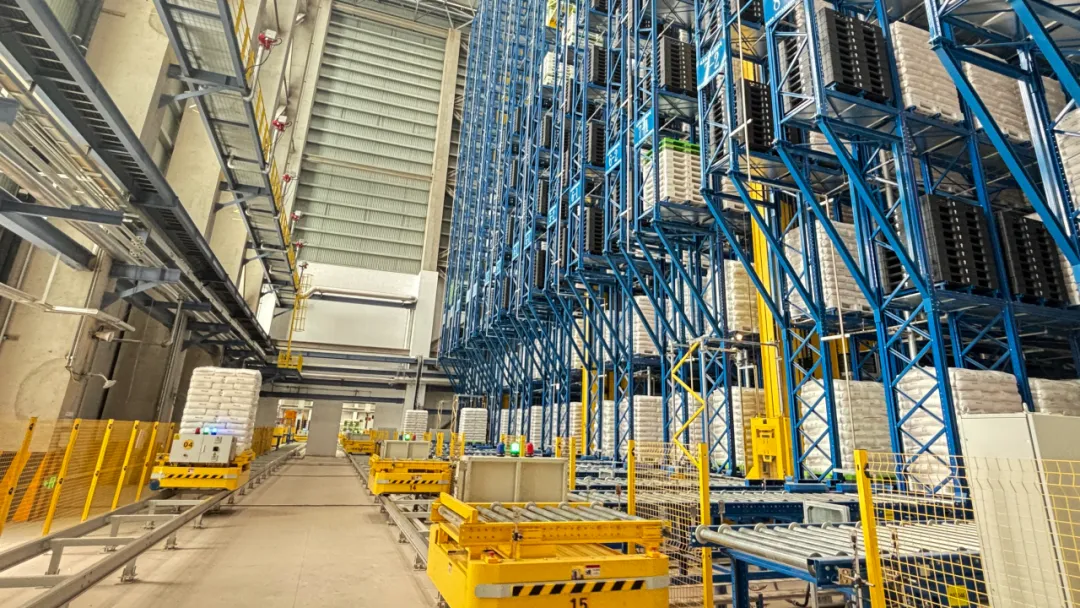
Automated Engineering Solutions Designed for High-Volume Agribusiness
To overcome these persistent land, labor, and fleet management challenges, SSTC Intelligence delivers factory-direct automated engineering engineered specifically for demanding tropical warehouse environments. By transitioning static storage into high-bay automated infrastructure, palm oil refineries achieve full operational resilience while safeguarding throughput efficiency.
Maximizing Spatial Efficiency via Double-Deep Pallet AS/RS
Deploying Double-Deep Pallet AS/RS allows facilities to store two pallets deep per rack channel, effectively eliminating half of the service aisles required in standard high-bay layouts. This structural configuration increases overall cubic storage capacity by up to 40 percent within the existing building footprint. According to operational market studies from the Malaysian Palm Oil Council (MPOC), optimizing downstream export staging density is crucial for maintaining global supply chain competitiveness. High-speed stacker cranes equipped with heavy-duty telescopic forks smoothly handle industrial loads ranging from 1,000 kg to 1,500 kg, eliminating the need for manual forklift entry into storage lanes.
Streamlining Fleet Logistics and Workforce Stability
Transitioning to automated material handling fundamentally reshapes warehouse operating costs. Replacing manual material transport with Double-Deep Pallet AS/RS drastically cuts reliance on large forklift fleets, directly reducing long-term vehicle acquisition, battery maintenance, and ongoing operator training expenses. Integrated with advanced Warehouse Execution System (WES) software, the system provides automated batch control and FEFO compliance aligned with quality guidelines from the Malaysian Palm Oil Board (MPOB), ensuring touchless, error-free product dispatch from production lines to container staging yards.
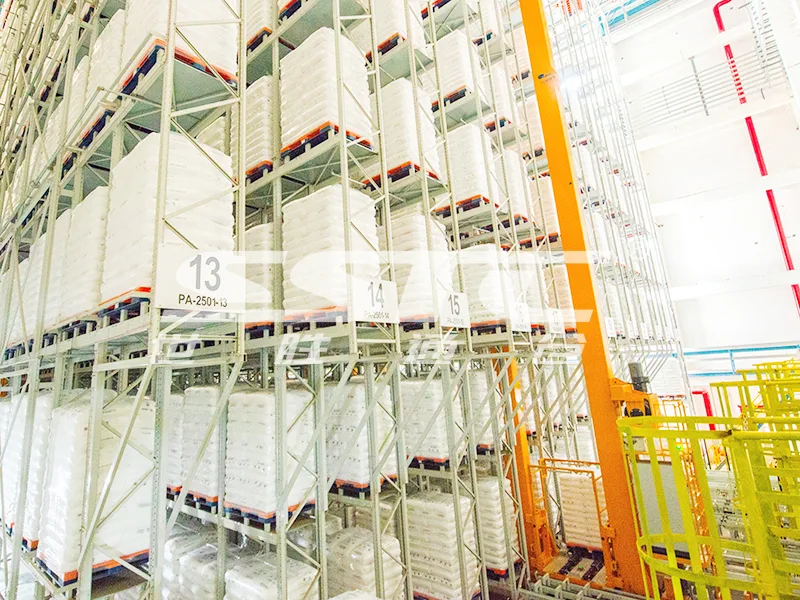
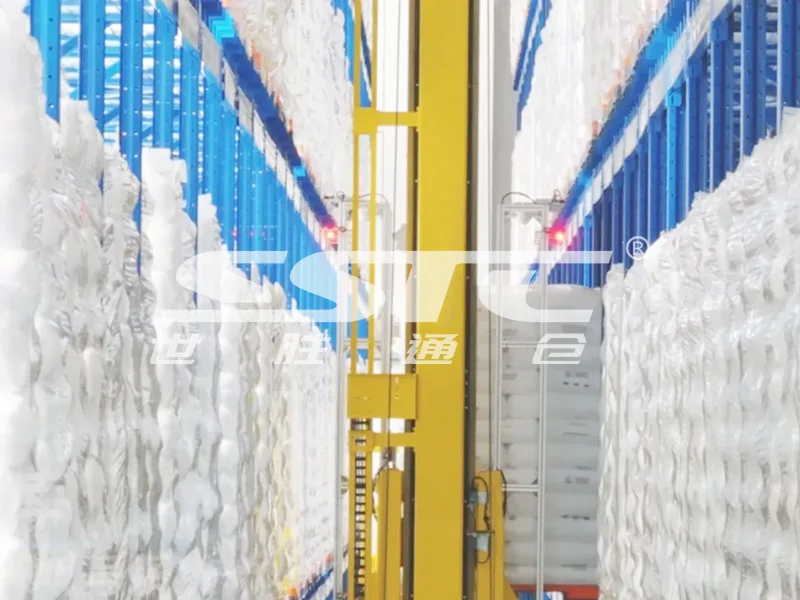
Why Are Southeast Asian Refineries Switching to Double-Deep Pallet AS/RS?
When evaluating capital equipment investments, agribusiness leadership in Indonesia and Malaysia must balance ROI, installation speed, and operational resilience. Comparing Double-Deep Pallet AS/RS against alternative material handling platforms reveals three decisive strategic advantages that directly address local industrial pain points:
Optimal ROI vs. Single-Deep Systems
While standard single-deep racking requires a dedicated aisle for every row of pallets, Double-Deep Pallet AS/RS stores two pallets back-to-back. This structural breakthrough reduces dedicated aisle count by 50 percent, allowing refineries to expand storage volume by up to 40 percent on the exact same land footprint without paying premium land acquisition costs.
Heavy-Duty Engineering for Palm Oil Loads
Refined palm oil, packaged shortening, and liquid chemical derivatives represent dense, high-tonnage inventory. Double-Deep Pallet AS/RS utilizes heavy-duty stacker cranes equipped with reinforced telescopic forks capable of carrying load payloads up to 1,500 kg reliably, safeguarding against mechanical deformation under round-the-clock operating cycles.
Mitigating Labor Turnover and Safety Risks
Operating conventional forklifts inside dense high-bay storage exposes workers to continuous safety risks and drives up operator turnover. Deploying Double-Deep Pallet AS/RS automates material movement entirely within the storage envelope, eliminating warehouse collisions, lowering headcount requirements, and stabilizing daily dispatch schedules.
How Does Double-Deep Pallet AS/RS Perform in Real-World Regional Deployments?
The operational reliability of Double-Deep Pallet AS/RS is proven through major industrial deployments across Southeast Asian agribusiness hubs. By replacing outdated manual warehousing with factory-direct automated engineering, refinery operators in Indonesia and Malaysia are setting new benchmarks for spatial efficiency and dispatch speed:
Edible Oil Export Facility in Medan, Indonesia
Facing acute land constraints near port dispatch corridors, a major edible oil processor commissioned a 21-meter-high automated high-bay system. Deploying Double-Deep Pallet AS/RS enabled the facility to nearly triple its pallet storage density while completely removing manual forklifts from internal high-bay racks.
Oleochemical Processing Hub in Johor, Malaysia
Managing heavy chemical derivative drums requires uncompromising safety and inventory control. By implementing Double-Deep Pallet AS/RS integrated with SSTC WES software, the refinery achieved total batch traceability, guaranteed strict FEFO dispatch, and eliminated product handling damage completely.
How Does Intelligent Software Manage Double-Deep Pallet Selectivity?
Hardware capability is only as effective as the underlying software architecture. Storing two pallets deep within a single rack channel introduces a unique operational priority: accessing a rear pallet requires smooth coordination to handle or reposition the front pallet. SSTC Intelligence solves this through proprietary software integration that ensures zero operational friction:
Algorithmic Storage Allocation & Dynamic Relocation
Our intelligent Warehouse Execution System (WES) optimizes rack allocation automatically upon pallet entry. By grouping homogeneous production batches, the system minimizes rear-pallet blocking. When retrieving a rear pallet becomes necessary, Double-Deep Pallet AS/RS stacker cranes execute automated, background relocation sequences during off-peak cycles without disrupting live export staging pipelines.
Full Traceability and Enterprise ERP Synchronization
Seamlessly bridging physical hardware with enterprise platforms (SAP, Oracle, and proprietary ERPs), SSTC software maintains continuous, touchless inventory control. Every individual pallet of refined palm oil or specialty oleochemical derivative is tracked by SKU, production timestamp, and batch number, guaranteeing strict FEFO/FIFO dispatch compliance for port shipping orders.
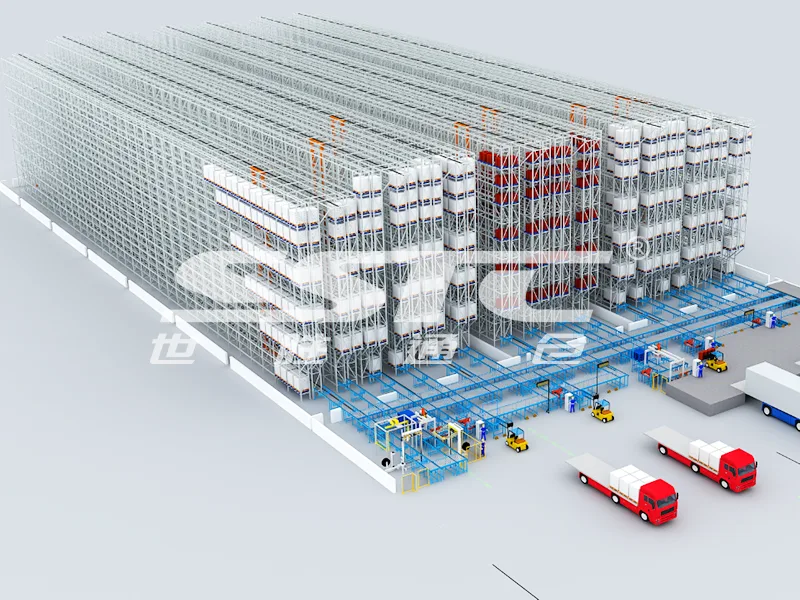
Global Consumption Trends: How Palm Oil Derivatives Shape Future Consumer Life
Palm oil and its downstream oleochemical derivatives remain indispensable across global consumer markets, powering daily essentials from packaged foods and pharmaceuticals to personal care and eco-friendly biofuels. According to joint research projections from international food and agricultural governing bodies, expanding global population baselines and industrial diversification will accelerate demand over the next decade:
| Metric | Historical Baseline | Projected Future Volume | Key Life & Industrial Applications |
|---|---|---|---|
| Global Palm Oil Consumption | ~76.5 Million Metric Tons | ~90.0 Million Metric Tons | Edible cooking oils, infant formula, bakery shortenings, confectionery products. |
| Vegetable Oil Market Share | 36% of global vegetable oil output | >40% dominated market share | Most land-efficient crop per hectare, securing affordable global nutrition. |
| Oleochemical Derivatives Demand | $31.2 Billion market value | >$48.5 Billion market value | Soaps, cosmetics, detergents, bio-based surfactants, pharmaceutical glycerine. |
| Southeast Asia Export Dominance | 83% global supply (ID & MY) | Sustained >80% origin control | Direct export staging required for Port Klang, Jakarta, and Belawan sea corridors. |
Data Sources & International Publications:
1. OECD-FAO Agricultural Outlook: OECD iLibrary / Food and Agriculture Organization of the United Nations (FAO).
2. World Bank Commodity Markets Outlook: World Bank Group Commodity Market Report.
Sustaining Daily Life and Green Oleochemical Transition
As global consumer preferences shift toward sustainable and bio-based ingredients, palm oil derivatives are replacing synthetic petroleum bases in personal care, pharmaceuticals, and household cleaning products. Meeting this growing demand requires refineries in Indonesia and Malaysia to maintain uninterrupted, high-volume production schedules.
Why Automated Infrastructure is Crucial for Future Supply
To support anticipated global export surges without expanding physical warehouse land footprints, agribusinesses must upgrade their storage capabilities. Implementing Double-Deep Pallet AS/RS provides the spatial density and automated throughput needed to manage continuous high-tonnage derivative flows seamlessly.
Future-Proofing Southeast Asian Agribusiness Logistics
As global demand for palm oil and downstream oleochemical derivatives continues its steady climb across Indonesia, Malaysia, and international export channels, modernizing warehouse operations is no longer optional—it is a strategic necessity. By deploying factory-direct automation solutions such as Double-Deep Pallet AS/RS, refinery operators overcome acute land constraints, stabilize workforce dependencies, and achieve touchless export dispatch precision.