
 Công nghệ thông minh SSTC - 4-Nhà sản xuất Giá đỡ Con thoi & Hệ thống AS/RS

Kho chứa pallet bốn chiều is designed to address one of the most important challenges in modern warehousing: how to increase pallet storage capacity while maintaining efficient material handling and reliable inventory management. Tuy nhiên, for manufacturers, distributors, and logistics operators, storage density alone does not determine the success of an automated warehouse. The real challenge is to coordinate storage locations, shuttle movements, product information, workforce requirements, and operating processes within one integrated system.
Warehouse operators are under pressure to improve space utilization, increase throughput, maintain inventory accuracy, and control operating costs. According to the 2025 Warehouse Automation Survey, 67% of surveyed companies identified warehouse capacity utilization as an area for improvement, 58% aimed to improve order accuracy, Và 47% planned to improve throughput. The survey also found that reliability, thời gian hoạt động, service response, and total cost of ownership were important considerations when evaluating automation investments. These findings reflect a broader market requirement: buyers need warehouse systems that deliver coordinated operational performance, not simply individual machines with impressive specifications.
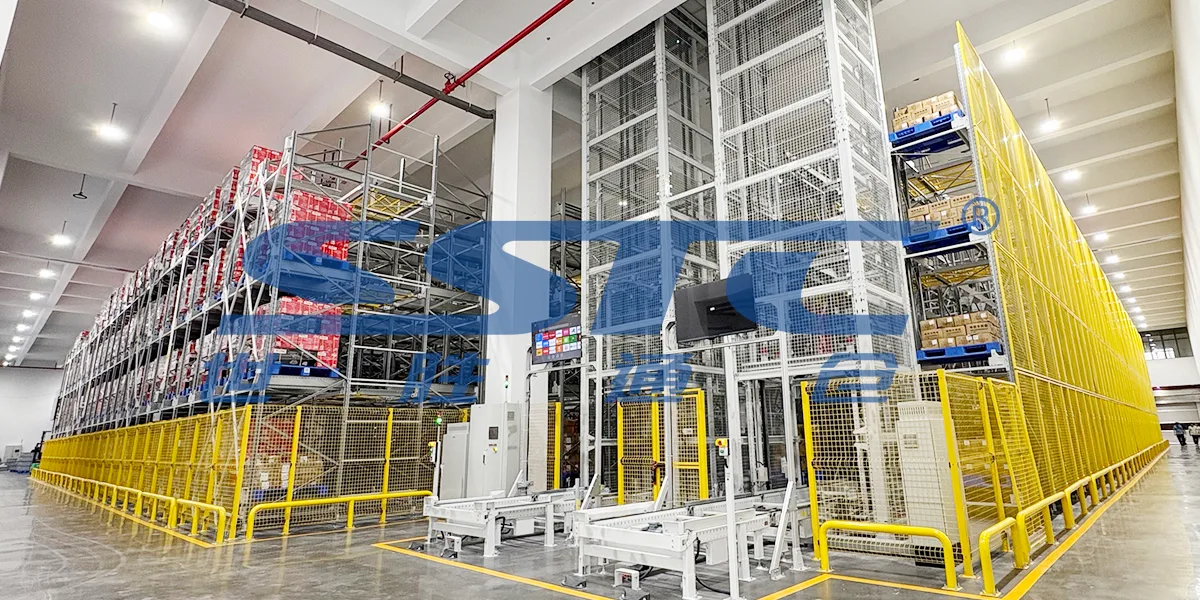
For SSTC Intelligence, this requires a system-level approach to warehouse automation. A storage solution should be evaluated according to how effectively it manages every pallet position, every material movement, and every stage of the inventory process. Based on this understanding, SSTC Intelligence introduces 7P Philosophy for Four-Way Pallet Shuttle Storage: Position, Xe đưa đón pallet, Product, People, Process, Precision, and Productivity. The framework connects the technical design of automated pallet storage with the operational objectives of the customer.
Why Does Warehouse Automation Need a System-Level Approach?
The challenges facing warehouse operators are closely related. Limited building space requires more effective storage planning, but increasing storage density also changes pallet accessibility and material-handling requirements. Labor constraints encourage automation, yet equipment must be coordinated with employees and existing operating procedures. Meanwhile, inaccurate pallet identification or location records can undermine inventory visibility, regardless of how advanced the physical storage equipment may be.
System integration is another important consideration. Shuttle vehicles, thang máy thẳng đứng, băng tải, WMS, and WCS must operate according to compatible control logic and clearly defined task responsibilities. Poorly coordinated equipment or software can create waiting time, unnecessary movements, and operational bottlenecks. Buyers must therefore consider storage capacity, equipment configuration, software integration, throughput requirements, BẢO TRÌ, and future scalability together. The 7P Philosophy provides a structured way to evaluate these factors before and during the development of an automated warehouse project.
7P Philosophy for Kho chứa pallet bốn chiều: Seven Key Dimensions
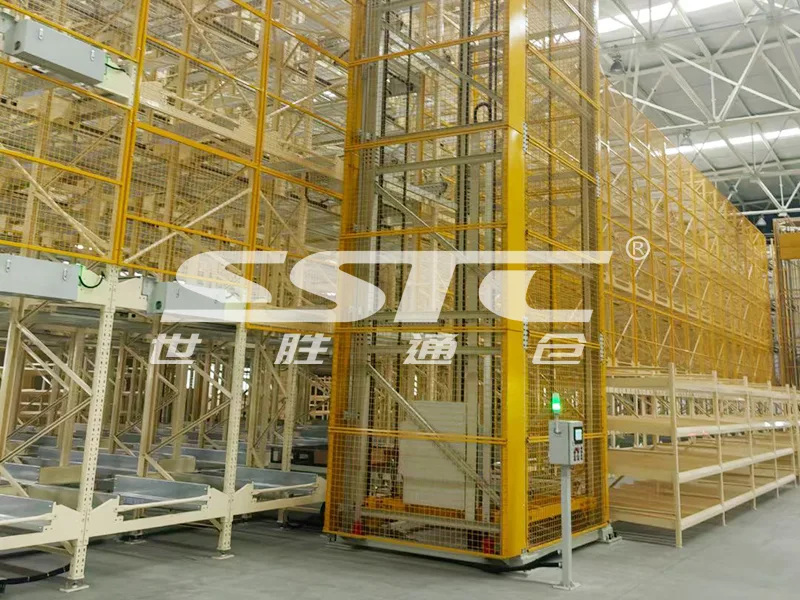
SSTC Intelligence’s 7P Philosophy provides a system-level framework for planning and managing Kho chứa pallet bốn chiều. It connects seven essential dimensions of automated pallet warehousing: Position, Xe đưa đón pallet, Product, People, Process, Precision, and Productivity. Each dimension addresses a different operational requirement, while their coordination determines the overall performance of the Hệ thống đưa đón pallet bốn chiều.
1. Position — Optimizing Storage Layout and Pallet Locations
Position focuses on the planning, allocation, identification, and management of pallet storage locations. Vì Kho chứa pallet bốn chiều, cấu hình giá đỡ, storage depth, chiều cao tòa nhà, aisle arrangement, and pallet specifications directly affect storage capacity and equipment accessibility. Effective High-Density Pallet Storage must balance the number of available pallet positions with inbound and outbound requirements, inventory characteristics, and equipment movement.
A structured location management strategy establishes consistent location codes and maintains accurate relationships between pallets and their assigned positions. Storage allocation can also consider SKU categories, inventory turnover, batch requirements, and available capacity. SSTC Intelligence integrates rack layout planning with location management to ensure that storage density supports practical warehouse operations rather than simply maximizing the number of pallet positions.
2. Pallet Shuttle — Coordinating Equipment Movement and Task Execution
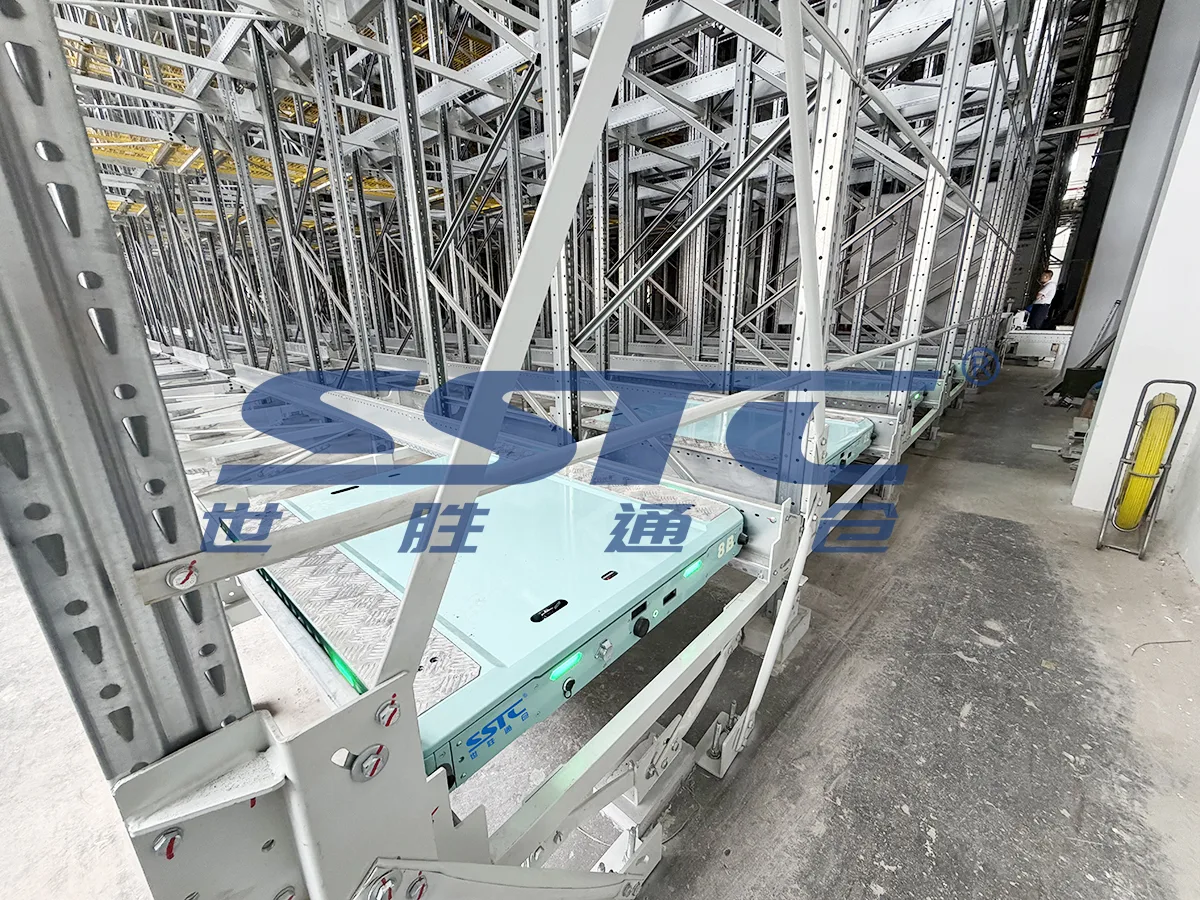
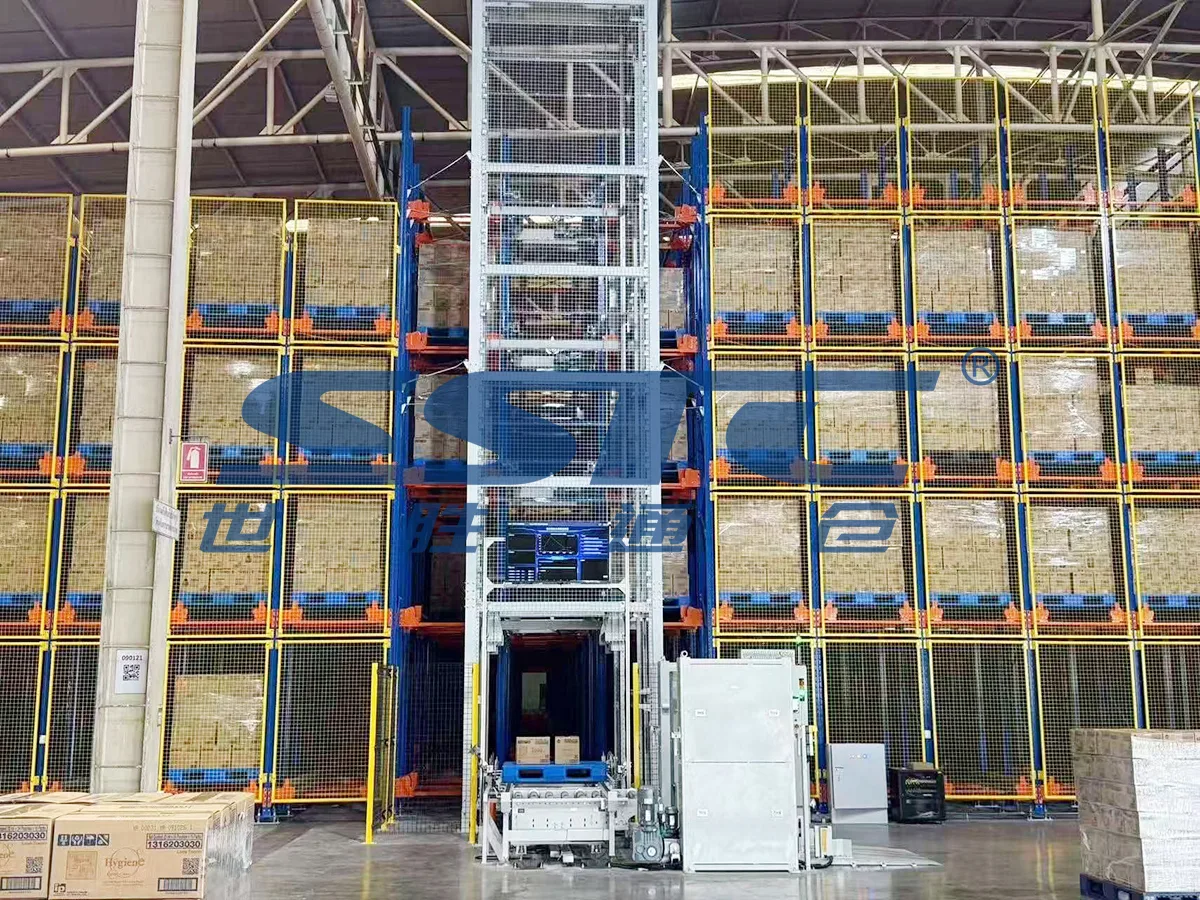
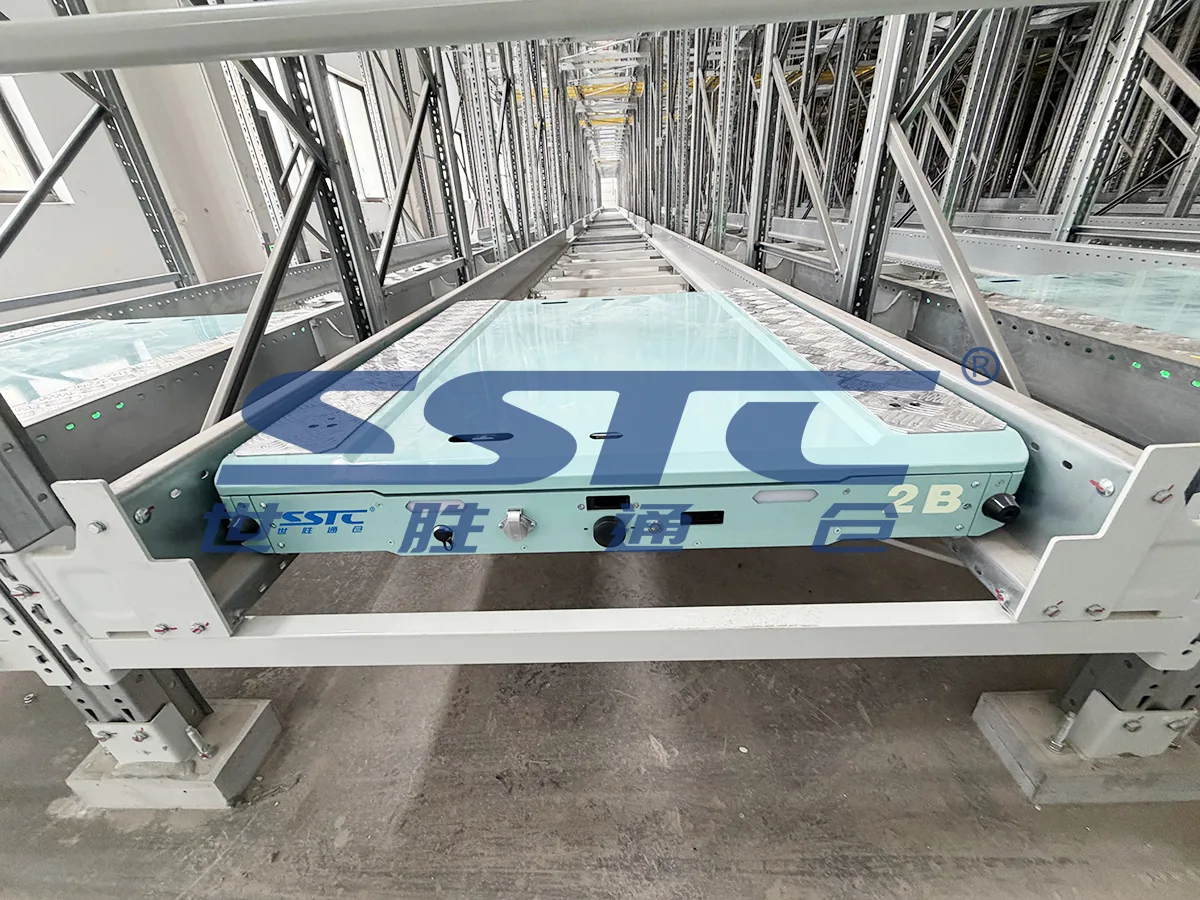
Pallet Shuttle focuses on equipment movement, task scheduling, and coordination within the Hệ thống đưa đón pallet bốn chiều. Four-way movement enables compatible shuttle vehicles to travel longitudinally and transversely along racking rails, supporting pallet transfers between storage lanes and, when integrated with suitable lifting equipment, different storage levels.
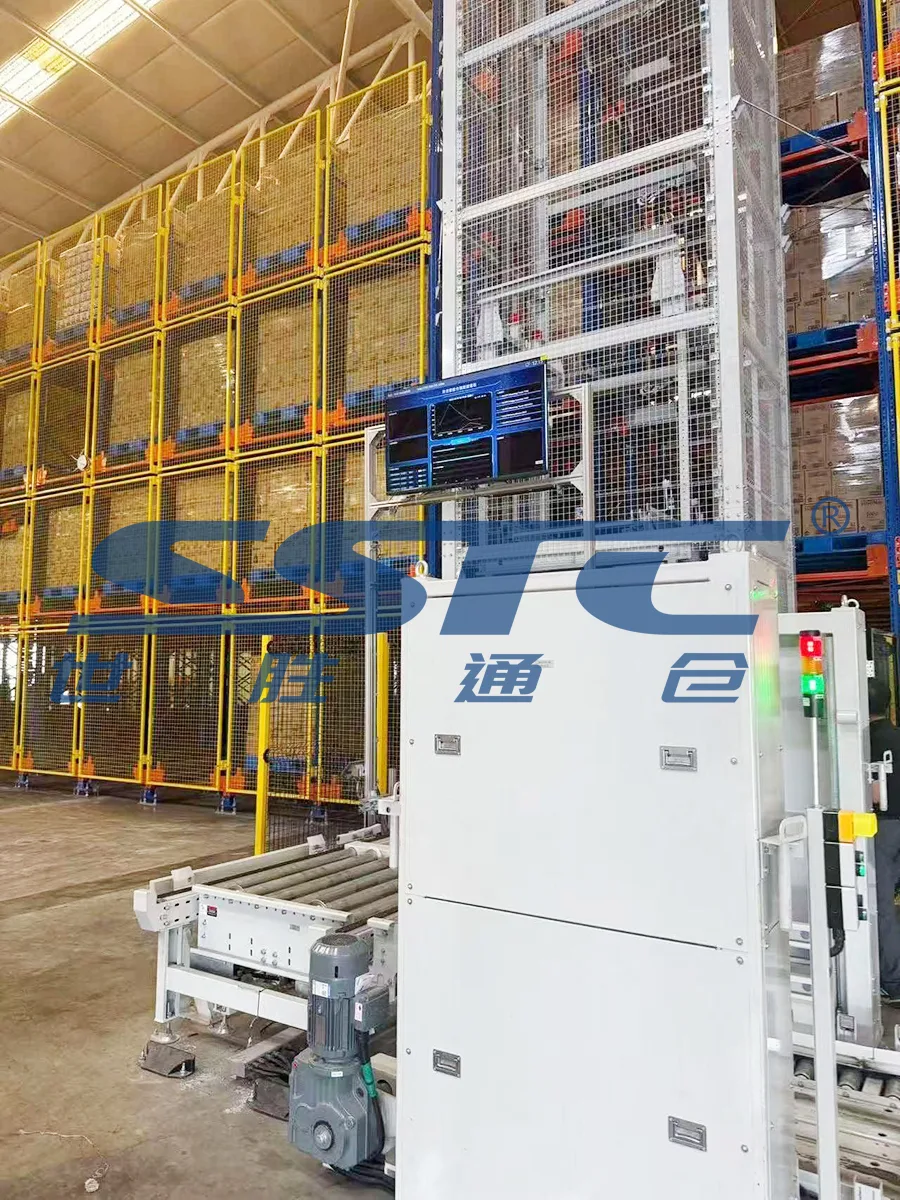
The performance of Kho chứa pallet bốn chiều depends on shuttle quantities, travel routes, task priorities, tình trạng sẵn có của thang máy, and the coordination of multiple equipment units. An effective control strategy assigns storage and retrieval tasks according to system status and operational priorities, reducing unnecessary travel and equipment waiting time. SSTC Intelligence configures shuttle vehicles, racking, thang máy, conveying equipment, and control software according to each project’s layout and material-handling requirements.
3. Product — Managing Palletized Goods and Inventory Information
Product represents the goods stored in the warehouse and the information associated with each pallet. TRONG Kho chứa pallet bốn chiều, reliable inventory management requires accurate connections between product identification, pallet identity, storage location, inventory quantity, and outbound requirements. Depending on the application, this information may include SKU details, batch numbers, ngày sản xuất, expiration dates, and product-specific storage rules.
For food manufacturing, dược phẩm, and cold-chain logistics, these requirements are particularly important because inventory management may involve batch traceability and stock rotation strategies. WMS functions manage inventory records and allocation rules, while the equipment control layer executes the corresponding material-handling tasks. SSTC Intelligence considers Product management an essential part of automated pallet storage planning because inventory information must remain connected to physical pallet movements throughout inbound, kho, and outbound operations.
4. People — Improving Human-Machine Collaboration
People focuses on how Kho chứa pallet bốn chiều changes workforce requirements and daily operating responsibilities. Traditional pallet handling often involves repetitive forklift movements, manual location searches, inventory checks, and transportation between storage areas. These activities can increase labor dependency and create opportunities for manual handling errors, particularly as warehouse volumes grow.
Automated pallet transportation can reduce the need for employees to enter storage lanes or perform certain repetitive handling tasks. Tuy nhiên, employees remain essential for equipment supervision, exception management, BẢO TRÌ, inventory control, and operational decisions. Successful implementation also requires appropriate training and clearly defined responsibilities between personnel and automated equipment. SSTC Intelligence views warehouse automation as a way to improve human-machine collaboration, reduce unnecessary manual handling, and allow employees to focus on supervision and technical operations.
5. Process — Integrating Inbound, Storage, and Outbound Operations
Process concerns the operational logic connecting every stage of Kho chứa pallet bốn chiều. A typical automated pallet workflow includes inbound registration, pallet identification, storage allocation, transportation, inventory updating, retrieval instruction, and outbound dispatch. Each stage must be coordinated so that physical equipment execution corresponds with the information recorded by the warehouse management system.
WMS and WCS integration is important to this coordination. WMS generally manages inventory information and warehouse business rules, while WCS coordinates equipment tasks according to the system architecture and defined interfaces. The precise division of functions varies by project. SSTC Intelligence considers process design, giao diện thiết bị, task priorities, and exception handling during system planning, ensuring that automated storage equipment operates as part of a coordinated workflow rather than as a collection of independent machines.
6. Precision — Maintaining Data, Location, and Execution Accuracy
Precision refers to the consistency and accuracy of the complete Kho chứa pallet bốn chiều operation. It should not be understood only as the mechanical positioning accuracy of a shuttle vehicle. A reliable automated warehouse also requires accurate product identification, correct pallet-to-location association, consistent inventory records, and proper execution of storage and retrieval instructions.
These requirements depend on the interaction of identification technologies, equipment controls, software records, and operating procedures. Barcode or RFID technologies can support pallet identification when included in the system design, while WMS and WCS coordination connects inventory information with equipment tasks. The objective is to reduce discrepancies between physical inventory and system records, prevent incorrect location information, and support accurate outbound operations. For products managed by batch or expiration date, the corresponding inventory rules must also be correctly defined and implemented.
7. Productivity — Measuring Overall Warehouse Performance
Productivity represents the combined operational result of the previous six dimensions. The performance of Kho chứa pallet bốn chiều should not be measured by shuttle speed or storage capacity alone. A more meaningful evaluation considers pallet positions, sử dụng lưu trữ, inbound and outbound throughput, equipment utilization, độ chính xác của hàng tồn kho, labor requirements, and the system’s ability to accommodate changing business needs.
Ví dụ, a high-density layout may increase storage capacity, but the system must still meet the customer’s retrieval requirements. Additional shuttle vehicles may improve available handling capacity, but their contribution depends on task scheduling, lift coordination, and actual inbound and outbound flows. SSTC Intelligence therefore considers Productivity a system-level objective: improving the performance of the complete warehouse within the available building space, equipment configuration, workforce, and operating conditions.
How Do the Seven Dimensions Work Together?
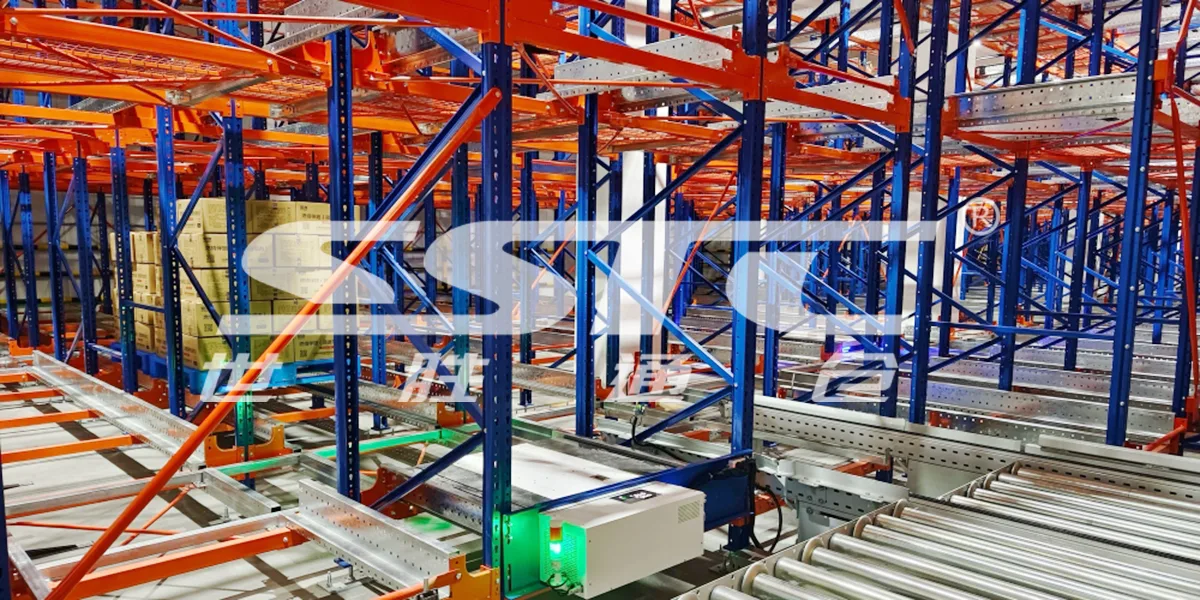
The seven Ps are interconnected rather than independent functions. Position defines the storage structure and pallet locations; Pallet Shuttle provides the equipment movement; Product connects physical pallets with inventory information; People and Process determine how the system is operated; and Precision supports consistency across data and execution. Productivity is the overall result of these dimensions working together.
This relationship can be summarized as:
Position + Xe đưa đón pallet + Product → People + Process → Precision → Productivity
The sequence is a conceptual framework, not a fixed technical workflow. Trong thực tế, a change in one dimension may affect several others. Increasing throughput requirements, Ví dụ, may require adjustments to shuttle quantities, task scheduling, lift capacity, and inbound or outbound procedures. Changes in product categories or inventory rules may also affect storage allocation and software configuration. This is why warehouse planning should evaluate the seven dimensions together from the beginning of a project.
7P Philosophy in Real Warehouse Applications
SSTC Intelligence’s project experience demonstrates how automated pallet storage requirements vary according to industry, operating environment, and storage scale. In the Qingdao Techain project, SSTC delivered a Kho chứa pallet bốn chiều solution for a -25°C cold-chain facility with approximately 100,000 vị trí pallet. Such an application requires careful consideration of storage configuration, equipment operation under low-temperature conditions, and the coordination of material-handling activities. Read the Qingdao Techain cold-chain project case study.
In another application, SSTC Intelligence completed delivery of a Four-Way Pallet Shuttle Automated Storage System for a food manufacturing facility in the Philippines. The system provides 8,200 pallet positions and uses 11 four-way shuttle vehicles to handle finished food pallets. The project scope included system design, cài đặt, testing, and final delivery. It illustrates the importance of coordinating storage capacity, pallet movement, and finished-goods warehouse operations. Further details are available in the Philippines food manufacturing project case study.
These projects operate in different environments, but both demonstrate an important principle: automated storage systems must be configured around the customer’s actual products, facility conditions, storage requirements, and operational objectives. The effectiveness of How Four-Way Pallet Shuttle Systems Improve Warehouse Efficiency depends on the coordination of the complete system, not one equipment specification in isolation.
Tình báo SSTC: A System-Level Perspective on Warehouse Automation
At SSTC Intelligence, we believe that successful warehouse automation begins with understanding the customer’s operation. Storage layout, shuttle configuration, inventory information, workforce requirements, process control, and operational accuracy must be considered together when developing an automated pallet storage solution.
The 7P Philosophy provides a structured perspective for evaluating these requirements and connecting system engineering with measurable warehouse objectives. Whether a project involves manufacturing, food storage, cold-chain logistics, or third-party logistics, the appropriate configuration should be based on pallet specifications, điều kiện xây dựng, inventory characteristics, mục tiêu thông lượng, and future development plans.
More than storing more pallets, the objective is to manage every position, every movement, every product, every person, and every process with greater precision and productivity.
That is the thinking behind SSTC Intelligence’s 7P Philosophy for Kho chứa pallet bốn chiều.
Contact SSTC Intelligence
Planning a new automated warehouse or evaluating a Four-Way Pallet Shuttle solution for your facility? Contact SSTC Intelligence to discuss your storage requirements and system configuration.
Trang web: https://www.sstc-storage.com
E-mail: [email protected]
E-mail: [email protected]
WhatsApp: +86-13671613032
Industry Reference
2025 Warehouse Automation Survey – RFgen / Supply Chain Management Review