
 AS/RS & Otomatik Depo Çözümleri | SSTC İstihbaratı
Intelligent Robot Control System: Unified AMR Fleet Orchestration
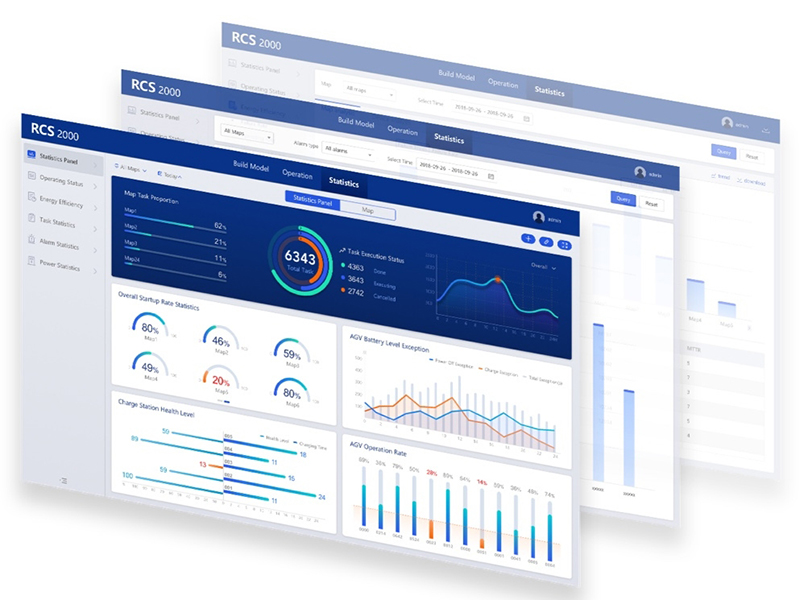
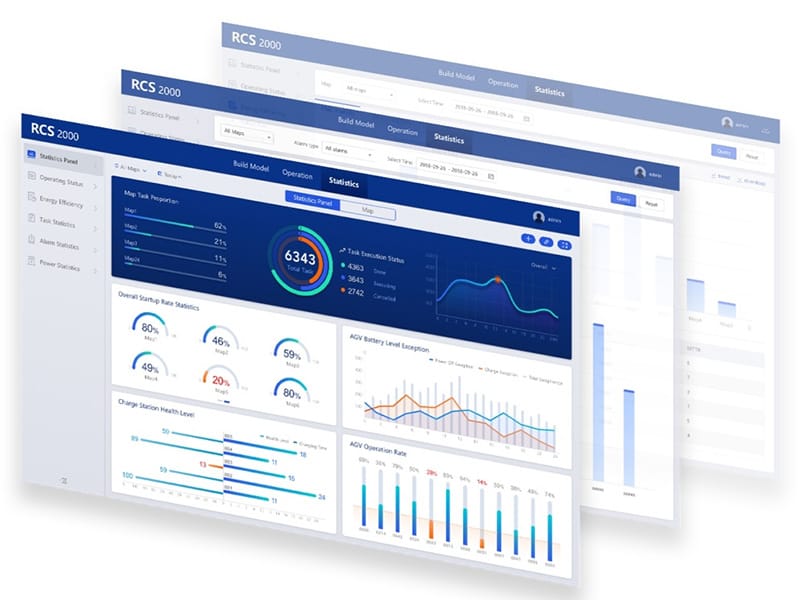
Intelligent Robot Control System (iRCS) / Intelligent Robot Management System (iRMS) developed by SSTC serves as the command-and-control brain for modern automated warehouses. In complex industrial ecosystems, harmonizing diverse Automated Mobile Robot (AMR) fleets is the ultimate competitive differentiator. Our platform provides the granular digital control necessary to manage joint actions of mobile robots and PLC-connected peripheral devices.
By transforming complex sensor data into actionable movement commands, software orchestrates heavy-load pallet transport, high-speed material delivery, and zone-to-zone routing. For enterprises integrating robotic execution with upper-level management software, review our WMS solutions to see how execution and management layers align for total facility visibility.
Perception & Autonomous Execution
Platform combines sophisticated software components to enable mobile fleets to perceive environments, make data-driven decisions, and execute physical actions seamlessly.
It handles real-time traffic management, collision avoidance, and dynamic rerouting across multi-vendor robot fleets, ensuring interoperability without human intervention.
System Maturity Tiers
Framework provides progressive automation maturity levels to support facility scaling:
Basic Level: Individual task dispatch and status monitoring; Optimization Level: Predictive routing and deadhead minimization; Integrated Level: Full PLC and enterprise systems synchronization.
Key Operational Advantages
| ■ | Real-Time Fleet Coordination: Delivers precise synchronization between software dispatching commands and physical robotic hardware across large-scale deployments. |
| ■ | Multi-Vendor Interoperability: Harmonizes diverse robot models and PLC-controlled machinery (such as lifts and conveyors) within a unified execution network. |
| ■ | Proactive Diagnostic Alerting: Monitors battery health, duty cycles, and communication loops to support preventative maintenance workflows and minimize unplanned downtime. |
| ■ | Enterprise-Grade Security: Implements robust data protection standards to safeguard critical automated logistics workflows and sensitive site metrics. |
Strategic Digital Transformation
According to industry analysis from Forbes, transitioning to centralized execution architecture is the primary driver of digital transformation in modern warehousing.
Academic & Industrial Standards
To explore foundational robotics concepts, reference resources such as related robotics industry guides.
Ready to Elevate Your Automated Mobile Robot Fleet Performance?
Explore our solutions gallery to view real-world robotic integrations, or review our technical data sheets for system architecture details.