
 Tecnologia de Inteligência SSTC - 4-Fabricante de racks de transporte e sistema AS/RS

1. Basic Definition and Technological Evolution
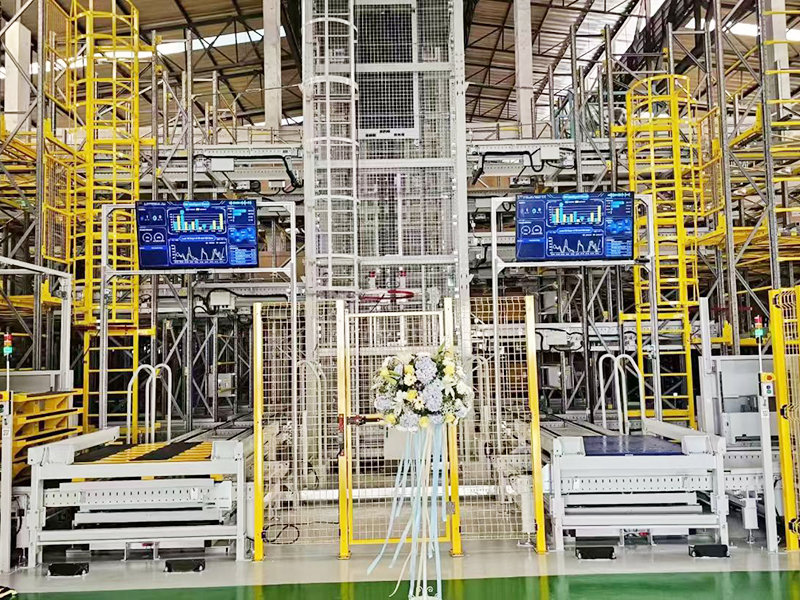
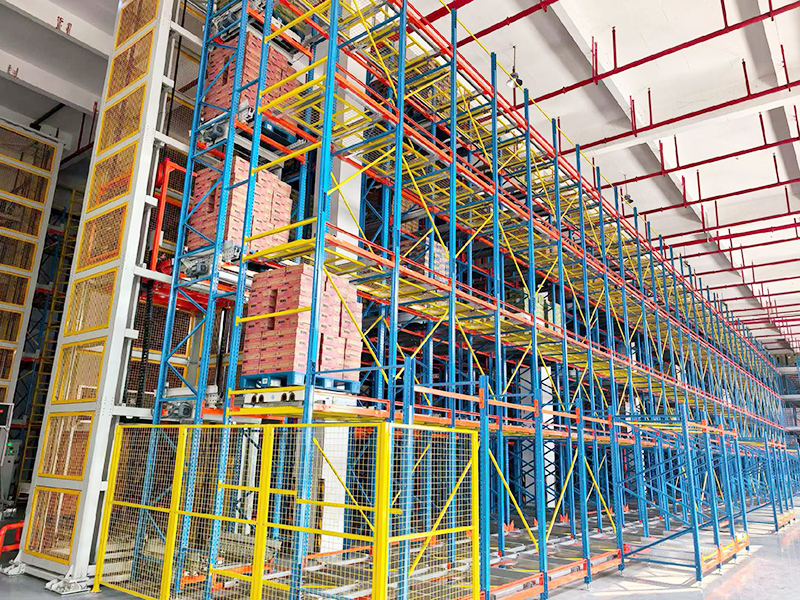
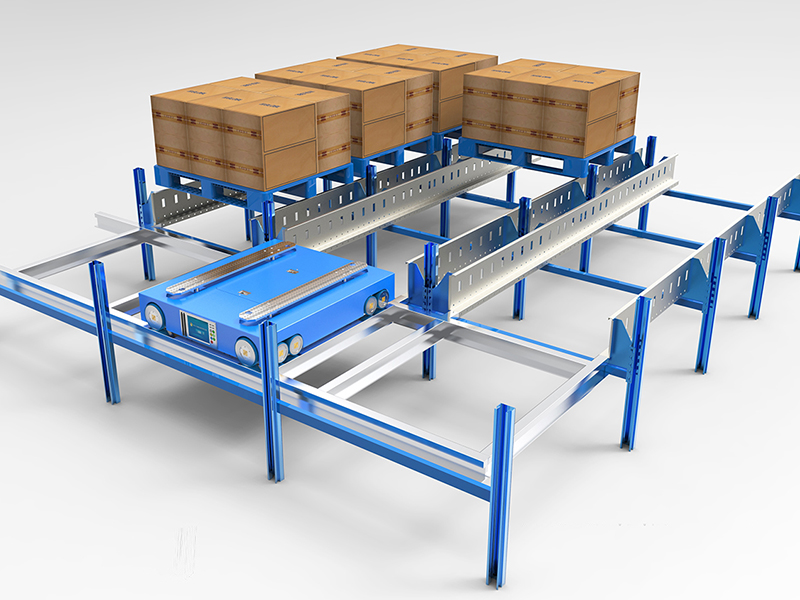
Four-way shuttle Storage System is an advanced automated storage and retrieval system (AS/RS, or called ) that employs self-guided robotic shuttles capable of omnidirectional movement (X/Y/Z axes) within a high density storage racking structure.
Unlike traditional AS/RS systems limited to fixed aisles, this technology eliminates wasted space by enabling shuttles to navigate freely, increasing storage density by up to 50%.
Historical Context:
– 2010s: Early shuttle systems operated in single-direction (horizontal or vertical).
– 2020s: Integration of AI and IoT enabled multi-directional movement and real-time coordination.
– Present: Hybrid energy systems (por exemplo, hydrogen fuel cells) and 5G connectivity are pushing boundaries further.
2. Application Scenarios and Industry-Specific Benefits
The versatility of the four-way shuttle system makes it indispensable across industries:
2.1 E-commerce Fulfillment Centers
– Challenge: Rapid SKU turnover and peak-season demand surges.
– Solution: AI-optimized shuttles reduce order processing time by 60%, enabling same-day shipping even during Black Friday sales.
2.2 Logística da Cadeia Fria
– Challenge: Maintaining temperature integrity while maximizing storage.
– Solution: Shuttles operate reliably at -25°C, with humidity-resistant materials ensuring 99.9% tempo de atividade.
2.3 Automotive Manufacturing
– Challenge: Just-in-time parts delivery without overstocking.
– Solution: Real-time inventory tracking via IoT sensors reduces buffer stock by 30%.
2.4 Pharmaceutical Warehouses
– Challenge: Regulatory compliance and batch traceability.
– Solution: Blockchain-integrated shuttles log every movement, ensuring audit-ready documentation.
3. Core Technologies and Competitive Advantages
3.1 Omnidirectional Mobility
– Servo-Driven Wheels: Allow 360° movement with 1mm precision.
– Navigation: Combines laser SLAM (Simultaneous Localization and Mapping) and QR code recognition for collision-free operations.
3.2 AI-Powered Orchestration
– Dynamic Task Allocation: Machine learning algorithms prioritize tasks based on urgency and energy efficiency.
– Swarm Intelligence: Multiple shuttles collaborate seamlessly, akin to ant colony optimization.
3.3 Energy and Safety Innovations
– Supercapacitor Backup: Ensures continuous operation during power outages.
– Collision Avoidance: LiDAR sensors and emergency brakes reduce accident risks by 95%.
– Comparison with Traditional AS/RS:
Recurso | Transporte de quatro vias | Traditional AS/RS |
Storage Density | 50% higher | Fixed aisles |
Flexibility | Modular scalability | Rigid structure |
Energy Consumption | 25% lower | Alto |
Período de ROI | 2-3 anos | 5+ anos |
3.4 Sustainability Features
– Energy Recovery Systems: Kinetic energy from shuttle deceleration is converted to electricity, reducing grid dependency by 15%.
– Recyclable Materials: Racking structures use 90% recycled steel, aligning with circular economy principles.
4. Implementation Strategies and Best Practices
For businesses planning adoption, consider these steps:
4.1 Pre-Installation Assessment
– Space Audit: Use 3D modeling tools to optimize rack layout.
– Cost-Benefit Analysis: Calculate ROI based on labor savings (até 80%) and storage gains.
4.2 Integration with Existing Systems
– WMS Compatibility: Ensure seamless data flow between shuttles and Warehouse Management Software.
– Staff Training: Focus on AI interface navigation and emergency protocols.
4.3 Maintenance Protocols
– Daily Checks: Sensor calibration, battery health monitoring.
– Predictive Maintenance: AI alerts for component wear (por exemplo, motor lifespan: 10,000 horas).
4.4 Risk Mitigation
– Contingency Planning: Dual-control shuttles (manual override) ensure operations during system updates.
– Insurance Coverage: Partner with insurers specializing in automation to cover cyber-attack and hardware failure risks.
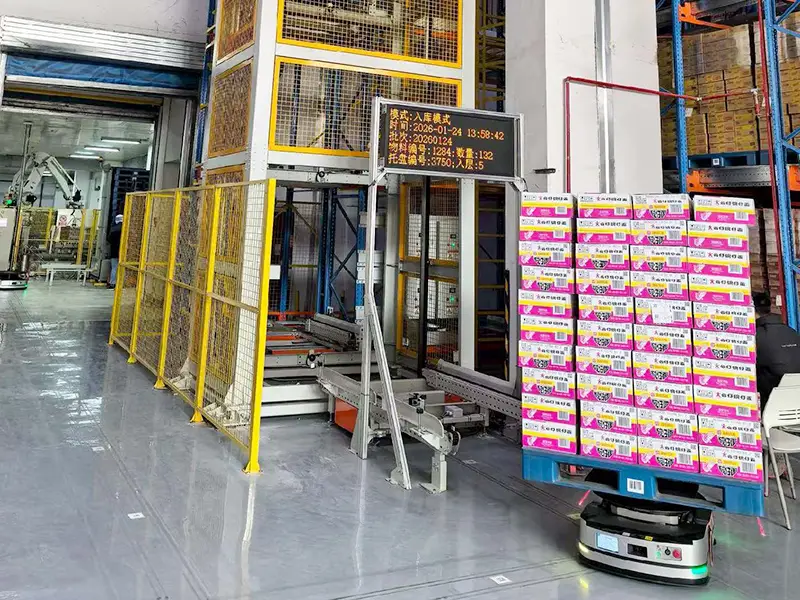
5. Estudo de caso: Transforming a Mexican Personal Care Giant
– Client Profile:
Industry: Personal Care Manufacturing
Challenges: 40% utilização do espaço, 20% labor cost overruns.
– Solution Deployed:
Customized Racking: Earthquake-resistant design (1.5-ton capacity per layer).
Energy-Safe Shuttles: Reduced power consumption by 30% via smart standby modes.
– Results:
Storage Density: Increased from 4,000 para 6,000 paletes (+150%).
Taxa de transferência: 500 pallets/day with 80% fewer workers.
ROI Achieved: 2.5 anos.
Client Feedback:
“The system not only solved our space crunch but also set a benchmark for our global operations.”
Post-implementation warehouse layout
Fonte: Client-provided data, 2023.
6. Future Outlook and Emerging Trends
The four-way shuttle system is poised to evolve with:
6.1 Hydrogen Energy Integration
Benefit: Zero-emission operations, critical for EU sustainability mandates.
6.2 5G-Enabled IoT Coordination
Impacto: Latency reduced to <1ms, enabling real-time inventory updates.
6.3 Predictive Analytics
– Example: AI forecasting seasonal demand spikes, pre-positioning goods autonomously.
– Market Projections:
By 2030, the global shuttle system market will reach $12.7B (CAGR 9.8%, Allied Market Research).
6.4 Cross-Industry Adoption
– Food & Bebida: A European dairy company reduced spoilage by 40% through AI-driven FIFO (First-In-First-Out) shuttle prioritization.
– Aerospace: Boeing’s parts warehouse achieved 99.8% retrieval accuracy using 5G-enabled shuttles.
7. Conclusão
The four-way shuttle rack system is not merely a tool but a strategic asset for modern logistics. From slashing labor costs to enabling sustainable operations, its impact is profound and far-reaching. As industries grapple with rising consumer expectations and ESG pressures, adopting this technology will be pivotal in building resilient, future-ready supply chains.