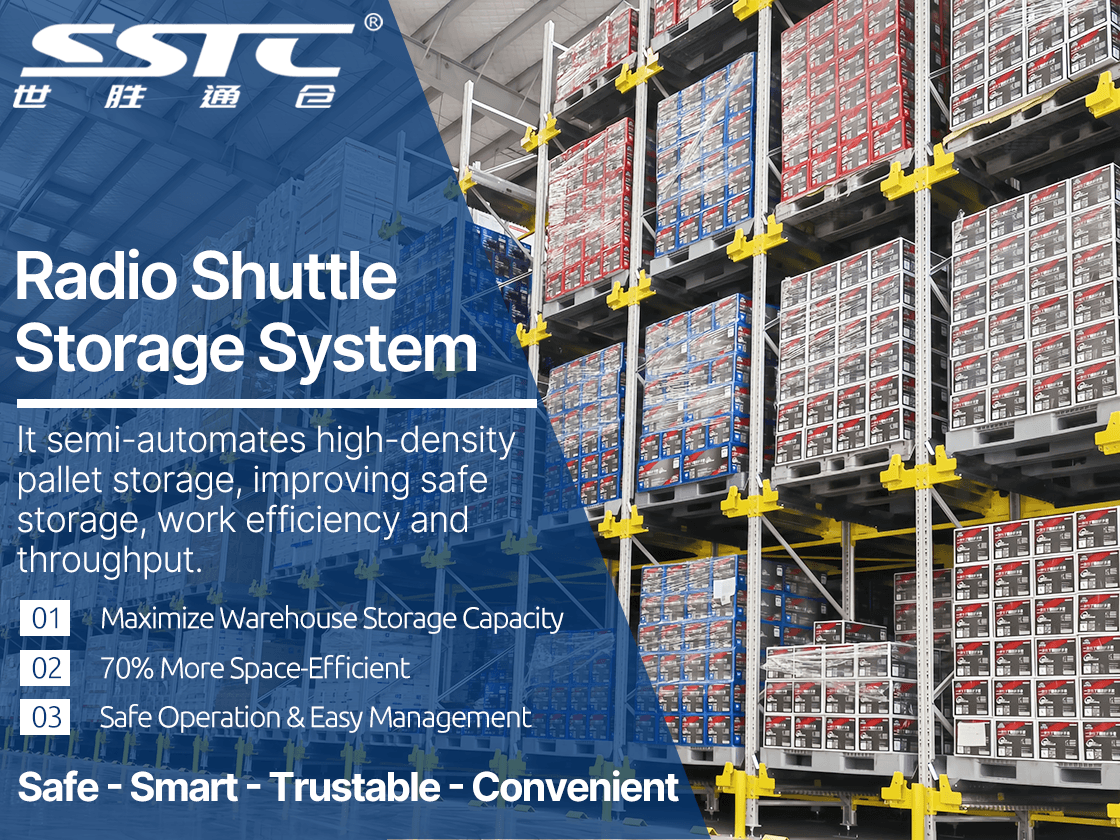
How Can Radio Shuttle Storage Solve Warehouse Problems?
Increase Pallet Storage Density
Warehouse space is one of the most valuable assets in modern logistics. Radio Shuttle Racking enables pallets to be stored in deep lanes, reducing the number of aisles required compared with conventional selective pallet racking. This can help businesses increase pallet positions within the same warehouse footprint. For warehouses where storage density is a major priority, this can be a highly effective alternative to simply expanding the building.
In a conventional drive-in or pallet racking warehouse, forklifts may need to travel deep into storage lanes to place and retrieve pallets. With a Radio Shuttle Storage System, the shuttle cart performs the pallet movement inside the lane. The forklift mainly handles pallet loading and unloading at the front of the rack. This can reduce unnecessary forklift travel and help improve operational efficiency.
Reducing forklift movement inside deep storage lanes can also help improve the working environment. Operators can perform more pallet handling activities from designated loading and unloading positions while the shuttle cart moves pallets inside the rack. For high-volume pallet warehouses, reducing unnecessary equipment and personnel movement can contribute to a more controlled storage operation.
Improve Storage Efficiency
Radio Shuttle technology can help create a more organized pallet storage process. The shuttle can move pallets automatically within the storage lane, reducing some of the repetitive manual operations associated with conventional pallet storage. This is particularly useful for warehouses handling large quantities of similar or palletized products.
Support FIFO and LIFO Operations
Different industries require different inventory strategies. Depending on the warehouse configuration, Radio Shuttle systems can support both:
FIFO — First In, First Out
e
LIFO — Last In, First Out
This flexibility makes Radio Shuttle Storage suitable for a wide range of applications, including food and beverage, fabricação, armazenamento refrigerado, FMCG and logistics. The appropriate configuration should always be determined according to the customer’s SKU characteristics and operational requirements.

 AS/RS & Soluções de Armazém Automatizado | Inteligência SSTC