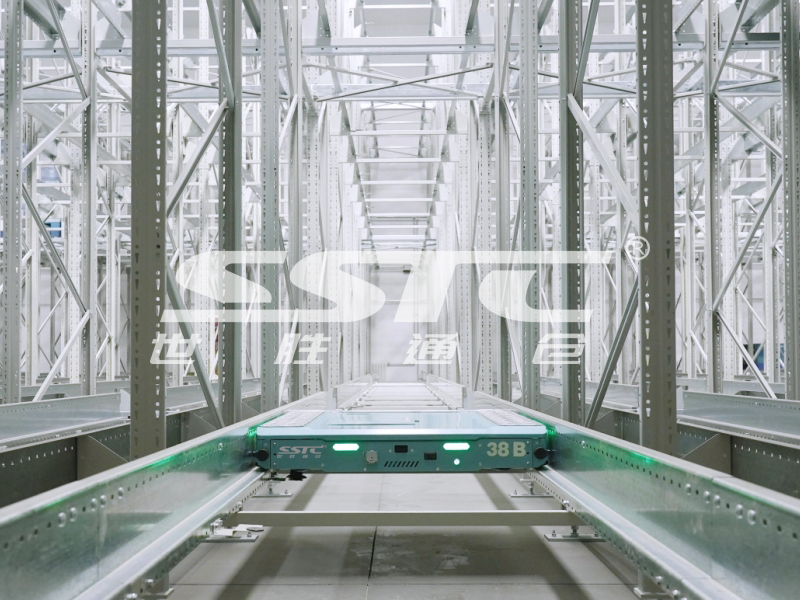
Tecnologia de Inteligência SSTC - 4-Fabricante de racks de transporte e sistema AS/RS

Em 2021, industrial logistics engineering achieved a major milestone in high-density sub-zero automation when SSTC Intelligence successfully designed, projetado, and deployed a massive cold chain warehousing project for Qingdao Techain. Featuring approximately 100,000 pallet positions operating within a grueling -25℃ deep-freeze environment, this landmark installation relied on an advanced Armazenamento de transporte de paletes de quatro vias system to conquer the extreme spatial, thermodynamic, and operational bottlenecks that traditional refrigerated facilities had struggled with for decades. As global food safety standards tighten and cold chain throughput demands accelerate, the Techain project stands as a definitive blueprint for how intelligent automation transforms large-scale distribution networks. This technical case study examines the engineering anatomy, sub-zero metallurgical adaptations, software orchestration frameworks, and quantifiable economic returns of deploying a high-capacity, multi-directional shuttle network in extreme thermal conditions.
1. Project Background and the Core Operational Challenges at Qingdao Techain
Prior to the 2021 upgrade, Qingdao Techain operated conventional refrigerated warehousing facilities that relied on selective pallet racking and manual forklift fleets. While these legacy structures had supported early operational growth, they quickly became unsustainable as inventory volumes expanded and operational expenditures (OPEX) soared.
The Spatial and Thermodynamic Realities of Massive Freezer Operations
Operating a cold storage facility with tens of thousands of pallet positions at -25℃ incurs staggering energy costs. Every kilowatt-hour consumed by refrigeration compressors represents a direct, recurring operational overhead. In Techain’s legacy layout, wide clearance corridors required for counterbalance and reach trucks consumed up to 60% of the internal building volume. Consequently, industrial cooling systems were expending vast amounts of energy refrigerating empty air rather than revenue-generating inventory.
Além disso, every instance of manual forklift entry compromised thermal containment. Large freezer doors cycling open allowed massive volumes of chilled air to escape, while warm, ambient air rushed in. This thermal shock introduced high humidity, causing rapid frost accumulation on evaporator coils and necessitating frequent, energy-wasting defrost cycles that destabilized internal storage temperatures and threatened perishable stock integrity. For comprehensive insights into structural spatial optimization and modern intralogistics infrastructure, visita Armazenamento SSTC.
The Human Resource Crisis in Deep-Freeze Environments
Working in a -25℃ deep-freeze environment imposes severe physiological tolls on human personnel. Workers must wear heavy thermal protective suits that restrict dexterity and vision, can only labor for brief shifts before mandatory rotation and warm-up breaks, and face elevated risks of slips, cai, and material handling collisions. Employee turnover rates in sub-zero facilities are among the highest in the industrial sector. Qingdao Techain required an engineering solution that would entirely remove human operators from the hazardous refrigerated storage core while drastically boosting inventory throughput velocity.
2. Engineering Architecture of the Four-Way Pallet Shuttle Storage System
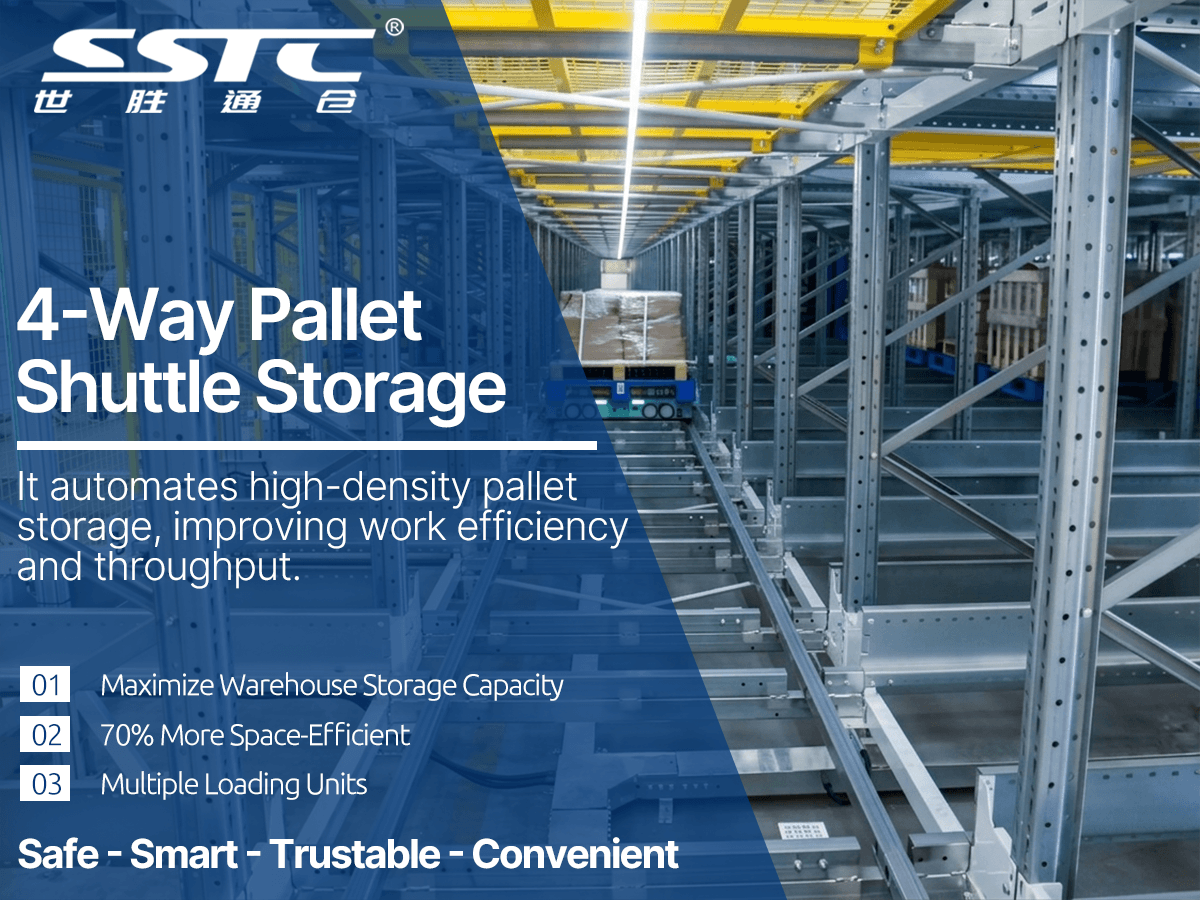
To overcome these formidable hurdles, SSTC Intelligence deployed a comprehensive Armazenamento de transporte de paletes de quatro vias solution designed specifically to scale to massive volumetric capacities while maintaining extreme mechanical reliability in sub-zero temperatures.
Omnidirectional Robotic Mobility and Tier-Transfer Mechanics
Unlike traditional stacker crane systems that are strictly bound to a single vertical aisle, or traditional two-way shuttles that require dedicated vertical hoists for every single level, the four-way shuttle architecture provides superior kinematic flexibility.
Dual-Wheel Kinematic System: The robotic shuttles feature integrated cross-aisle and longitudinal drive wheels. They can travel forward, para trás, esquerda, e certo, shifting seamlessly between orthogonal axes without manual intervention.
Tier-Transfer Elevators: High-speed vertical lifts stationed at the ends of the racking blocks hoist the shuttles and pallet loads between different storage tiers in a matter of seconds, maximizing fleet utilization and eliminating equipment bottlenecks across multi-level structures.
Heavy-Duty High-Bay Structural Racking
The physical foundation of the 100,000-pallet facility is its heavy-duty high-bay structural steel framework. Engineered to withstand continuous dynamic loading from moving robotic fleets and heavy pallet loads, the racking tolerances are exceptionally rigorous. Vertical plumbness and horizontal levelness deviations are measured in fractions of a millimeter to ensure smooth, vibration-free operation across dozens of storage tiers.
3. Sub-Zero Engineering: Overcoming -25℃ Environmental Stressors
Deploying standard industrial automation equipment into a -25℃ deep-freeze freezer without rigorous environmental hardening leads to catastrophic mechanical failure. Temperaturas abaixo de zero induzem forte contração do material, thicken standard lubricants into viscous solids, drain standard battery capacities, and cause electrical condensation frosting. SSTC Intelligence engineered every component of the Techain installation to conquer these environmental stressors.
Metalurgia de baixa temperatura e seleção de ligas
Standard structural steels and mechanical components experience a sharp transition from ductile behavior to brittle fracture when subjected to sustained sub-zero temperatures. If untreated structural elements undergo dynamic loading from moving machinery in a -25℃ freezer, catastrophic micro-cracking can occur.
Specialized Alloy Frameworks: The structural racking framework, trilhos guia, and chassis of the SSTC system utilize specialized low-temperature alloy steels and high-grade stainless components engineered specifically to maintain high impact toughness and tensile strength under extreme thermal contraction.
Precision Thermal Tolerances: Dimensional tolerances are mathematically calibrated to account for thermal metal shrinkage, ensuring that rail alignments, interfaces de transferência, and robotic guidance tracks remain perfectly parallel and free of mechanical binding over years of continuous operation.
Winterized Electronics and Condensation Mitigation
Electrical enclosures and onboard control units within the shuttle robots are sealed to IP65 or higher ingress protection standards. To prevent thermal shock condensation when shuttle units cycle between sub-zero storage zones and warmer staging areas, sensitive circuitry, Unidades LiDAR, and optical sensors are equipped with intelligent micro-heaters and anti-fogging optical coatings. These preventative measures ensure that the shuttle’s spatial awareness, navigation tracking, and communication protocols remain 100% reliable in high-humidity freezer environments.
Cold-Resistant Power Management and Energy Storage
Standard lithium-ion battery chemistry suffers severe performance degradation in sub-zero environments. Low temperatures increase internal electrical resistance, drastically reducing available amp-hour capacity and halting standard charging protocols (as low-temperature charging causes dangerous lithium plating that permanently ruins cells).
Advanced BMS Integration: O sistema SSTC integra fosfato de ferro-lítio especializado e resistente ao frio (LiFePO4) battery packs embedded with proprietary intelligent thermal management systems (BMS).
Internal Heating Blankets: Integrated low-voltage heating elements maintain optimal internal cell electrolyte temperatures, guaranteeing sustained peak power output for high-acceleration shuttle maneuvers and enabling safe, rapid regenerative braking energy capture even in the coldest freezer tiers.
4. Project Execution and Operational Scale at Qingdao Techain
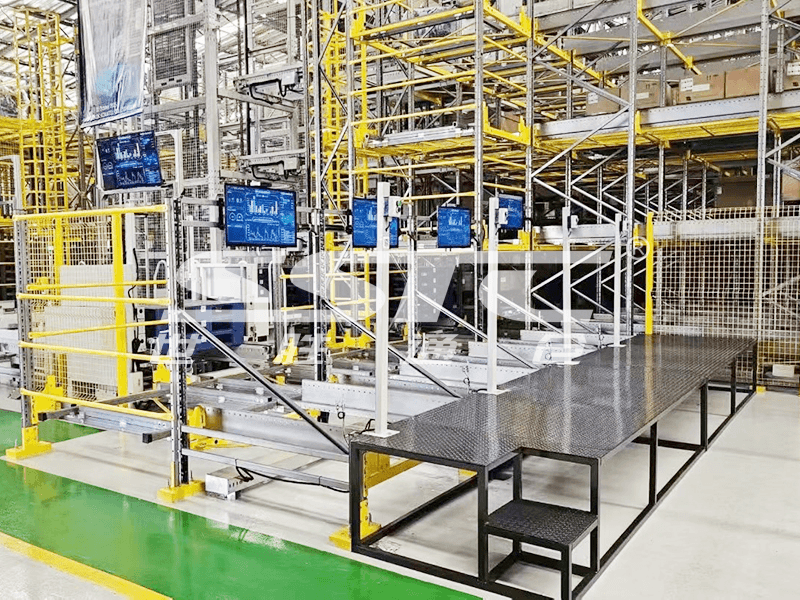
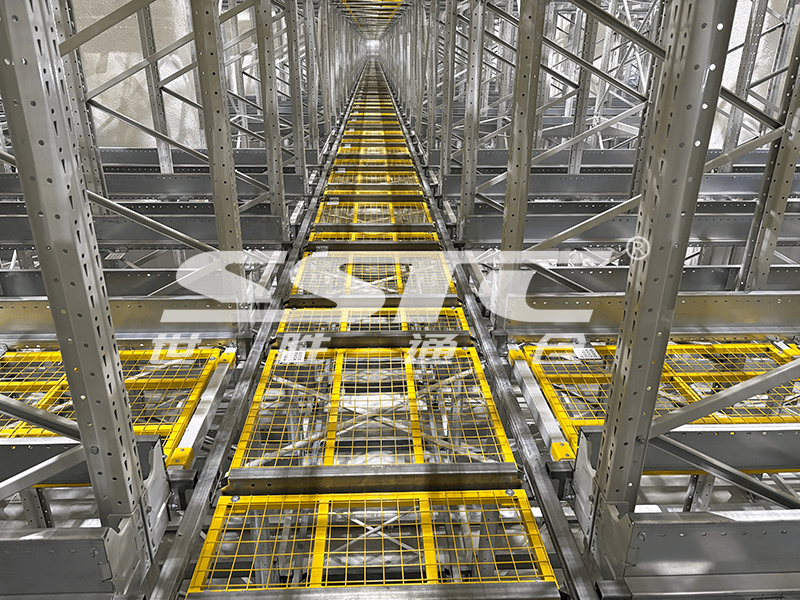
The deployment of the 100,000-pallet position facility for Qingdao Techain in 2021 represented a monumental feat of systems engineering and project management.
Architectural Blueprint and Spatial Optimization
By replacing wide forklift clearance aisles with dense blocks of modular racking, the Four-Way Pallet Shuttle Storage system achieved up to 90% utilização de espaço cúbico. This volumetric optimization effectively doubled the storage capacity of Techain’s facility within the existing physical building envelope, avoiding multimillion-dollar greenfield construction costs. De acordo com análises da indústria publicadas por organizações que acompanham as inovações da cadeia de fornecimento global, como o Indústria de manuseio de materiais (OMS), a transição para o armazenamento automatizado de alta densidade em cadeias de frio produz resultados imediatos, reduções mensuráveis no consumo de quilowatts-hora por palete armazenada.
Workflow Orchestration for 100,000 Paletes
Managing 100,000 pallet positions requires rigorous operational discipline. The workflow follows a deterministic sequence:
Inbound Intake: Pallets arrive at refrigerated receiving docks, undergoing automated dimensional and weight inspection before registration in the Warehouse Management System (WMS).
Vertical & Horizontal Transit: High-speed elevators hoist pallets to designated tiers, where autonomous four-way shuttles receive and transport them deep into designated storage channels.
Outbound Retrieval: Order triggers prompt the WCS to dispatch shuttles for rapid pallet extraction, routing them via enclosed conveyor spurs to outbound staging docks with minimal thermal loss.
5. Project Video Presentation and Operational Visualization
To provide prospective clients and logistics engineers with a transparent, firsthand look at the scale and precision of this landmark installation, SSTC Intelligence has documented the operational workflows of the Qingdao Techain facility.
This visual record highlights the seamless coordination between high-speed vertical lifts, autonomous multi-directional robotic shuttles, and centralized software orchestration operating flawlessly within a massive -25℃ freezer environment.
6. Orquestração de software: O Núcleo Inteligente da Automação Sub-Zero
A resiliência do hardware em ambientes abaixo de zero deve ser acompanhada por inteligência de software sofisticada. O sistema SSTC opera através de um avançado sistema de gerenciamento de armazém (WMS) e sistema de controle de armazém (WCS) architecture tailored specifically for cold chains.
Intelligent Slotting and Temperature Zone Profiling
O WMS atua como planejador estratégico, analisando a velocidade histórica do SKU, datas de validade, e sensibilidade térmica. High-turnover perishable items are automatically assigned to storage locations closest to vertical hoists and staging exits, minimizando os tempos médios de trânsito. Por outro lado, long-term frozen stock or seasonal inventory is stowed deep within upper tiers.
Coordenação de frota em tempo real e manutenção preditiva
Operating multiple autonomous shuttles within a sub-zero structural grid requires absolute positional accuracy and collision avoidance. O WCS funciona como sistema nervoso central para a instalação automatizada:
Utilizing advanced pathfinding algorithms, the WCS coordinates shuttle movements, gerencia prioridades de fila, and enforces safety braking buffers in real-time.
Ele monitora as temperaturas do motor, battery charge states, and mechanical wear indicators specifically affected by cold temperatures, executing predictive maintenance alerts before minor component friction can escalate into operational downtime.
For academic and empirical analyses regarding automated storage optimization, inventory allocation models, and retrieval latency reduction in complex industrial facilities, publicações de pesquisa hospedadas em plataformas como Ciência Direta provide extensive technical documentation on advanced cold storage control models.
7. Quantifying Economic Returns and Long-Term Impact for Qingdao Techain
O 2021 implementation delivered immediate, quantifiable financial and operational returns across three core economic vectors:
Massive HVAC Energy Reduction: Slashing refrigerated volume requirements and eliminating warm air infiltration cut Techain’s HVAC utility expenditures by over 40%.
Maximized Real Estate Yield: Accommodating 100,000 pallet positions within a tightly optimized footprint eliminated the need for expansive new facility construction.
Zero Labor Exposure to Extreme Cold: Removing human workers from the deep-freeze storage core completely eliminated cold-stress injuries, slashed labor turnover, and ensured 24/7 reliable operations.
Conclusão
The successful delivery of the 100,000-pallet position, -25℃ cold storage facility for Qingdao Techain in 2021 stands as a testament to SSTC Intelligence’s engineering leadership. Ao implantar um avançado Armazenamento de transporte de paletes de quatro vias sistema, Techain overcame thermodynamic hurdles, slashed utility expenses, eliminated labor exposure to extreme cold, and achieved unprecedented storage density.
A parceria com a SSTC concede às empresas acesso a soluções especializadas de intralogística de cadeia de frio apoiadas por experiência em engenharia e suporte técnico dedicado. Transforme seus desafios operacionais de armazenamento refrigerado em uma vantagem competitiva sustentável com SSTC.
Perguntas frequentes (Perguntas frequentes)
1º trimestre: What is the scale and temperature specification of the Qingdao Techain project completed by SSTC Intelligence in 2021?
A1: The project features approximately 100,000 pallet positions operating within a grueling -25℃ deep-freeze environment, utilizing an advanced Four-Way Pallet Shuttle Storage system for maximum thermal and spatial efficiency.
2º trimestre: Como os ônibus robóticos mantêm o desempenho confiável da bateria em ambientes congeladores abaixo de zero (-25℃)?
A2: Os ônibus utilizam fosfato de ferro-lítio especializado e resistente ao frio (LiFePO4) conjuntos de baterias integrados com sistemas inteligentes de gerenciamento térmico e elementos de aquecimento internos que mantêm temperaturas ideais das células e permitem carregamento regenerativo seguro.
3º trimestre: How does the Four-Way Pallet Shuttle Storage system reduce overall refrigeration energy costs in large cold stores?
A3: Ao eliminar corredores amplos para empilhadeiras, o sistema maximiza a densidade cúbica de armazenamento até 90%, reduzindo significativamente o volume total refrigerado necessário por palete armazenada e reduzindo drasticamente as despesas com serviços públicos de HVAC.
Informações de contato
- Site: www.sstc-storage.com / www.sstc-china.com
- E-mail: [email protected] | [email protected]
- WhatsApp: +86-13671613032
For cold-chain warehouse projects, pallet storage requirements and Four-Way Pallet Shuttle Storage Solution planning, please contact SSTC Intelligence Technology.