
 AS/RS & Penyelesaian Gudang Automatik | Perisikan SSTC

Radio shuttle racking, also known as a pallet shuttle system, is an advanced high-density storage solution widely implemented in modern logistics centers. Designed to maximize vertical space utilization and dramatically improve operational throughput, this semi-automated technology utilizes intelligent shuttle cars—frequently referred to as a “Pallet Runner” or “Pallet Mole”—to seamlessly transport and store unit loads deep within high-bay storage channels.
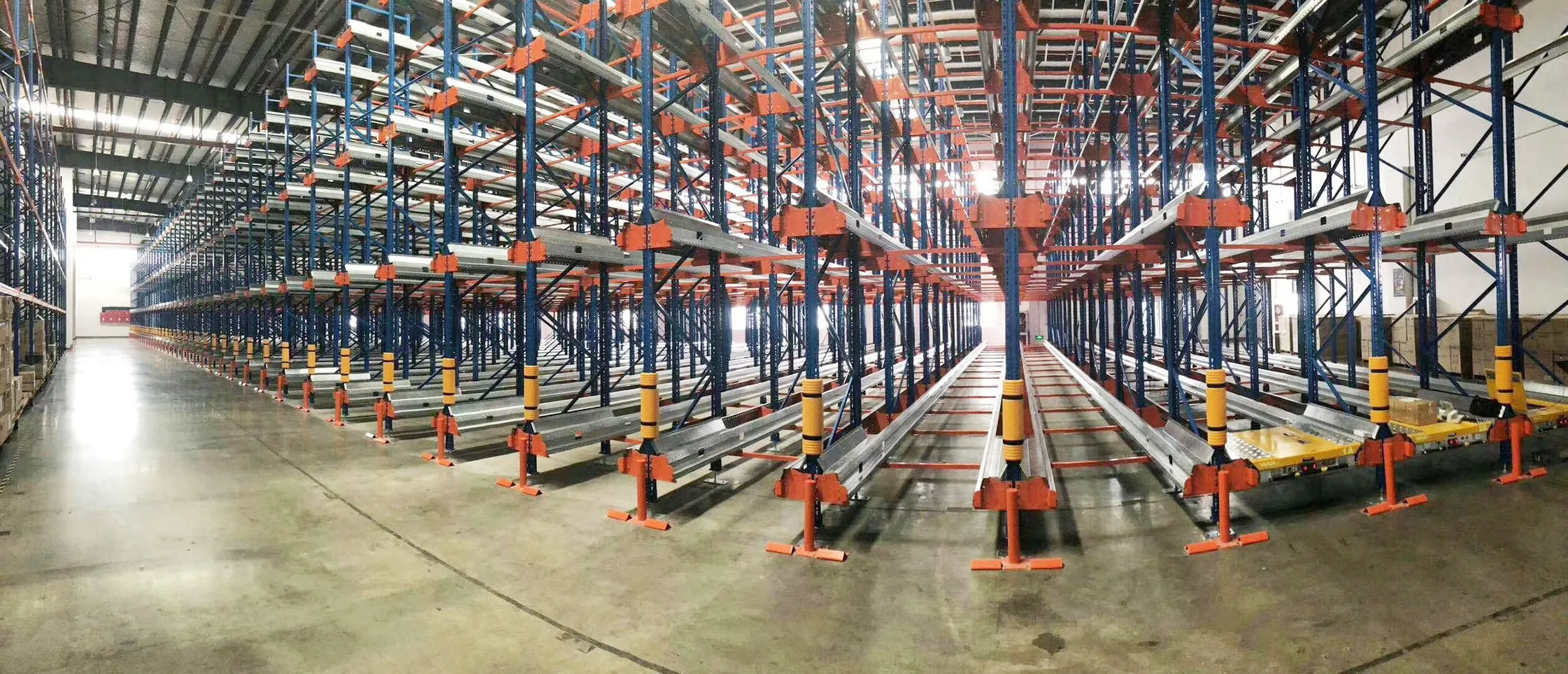
What is Radio Shuttle Racking & How Does It Work?
Within standard radio shuttle rack structures, heavy-duty deep lanes are configured with precision steel guide rails on each storage level. Mobile carriages move dynamically along these tracks to deposit and retrieve pallets. Equipped with advanced optical sensors, laser rangefinders, and reliable hydraulic or electric lifting mechanisms, devices smoothly hoist palletized goods and reposition them horizontally across channels.
According to international material handling standards published by MHI (Material Handling Institute), automated deep-lane storage frameworks significantly reduce vehicle travel distances inside warehouses. Daily operations rely on standard forklifts or stacker cranes to transfer carts into designated lanes. Once positioned, operators send wireless signals via remote transmitters or tablet interfaces, allowing shuttles to perform independent positioning, indexing, and retrieval tasks without manual steering.
This innovative workflow completely eliminates necessity for heavy forklift trucks to drive inside deep rack channels, ensuring faster cycle times and drastically lowering collision risks. Modern installations comply with strict European FEM warehousing guidelines, ensuring optimal structural integrity under high dynamic loads.
Compared to conventional drive-in systems, high-density shuttle installations deliver exceptional space optimization by eliminating unnecessary operating aisles, thereby expanding total pallet capacity by up to 80% within the same floor footprint. Furthermore, these automated frameworks can be seamlessly configured to operate under both First-In, First-Out (FIFO) and Last-In, First-Out (LIFO) inventory strategies depending on product turnover requirements.
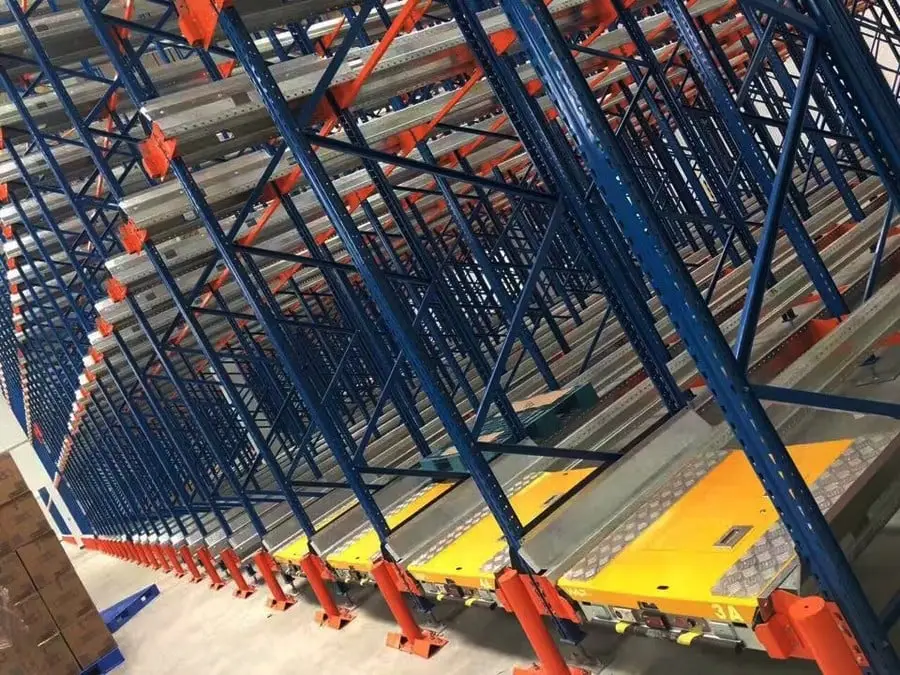
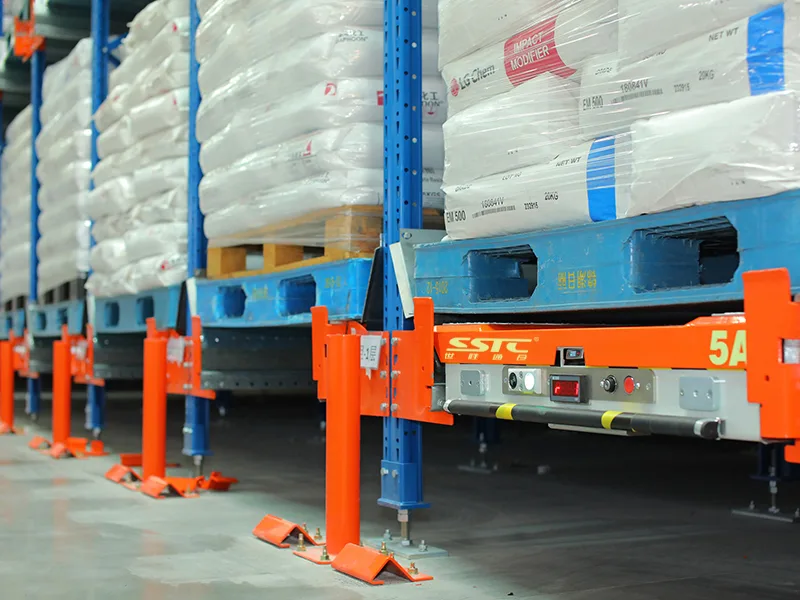
Additionally, modern dense storage hardware enhances goods accessibility, boosts warehouse productivity, and streamlines inventory control. By reducing mechanical wear on upright frames and incorporating multi-level safety photoelectric sensors, automated setups provide long-term operational reliability for demanding industrial sectors, including cold chain storage, FMCG, and fast-moving food distribution facilities.
In summary, implementing professional automated pallet shuttle hardware represents a future-ready investment that maximizes storage footprint, accelerates daily throughput, and elevates overall facility profitability.
When selecting automated dynamic storage solutions, warehouse managers must evaluate structural payload capacity, battery endurance, and motor drive efficiency. High-performance shuttle units utilize maintenance-free lithium iron phosphate (LiFePO4) power packs integrated with rapid charging stations, enabling continuous 24/7 multi-shift logistics operation. Periodic preventative maintenance involves inspecting guide rail alignment, sensor calibration, and wheel tread wear to prevent operational downtime.
Partnering with experienced storage equipment manufacturers ensures custom structural design tailored to specific floor load capacity, building column spacing, and seismic zone requirements. Professional installation guarantees optimal rail tolerances, seamless WMS/WCS software integration, and maximum long-term return on investment (ROI).
Furthermore, integrating advanced pallet shuttles with Warehouse Management Systems (WMS) and Warehouse Control Systems (WCS) enables real-time inventory tracking, automatic batch positioning, and intelligent stock replenishment. Automated optical barcodes and RFID tag scanners ensure absolute precision during high-throughput order fulfillment processes, significantly minimizing human error while optimizing overall supply chain transparency.