How AS/RS Helps E-commerce and New Retail Logistics
Increase Pallet Storage Density
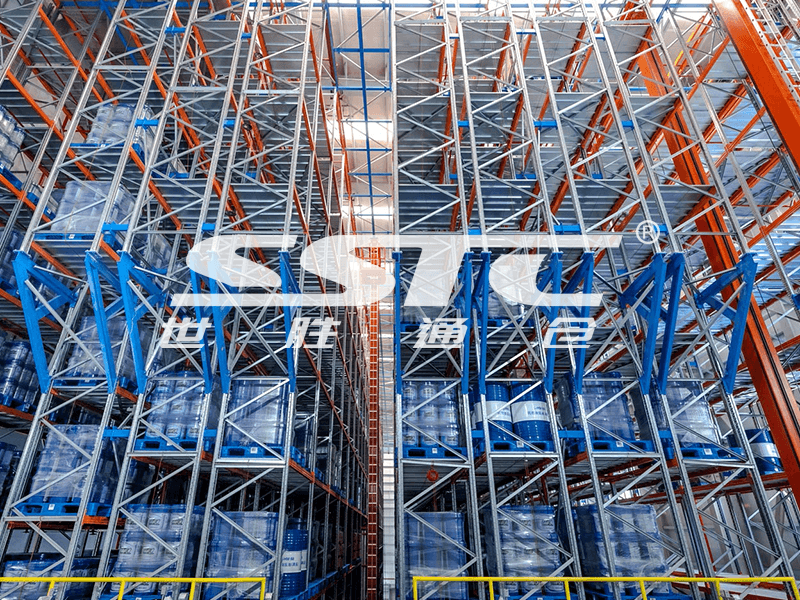
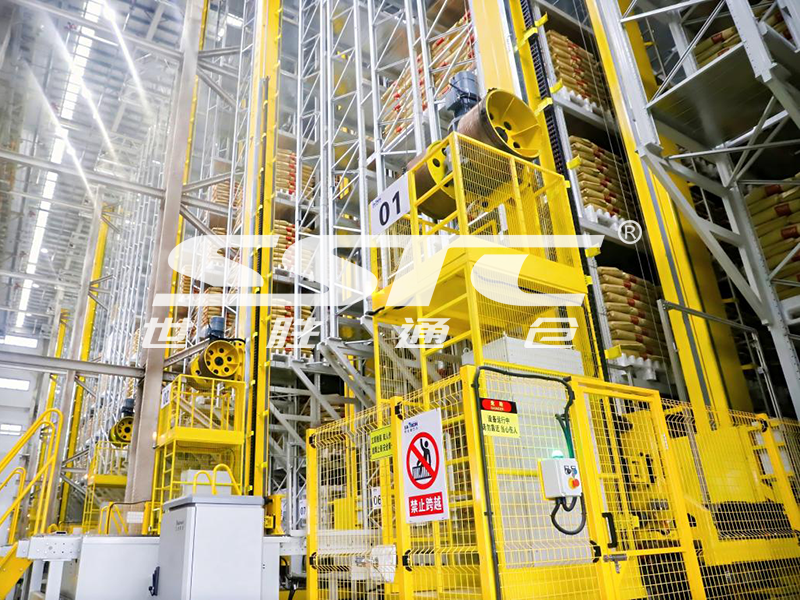
For e-commerce and new retail distribution centers, maximizing storage capacity is critical. SSTC’s high-density AS/RS solutions can combine:
- High-bay pallet storage
- Deep-lane storage
- Automated pallet movement
- Vertical lifting
- Intelligent warehouse control
This allows businesses to store more palletized goods within a limited warehouse footprint. SSTC currently provides:
- AS/RS Warehouse
- Four-Way Pallet Shuttle Storage
- Shuttle Stacker Crane Storage
- Racking Ulang-alik Radio
- Shuttle Carrier Storage
These solutions can be configured according to pallet dimensions, warehouse height, storage capacity, throughput and operational requirements.
Explore SSTC High-Density Storage Solutions
Improve Pallet Handling Efficiency
E-commerce fulfillment centers can experience large fluctuations in inbound and outbound pallet volumes. During promotional campaigns, shopping festivals and seasonal peaks, manual forklift operations may become a bottleneck. AS/RS can automate pallet storage and retrieval, reducing unnecessary forklift travel inside the storage area. This can help create a more consistent material flow between: Receiving → Storage → Replenishment → Picking → Staging → Shipping
SSTC’s Four-Way Shuttle is designed to automatically move pallets along longitudinal and transverse rails and can communicate with WMS/WCS systems for intelligent storage and retrieval operations.
Support Omnichannel and New Retail Operations
New retail is no longer limited to traditional store-based distribution. Modern retailers may simultaneously support:
- E-commerce orders
- Physical stores
- Click-and-collect
- B2B distribution
- B2C fulfillment
- Regional distribution
- Same-day or next-day delivery
This creates a more complex warehouse environment. The warehouse must act as a flexible inventory hub capable of serving multiple channels. AS/RS can provide an automated buffer between inbound goods and downstream order fulfillment, helping warehouses coordinate different inventory and distribution requirements. Industry research from MHI has highlighted how e-commerce and omnichannel retail are driving new AS/RS applications, including higher-density storage, flexible automation and goods-to-person fulfillment.
Read MHI’s AS/RS and E-commerce Industry Insights
Improve Inventory Visibility and Accuracy
Inventory accuracy is critical for e-commerce. A customer may place an order online based on the inventory information displayed by the retailer. If the physical warehouse inventory does not match the digital inventory system, companies may experience:
- Stockouts
- Order delays
- Incorrect shipments
- Customer complaints
- Additional logistics costs
AS/RS combined with WMS/WCS can create a digital connection between inventory information and physical pallet locations. This can support:
- Real-time pallet location tracking
- Automated storage assignment
- Inventory visibility
- Replenishment management
- FIFO/LIFO strategies
- Automated inbound and outbound processes
SSTC describes WMS/WCS integration and real-time inventory traceability as part of its intelligent intralogistics approach.
Reduce Forklift Traffic and Labor Dependency
Labor availability and operating costs remain important considerations for modern warehouses. Traditional warehouses require operators and forklifts to travel repeatedly between pallet locations. AS/RS automates many of these repetitive movements. For e-commerce and new retail warehouses, this can help:
- Reduce unnecessary forklift traffic
- Reduce manual pallet handling
- Improve workplace organization
- Reduce potential product and rack damage
- Standardize warehouse operations
The goal is not simply to replace people with machines. The real objective is to allow people to focus on higher-value warehouse activities while automation handles repetitive pallet transportation and storage tasks.
Respond to Seasonal and Promotional Demand
E-commerce demand can change rapidly. Major promotional events, holidays, product launches and marketing campaigns can generate sudden increases in order volumes. An automated warehouse must therefore be flexible enough to handle changing throughput requirements. SSTC’s Four-Way Pallet Shuttle technology provides multi-directional pallet movement and scalable high-density storage. Multiple shuttle vehicles can be configured according to project requirements, helping create a flexible automated storage environment. This makes high-density shuttle AS/RS particularly interesting for distribution centers that need to balance:
Storage Capacity + Throughput + Flexibility
Optimize the Relationship Between Pallet Storage and Order Fulfillment
E-commerce warehouses are different from traditional warehouses because inventory may be stored as full pallets but ultimately consumed through smaller orders. A pallet may need to be retrieved, replenished, opened and returned to storage several times. Academic research has specifically studied this problem in B2C logistics. A study published in Transportation Research Part E examined retrieval-oriented storage relocation in AS/RS systems motivated by B2C e-commerce platforms such as Tmall and JD.com. The research highlights the importance of dynamically managing pallet storage locations when retrieval quantities are smaller than a full pallet. This reinforces an important principle: Modern e-commerce warehousing requires more than high storage density. It also requires intelligent coordination between storage, replenishment and order fulfillment.
Read the research on ScienceDirect

 AS/RS & Penyelesaian Gudang Automatik | Perisikan SSTC