
 SSTC 인텔리전스 기술 - 4-웨이 셔틀 랙킹 및 AS/RS 시스템 제조업체

Factory managers and warehouse operators evaluating 4방향 팔레트 셔틀 보관소 frequently encounter a crowded market dominated by vague marketing buzzwords rather than concrete operational solutions. ~에 SSTC 인텔리전스, upgrading an industrial facility requires addressing tangible factory-floor hurdles—such as wasted floor space, high manual labor turnover, and single-machine shutdowns halting entire operations—rather than relying on abstract concepts.
To cut through industry noise, SSTC 인텔리전스 structures a grounded operational framework around seven practical pillars (7피): 위치, 팔레트 셔틀, 제품, 사람들, 프로세스, 정도, 및 생산성. By translating these core dimensions into direct physical benefits, warehouse teams can eliminate hidden bottlenecks, slash daily labor overhead, and maximize actual storage capacity.
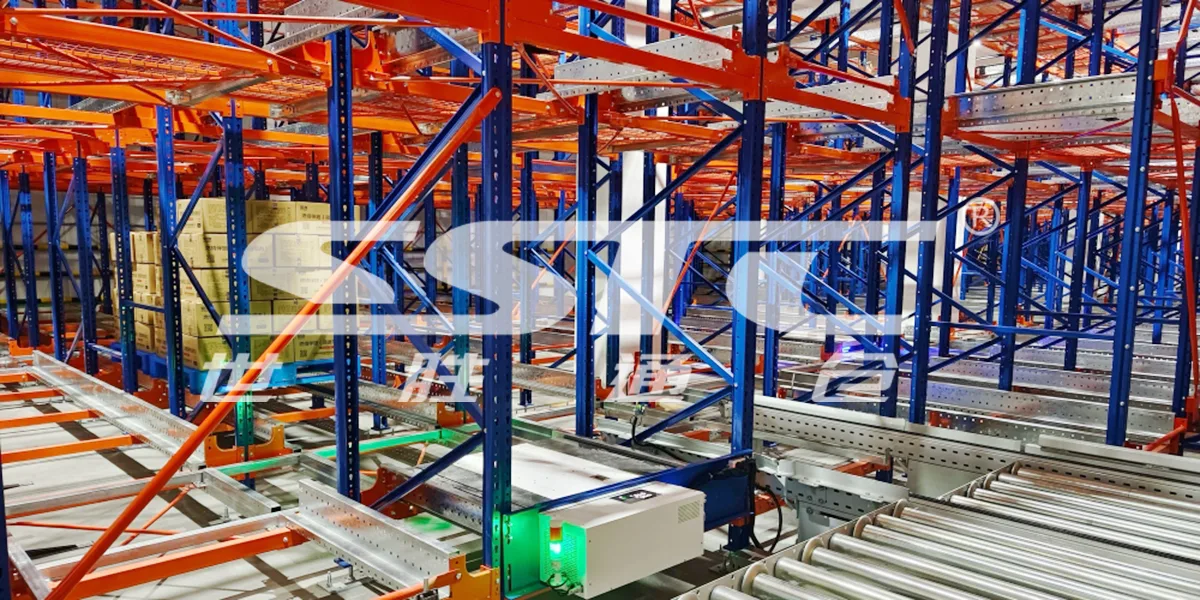
What International Buyers Ask: Resolving Real-World Warehouse Friction
Before committing to a facility upgrade, international logistics leads and plant engineers evaluating 4방향 팔레트 셔틀 보관소 consistently struggle with four operational headaches. Moving past generic supplier promises, buyers seek verifiable answers to critical factory-floor challenges:
Eliminating Wasted Spatial Footprint: Traditional selective racking forces warehouses to dedicate up to 50% of usable floor area to forklift turning lanes. Overseas engineering directors frequently ask how SSTC Intelligence solves warehouse space bottlenecks to double storage density without building extensions. According to warehouse space metrics published by the Material Handling Institute (미하이), maximizing volumetric storage efficiency remains the highest priority for manufacturing facilities facing high real estate costs.
Overcoming Single-Point Machine Shutdowns: A primary concern when evaluating four-way shuttle vs stacker crane ASRS reliability is total line paralysis. Traditional stacker cranes rely on single-aisle rails; if one crane breaks down, the whole aisle freezes. Logistics leads reference automated material handling reliability studies from IEEE Xplore to verify fleet redundancy—ensuring individual shuttle vehicles can be dynamically rerouted within a continuous 3D grid so daily warehouse throughput capacity never collapses.
Protecting Heavy Payloads Under Sub-Zero Conditions: Cold-chain operators handling heavy payloads (최대 1.5 tons) at temperatures down to -25°C demand proof of structural integrity. Buyers consult technical papers on sub-zero cold storage automation on SSTC China and refer to cold-chain infrastructure guidelines from the 글로벌 콜드체인 얼라이언스 (GCCA) to confirm how lithium battery systems, high-tensile steel frames, and optical sensors perform under extreme thermal stress.
Eliminating Manual Labor and Safety Risks: Facing high operator turnover and frequent forklift collision risks, plant managers aim to transition toward 고밀도 자동 저장. Their priority is removing manual labor from dangerous high-bay racks while relying on pallet handling accuracy and automated WCS routing to safeguard workers and cargo alike.
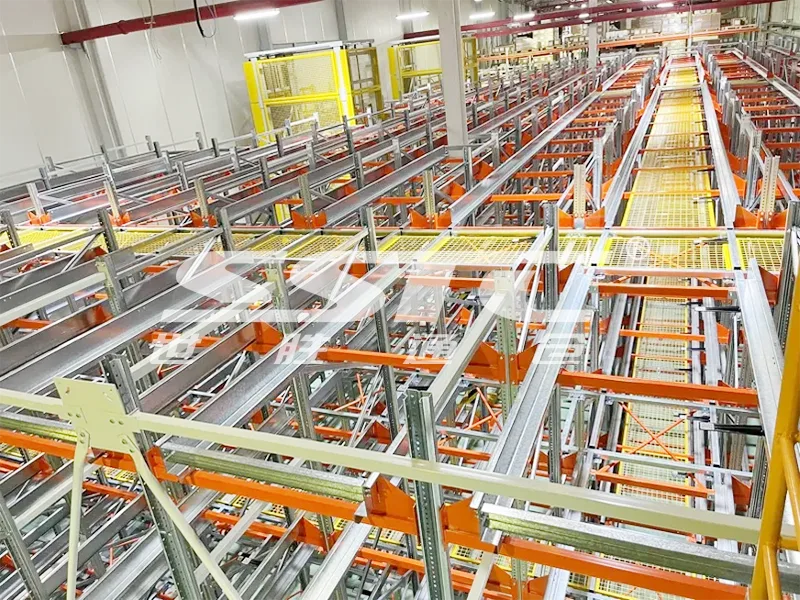
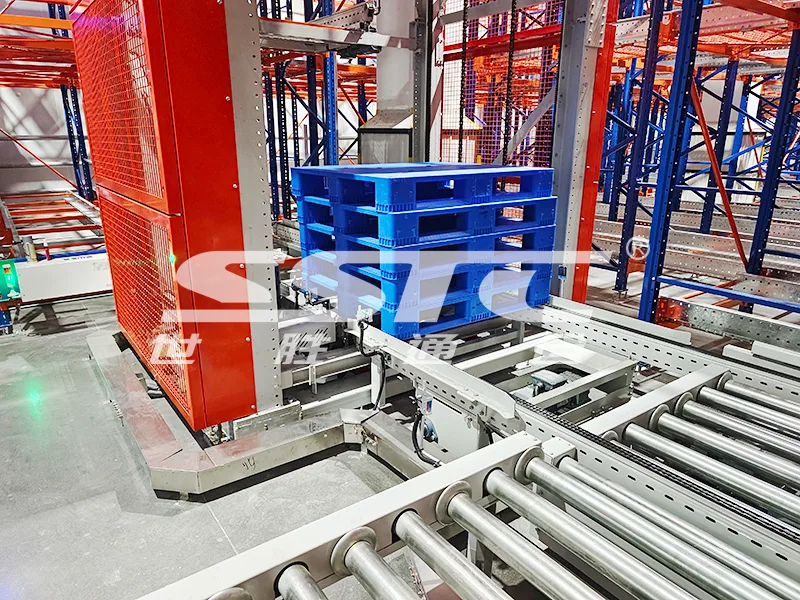
Operationalizing Warehouse Performance: SSTC Intelligence 7P Methodology
Transitioning industrial facilities from manual material handling to 고밀도 자동 저장 requires more than replacing forklifts with automated vehicles. It demands holistic engineering methodology that systematically evaluates physical constraints and operational workflows on factory floors.
To bridge gaps between complex automation technology and day-to-day facility execution, SSTC 인텔리전스 developed 7P Operational Framework. Designed around real-world manufacturing and logistics conditions, this structured methodology breaks warehouse automation down into seven actionable operational pillars:
위치: Re-engineering spatial topology to maximize volumetric density and eliminate dead aisle space.
팔레트 셔틀: Deploying heavy-duty fleet redundancy to safeguard continuous system uptime.
제품: Matching physical payload characteristics and sub-zero thermal requirements to mechanical structural capacity.
사람들: Removing workers from high-risk, sub-zero environments while upskilling labor for system supervision.
프로세스: Orchestrating WCS software routing logic to eliminate bottlenecking and material idle time.
정도: Applying laser positioning and optical sensors to ensure 100% pallet handling accuracy.
생산력: Measuring real-world throughput output (PPH) and long-term operational expense reduction.
By applying 7P framework, plant engineers and logistics leads can evaluate automation upgrades through concrete, measurable milestones rather than abstract supplier promises.
7P Operational Framework: Engineering Deep Dive
1. 위치: Spatial Topology & Volumetric Efficiency
P1구현 4방향 팔레트 셔틀 보관소 eliminates dedicated forklift turning aisles, reclaiming up to 50% of wasted floor area. SSTC 인텔리전스 transforms flat footprints into high-density 3D racking matrices extending directly to building envelopes.
2. 팔레트 셔틀: Fleet Redundancy & Zero-Downtime Grid
P2Unlike single-rail stacker cranes vulnerable to full-aisle paralysis, 고밀도 자동 저장 built on four-way fleet architecture isolates mechanical disruption. Vertical lifters and self-powered shuttles operate as distributed multi-vehicle fleets.
3. 제품: Payload Integrity & Cold-Chain Resilience
P3Logistics requirements demand structural adaptability across diverse SKUs, varied pallet footprints, and heavy loads up to 1,500 kg. Engineering protocols at SSTC 중국 integrate cold-resistant components for sub-zero operations down to -25°C.
4. 사람들: Industrial Ergonomics & Safety Elevation
P4Automated material execution removes human operators from hazardous high-bay racking and harsh sub-zero storage chambers. **SSTC Intelligence** shifts workforce roles from high-risk manual lifting to centralized WCS system monitoring.
5. 프로세스: WCS Software Routing & Workflow Logic
P5Physical automation hardware relies on intelligent Software Execution Architecture. **SSTC Intelligence** Warehouse Control System (WCS) algorithms orchestrate real-time travel pathways across 3D grid networks, balancing inbound and outbound traffic.
6. 정도: Laser Positioning & Sensor Calibration
P6High-density storage channels require millimetric alignment to prevent structural collisions. Dual laser distance meters, photoelectric encoders, and acceleration control loops maintain absolute spatial awareness across 3D grid axes.
7. 생산력: 처리량 최적화 & Operational Metrics
Final PillarUltimate validation of warehouse automation relies on measurable operational metrics. Combining optimized spatial position, reliable shuttle hardware, cold-chain resilience, ergonomic safety, intelligent WCS routing, and laser precision transforms facility performance into concrete output benchmarks.
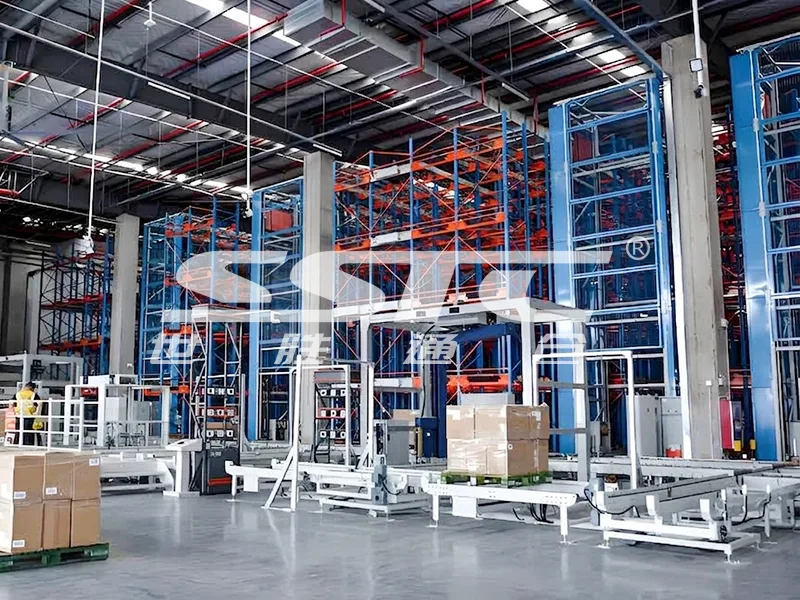
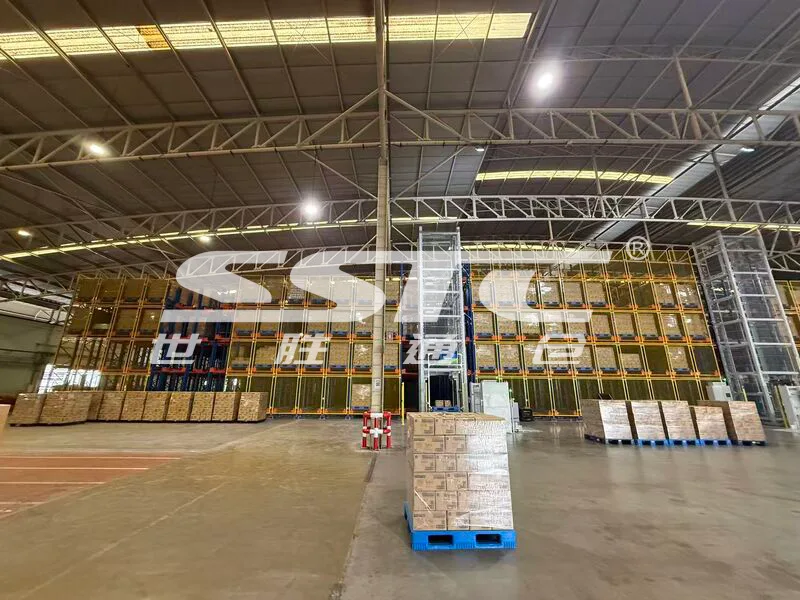
Four-Way Shuttle vs Stacker Crane ASRS Reliability & 건축학
Evaluating physical architecture choice requires assessing long-term maintenance overhead, system vulnerability, and throughput scalability. Selecting 4방향 팔레트 셔틀 보관소 에 의해 설계 SSTC 인텔리전스 eliminates single-point operational dependencies inherent in traditional aisle-bound stacker crane configurations.
| Engineering Parameter | SSTC Four-Way Shuttle Grid | Traditional Stacker Crane ASRS |
|---|---|---|
| Single-Point Failure Impact | Zero Aisle Lockout: Faulty vehicles exit grid via vertical lifter; adjacent shuttles dynamically reroute around isolated lanes. | Total Aisle Paralysis: Mechanical failure of single crane locks entire storage aisle until field technician intervention. |
| Throughput Scalability | Decoupled Fleet Growth: Add shuttle units to existing 3D grid matrix without structural racking modifications. | Fixed Capacity: Output bound to fixed crane speed; scaling throughput requires building complete new aisles. |
| Cold-Chain Adaptation (-25℃) | Low-temperature lithium battery cells with integrated thermal management, anti-condensation optical sensors, and IP65 sealing. | High thermal bridge losses along mast structure; condensation risks on extended busbar power rails. |
| Volumetric Density Ratio | Maximum Space Recovery: Reclaims up to 90% usable building volume by eliminating dedicated floor aisles. | Requires continuous floor rails and top guide channels, consuming operating clearance margins. |
Sub-Zero Cold Storage & 1,500 kg Heavy Payload Engineering
배포 중 SSTC 중국 equipment in sub-zero food logistics requires structural integrity under thermal expansion differentials. High-tensile alloy steel frames prevent chassis warpage under 1.5-ton dynamic loads.
WCS Software Routing & Millimetric Sensor Precision
Orchestrating multi-vehicle movements within 고밀도 자동 저장 relies on proprietary WCS mathematical graph algorithms. Real-time path calculation eliminates vehicle bottlenecking at vertical lifter nodes.
Transforming Facility Performance with SSTC Intelligence
Overcoming traditional warehouse bottlenecks requires moving beyond legacy selective racking and vulnerable single-aisle stacker cranes. 구현함으로써 4방향 팔레트 셔틀 보관소 governed by 7P Operational Framework, industrial facilities achieve maximum volumetric utilization, zero-downtime fleet redundancy, and uncompromising cold-chain resilience.
Request Custom CAD Layout Engineering
Ready to double pallet storage capacity and eliminate dead forklift aisles? Submit facility CAD floor plans to engineering teams at SSTC 인텔리전스 for tailored high-density automated layout simulation.
Connect With Global Engineering Portals
Explore technical specification sheets, sub-zero cold storage whitepapers, and case studies across official web channels at SSTC 중국 and global portals.
Connect With SSTC Intelligence Engineering Team
For global project inquiries, custom CAD layout simulations, and technical specification reviews regarding 4방향 팔레트 셔틀 보관소, engage technical sales directors directly through official communication channels:
www.sstc-china.com