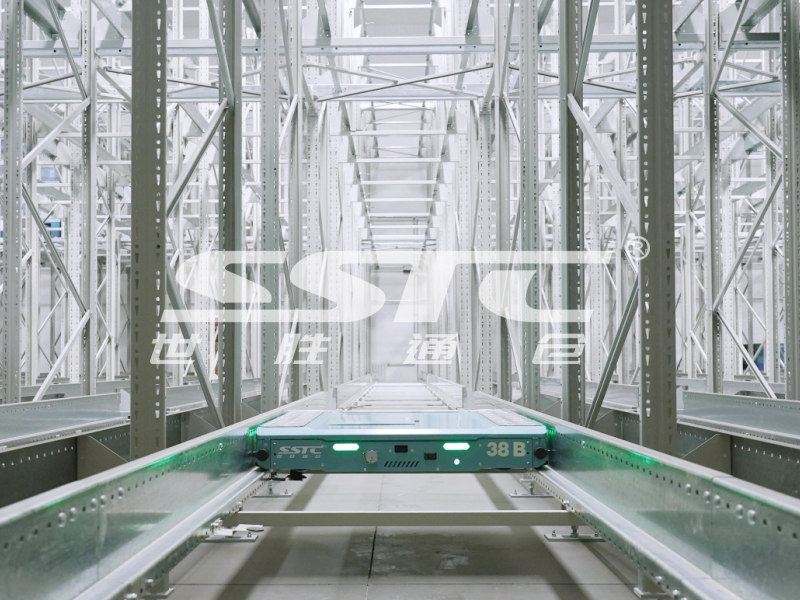

In 2021, industrial logistics engineering achieved a major milestone in high-density sub-zero automation when SSTC Intelligence successfully designed, engineered, and deployed a massive cold chain warehousing project for Qingdao Techain. Featuring approximately 100,000 pallet positions operating within a grueling -25℃ deep-freeze environment, this landmark installation relied on an advanced កន្លែងស្តុកទុកប៉ាឡេតបួនផ្លូវ system to conquer the extreme spatial, thermodynamic, and operational bottlenecks that traditional refrigerated facilities had struggled with for decades. As global food safety standards tighten and cold chain throughput demands accelerate, the Techain project stands as a definitive blueprint for how intelligent automation transforms large-scale distribution networks. This technical case study examines the engineering anatomy, sub-zero metallurgical adaptations, software orchestration frameworks, and quantifiable economic returns of deploying a high-capacity, multi-directional shuttle network in extreme thermal conditions.
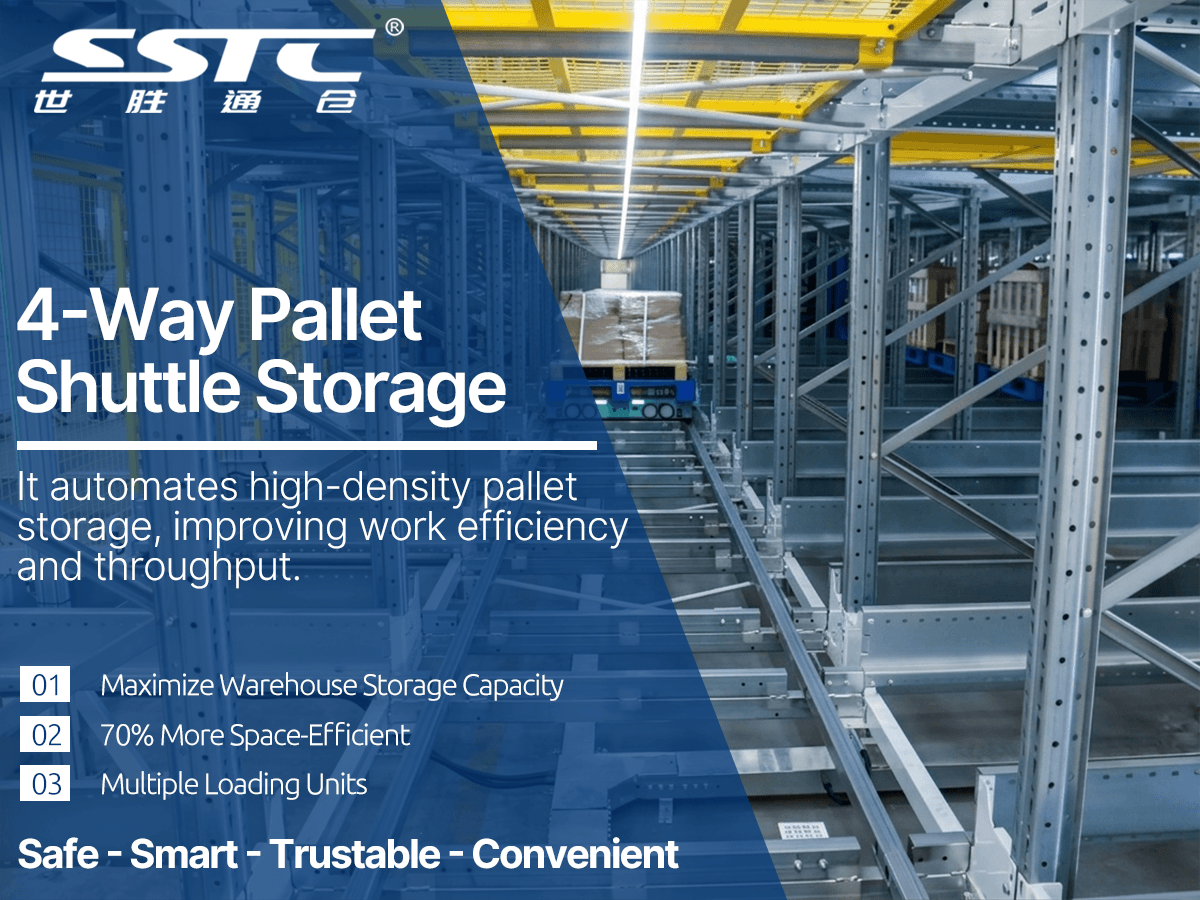
1. Project Background and the Core Operational Challenges at Qingdao Techain
Prior to the 2021 upgrade, Qingdao Techain operated conventional refrigerated warehousing facilities that relied on selective pallet racking and manual forklift fleets. While these legacy structures had supported early operational growth, they quickly became unsustainable as inventory volumes expanded and operational expenditures (OPEX) soared.
The Spatial and Thermodynamic Realities of Massive Freezer Operations
Operating a cold storage facility with tens of thousands of pallet positions at -25℃ incurs staggering energy costs. Every kilowatt-hour consumed by refrigeration compressors represents a direct, recurring operational overhead. In Techain’s legacy layout, wide clearance corridors required for counterbalance and reach trucks consumed up to 60% of the internal building volume. Consequently, industrial cooling systems were expending vast amounts of energy refrigerating empty air rather than revenue-generating inventory.
លើសពីនេះទៀត។, every instance of manual forklift entry compromised thermal containment. Large freezer doors cycling open allowed massive volumes of chilled air to escape, while warm, ambient air rushed in. This thermal shock introduced high humidity, causing rapid frost accumulation on evaporator coils and necessitating frequent, energy-wasting defrost cycles that destabilized internal storage temperatures and threatened perishable stock integrity. For comprehensive insights into structural spatial optimization and modern intralogistics infrastructure, visit SSTC Storage.
The Human Resource Crisis in Deep-Freeze Environments
Working in a -25℃ deep-freeze environment imposes severe physiological tolls on human personnel. Workers must wear heavy thermal protective suits that restrict dexterity and vision, can only labor for brief shifts before mandatory rotation and warm-up breaks, and face elevated risks of slips, falls, and material handling collisions. Employee turnover rates in sub-zero facilities are among the highest in the industrial sector. Qingdao Techain required an engineering solution that would entirely remove human operators from the hazardous refrigerated storage core while drastically boosting inventory throughput velocity.
2. Engineering Architecture of the Four-Way Pallet Shuttle Storage System
To overcome these formidable hurdles, SSTC Intelligence deployed a comprehensive កន្លែងស្តុកទុកប៉ាឡេតបួនផ្លូវ solution designed specifically to scale to massive volumetric capacities while maintaining extreme mechanical reliability in sub-zero temperatures.
Omnidirectional Robotic Mobility and Tier-Transfer Mechanics
Unlike traditional stacker crane systems that are strictly bound to a single vertical aisle, or traditional two-way shuttles that require dedicated vertical hoists for every single level, the four-way shuttle architecture provides superior kinematic flexibility.
Dual-Wheel Kinematic System: The robotic shuttles feature integrated cross-aisle and longitudinal drive wheels. They can travel forward, backward, left, and right, shifting seamlessly between orthogonal axes without manual intervention.
Tier-Transfer Elevators: High-speed vertical lifts stationed at the ends of the racking blocks hoist the shuttles and pallet loads between different storage tiers in a matter of seconds, maximizing fleet utilization and eliminating equipment bottlenecks across multi-level structures.
Heavy-Duty High-Bay Structural Racking
The physical foundation of the 100,000-pallet facility is its heavy-duty high-bay structural steel framework. Engineered to withstand continuous dynamic loading from moving robotic fleets and heavy pallet loads, the racking tolerances are exceptionally rigorous. Vertical plumbness and horizontal levelness deviations are measured in fractions of a millimeter to ensure smooth, vibration-free operation across dozens of storage tiers.
3. Sub-Zero Engineering: Overcoming -25℃ Environmental Stressors
Deploying standard industrial automation equipment into a -25℃ deep-freeze freezer without rigorous environmental hardening leads to catastrophic mechanical failure. Sub-zero temperatures induce severe material contraction, thicken standard lubricants into viscous solids, drain standard battery capacities, and cause electrical condensation frosting. SSTC Intelligence engineered every component of the Techain installation to conquer these environmental stressors.
Low-Temperature Metallurgy and Alloy Selection
Standard structural steels and mechanical components experience a sharp transition from ductile behavior to brittle fracture when subjected to sustained sub-zero temperatures. If untreated structural elements undergo dynamic loading from moving machinery in a -25℃ freezer, catastrophic micro-cracking can occur.
Specialized Alloy Frameworks: The structural racking framework, ផ្លូវដែកណែនាំ, and chassis of the SSTC system utilize specialized low-temperature alloy steels and high-grade stainless components engineered specifically to maintain high impact toughness and tensile strength under extreme thermal contraction.
Precision Thermal Tolerances: Dimensional tolerances are mathematically calibrated to account for thermal metal shrinkage, ensuring that rail alignments, transfer interfaces, and robotic guidance tracks remain perfectly parallel and free of mechanical binding over years of continuous operation.
Winterized Electronics and Condensation Mitigation
Electrical enclosures and onboard control units within the shuttle robots are sealed to IP65 or higher ingress protection standards. To prevent thermal shock condensation when shuttle units cycle between sub-zero storage zones and warmer staging areas, sensitive circuitry, LiDAR units, and optical sensors are equipped with intelligent micro-heaters and anti-fogging optical coatings. These preventative measures ensure that the shuttle’s spatial awareness, navigation tracking, and communication protocols remain 100% reliable in high-humidity freezer environments.
Cold-Resistant Power Management and Energy Storage
Standard lithium-ion battery chemistry suffers severe performance degradation in sub-zero environments. Low temperatures increase internal electrical resistance, drastically reducing available amp-hour capacity and halting standard charging protocols (as low-temperature charging causes dangerous lithium plating that permanently ruins cells).
Advanced BMS Integration: The SSTC system integrates specialized cold-resistant lithium iron phosphate (LiFePO4) battery packs embedded with proprietary intelligent thermal management systems (BMS).
Internal Heating Blankets: Integrated low-voltage heating elements maintain optimal internal cell electrolyte temperatures, guaranteeing sustained peak power output for high-acceleration shuttle maneuvers and enabling safe, rapid regenerative braking energy capture even in the coldest freezer tiers.
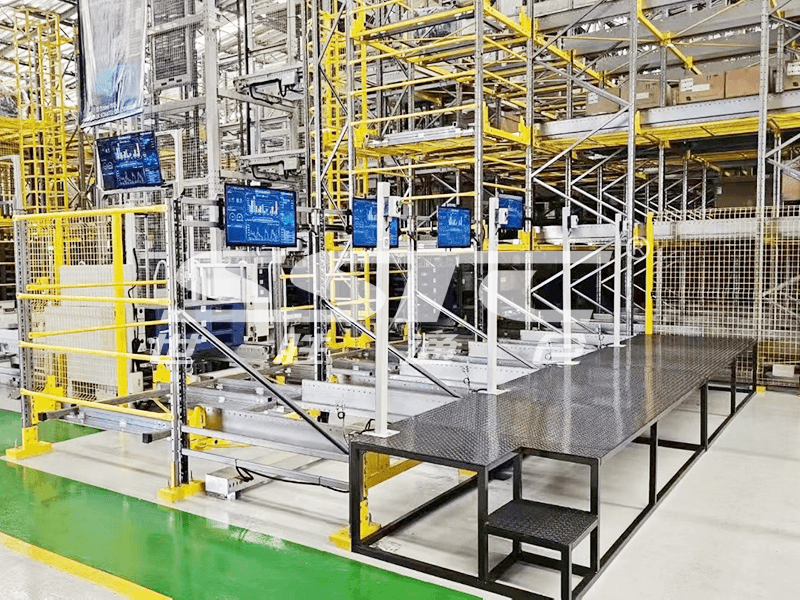
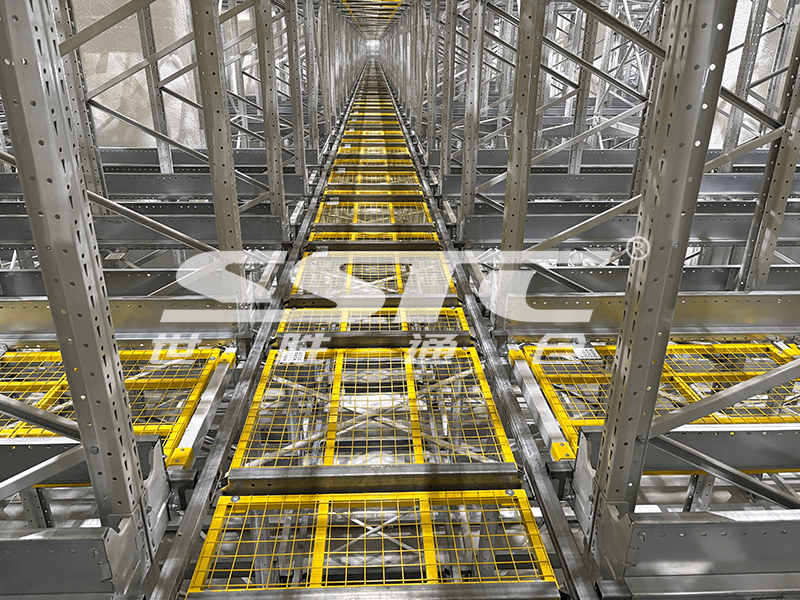
4. Project Execution and Operational Scale at Qingdao Techain
The deployment of the 100,000-pallet position facility for Qingdao Techain in 2021 represented a monumental feat of systems engineering and project management.
Architectural Blueprint and Spatial Optimization
By replacing wide forklift clearance aisles with dense blocks of modular racking, the Four-Way Pallet Shuttle Storage system achieved up to 90% cubic space utilization. This volumetric optimization effectively doubled the storage capacity of Techain’s facility within the existing physical building envelope, avoiding multimillion-dollar greenfield construction costs. According to industry analyses published by organizations tracking global supply chain innovations, such as the ឧស្សាហកម្មគ្រប់គ្រងសម្ភារៈ (MHI), transitioning to high-density automated storage in cold chains yields immediate, measurable reductions in kilowatt-hour consumption per pallet stored.
Workflow Orchestration for 100,000 Pallets
Managing 100,000 pallet positions requires rigorous operational discipline. The workflow follows a deterministic sequence:
Inbound Intake: Pallets arrive at refrigerated receiving docks, undergoing automated dimensional and weight inspection before registration in the Warehouse Management System (WMS).
បញ្ឈរ & Horizontal Transit: High-speed elevators hoist pallets to designated tiers, where autonomous four-way shuttles receive and transport them deep into designated storage channels.
Outbound Retrieval: Order triggers prompt the WCS to dispatch shuttles for rapid pallet extraction, routing them via enclosed conveyor spurs to outbound staging docks with minimal thermal loss.
5. Project Video Presentation and Operational Visualization
To provide prospective clients and logistics engineers with a transparent, firsthand look at the scale and precision of this landmark installation, SSTC Intelligence has documented the operational workflows of the Qingdao Techain facility.
This visual record highlights the seamless coordination between high-speed vertical lifts, autonomous multi-directional robotic shuttles, and centralized software orchestration operating flawlessly within a massive -25℃ freezer environment.
6. Software Orchestration: The Intelligent Core of Sub-Zero Automation
Hardware resilience in sub-zero environments must be matched by sophisticated software intelligence. The SSTC system operates via an advanced Warehouse Management System (WMS) and Warehouse Control System (WCS) architecture tailored specifically for cold chains.
Intelligent Slotting and Temperature Zone Profiling
The WMS acts as the strategic planner, analyzing historical SKU velocity, expiration dates, and thermal sensitivity. High-turnover perishable items are automatically assigned to storage locations closest to vertical hoists and staging exits, minimizing average transit times. Conversely, long-term frozen stock or seasonal inventory is stowed deep within upper tiers.
Real-Time Fleet Coordination and Predictive Maintenance
Operating multiple autonomous shuttles within a sub-zero structural grid requires absolute positional accuracy and collision avoidance. The WCS functions as the central nervous system for the automated installation:
Utilizing advanced pathfinding algorithms, the WCS coordinates shuttle movements, manages queue priorities, and enforces safety braking buffers in real-time.
It monitors motor temperatures, battery charge states, and mechanical wear indicators specifically affected by cold temperatures, executing predictive maintenance alerts before minor component friction can escalate into operational downtime.
For academic and empirical analyses regarding automated storage optimization, inventory allocation models, and retrieval latency reduction in complex industrial facilities, research publications hosted on platforms like ScienceDirect provide extensive technical documentation on advanced cold storage control models.
7. Quantifying Economic Returns and Long-Term Impact for Qingdao Techain
នេះ។ 2021 implementation delivered immediate, quantifiable financial and operational returns across three core economic vectors:
Massive HVAC Energy Reduction: Slashing refrigerated volume requirements and eliminating warm air infiltration cut Techain’s HVAC utility expenditures by over 40%.
Maximized Real Estate Yield: Accommodating 100,000 pallet positions within a tightly optimized footprint eliminated the need for expansive new facility construction.
Zero Labor Exposure to Extreme Cold: Removing human workers from the deep-freeze storage core completely eliminated cold-stress injuries, slashed labor turnover, and ensured 24/7 reliable operations.
Conclusion
The successful delivery of the 100,000-pallet position, -25℃ cold storage facility for Qingdao Techain in 2021 stands as a testament to SSTC Intelligence’s engineering leadership. By deploying an advanced កន្លែងស្តុកទុកប៉ាឡេតបួនផ្លូវ system, Techain overcame thermodynamic hurdles, slashed utility expenses, eliminated labor exposure to extreme cold, and achieved unprecedented storage density.
Partnering with SSTC grants enterprises access to specialized cold chain intralogistics solutions backed by engineering expertise and dedicated technical support. Transform your cold storage operational challenges into a sustainable competitive advantage with SSTC.
Frequently Asked Questions (FAQ)
Q1: What is the scale and temperature specification of the Qingdao Techain project completed by SSTC Intelligence in 2021?
A1: The project features approximately 100,000 pallet positions operating within a grueling -25℃ deep-freeze environment, utilizing an advanced Four-Way Pallet Shuttle Storage system for maximum thermal and spatial efficiency.
Q2: How do the robotic shuttles maintain reliable battery performance in sub-zero freezer environments (-25℃)?
A2: The shuttles utilize specialized cold-resistant lithium iron phosphate (LiFePO4) battery packs integrated with intelligent thermal management systems and internal heating elements that maintain optimal cell temperatures and enable safe regenerative charging.
Q3: How does the Four-Way Pallet Shuttle Storage system reduce overall refrigeration energy costs in large cold stores?
A3: By eliminating wide forklift clearance aisles, the system maximizes cubic storage density up to 90%, significantly shrinking the total refrigerated volume required per stored pallet and drastically cutting HVAC utility expenditures.
Contact Information
- គេហទំព័រ: www.sstc-storage.com / www.sstc-china.com
- អ៊ីមែល: [email protected] | [email protected]
- កម្មវិធី WhatsApp: +86-13671613032
For cold-chain warehouse projects, pallet storage requirements and Four-Way Pallet Shuttle Storage Solution planning, please contact SSTC Intelligence Technology.