



In the dynamic world of business, optimizing warehousing processes is crucial for a robust and effective supply chain. As companies expand and their logistics operations become more complex, the need for advanced storage solutions has never been greater. Radio Shuttle Racking Systems represent a cutting-edge approach to warehouse storage, offering a unique blend of automation, flexibility, and scalability that traditional storage systems simply can’t match. This article explores the history, uses, អត្ថប្រយោជន៍, and future of Radio Shuttle Racking Systems, detailing how they address the diverse needs of various industries and why they are a game-changer in modern warehousing.
The Evolution of កាំជណ្ដើរវិទ្យុ Systems: A Brief History
The evolution of warehousing technology dates back to the mid-20th century when businesses started moving away from manual handling of inventory toward more automated solutions. Initial innovations were aimed at increasing safety and reducing labor costs, which led to the development of conventional pallet racking systems and forklifts. However, these solutions had limitations in terms of storage density and operational efficiency.
By the 1990s, the increasing demand for more efficient storage solutions led to the development of Automated Storage and Retrieval Systems (AS/RS). While these systems brought a high level of automation, they were often complex, costly, and difficult to adapt to different warehouse needs. In response to these challenges, the Radio Shuttle Racking System was introduced in the early 2000s as a semi-automated solution that offered high storage density, operational efficiency, and flexibility, all at a lower cost than fully automated systems.
The Radio Shuttle Racking System combines the best features of manual and automated systems. It uses a battery-powered shuttle to move pallets within racking lanes, allowing forklifts to focus on loading and unloading at the entry point, thereby reducing the need for aisles and maximizing the use of warehouse space.
How Radio Shuttle Racking Systems Work
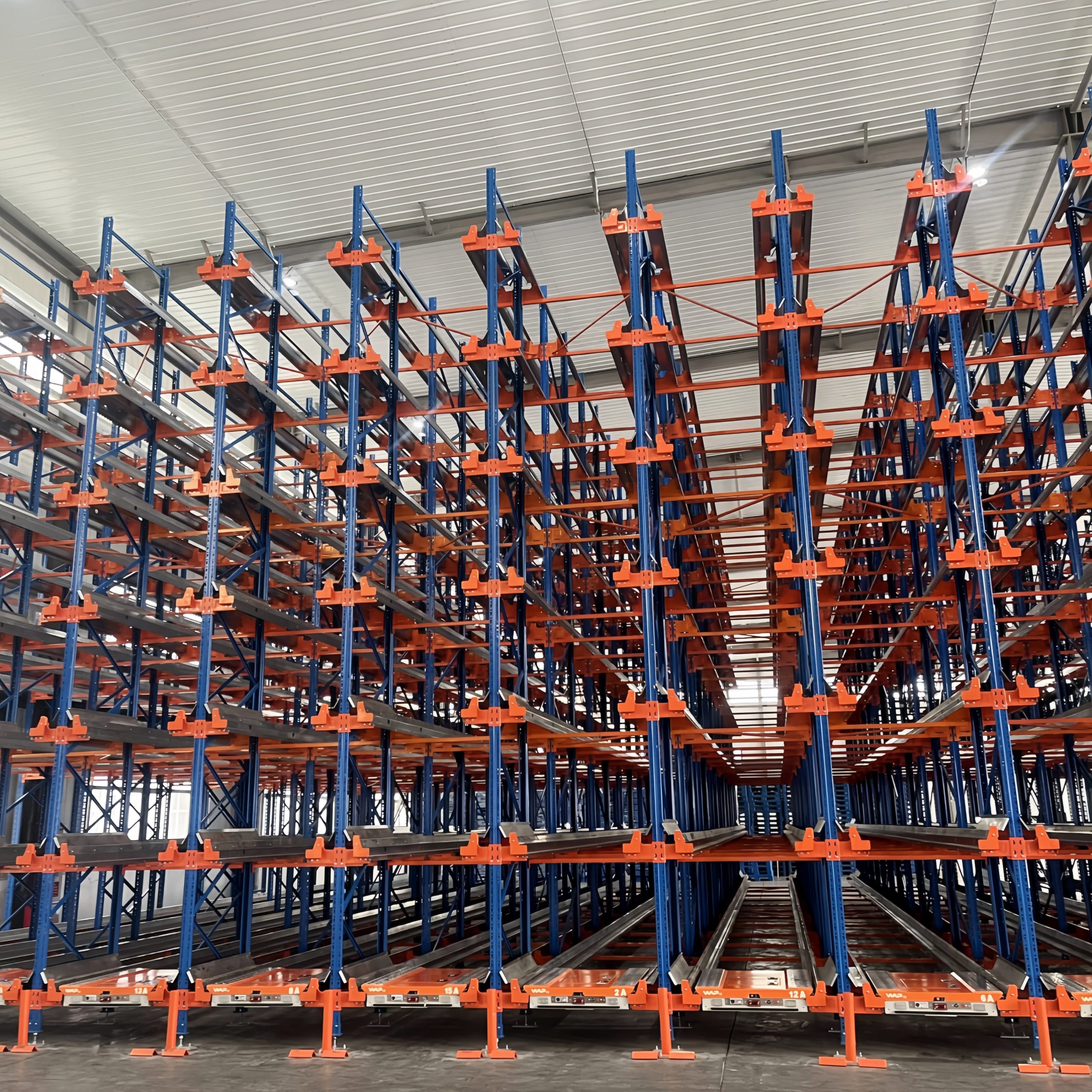
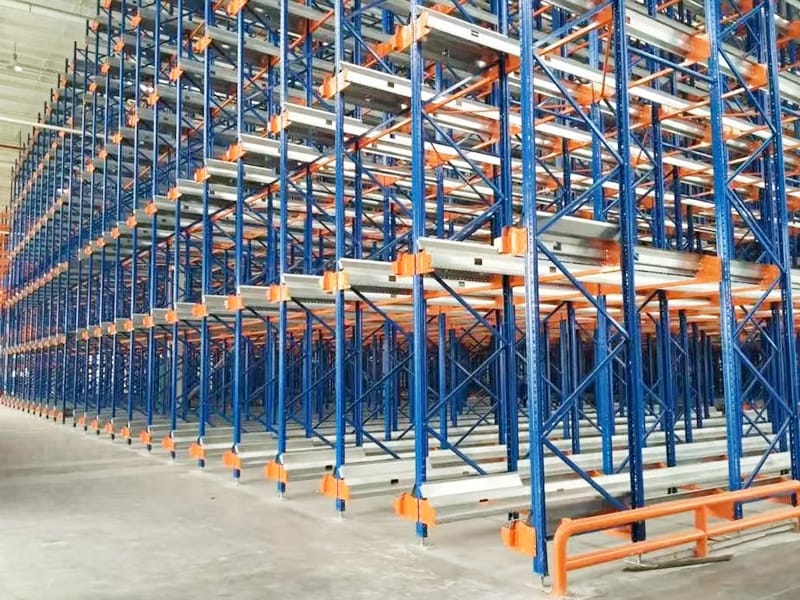
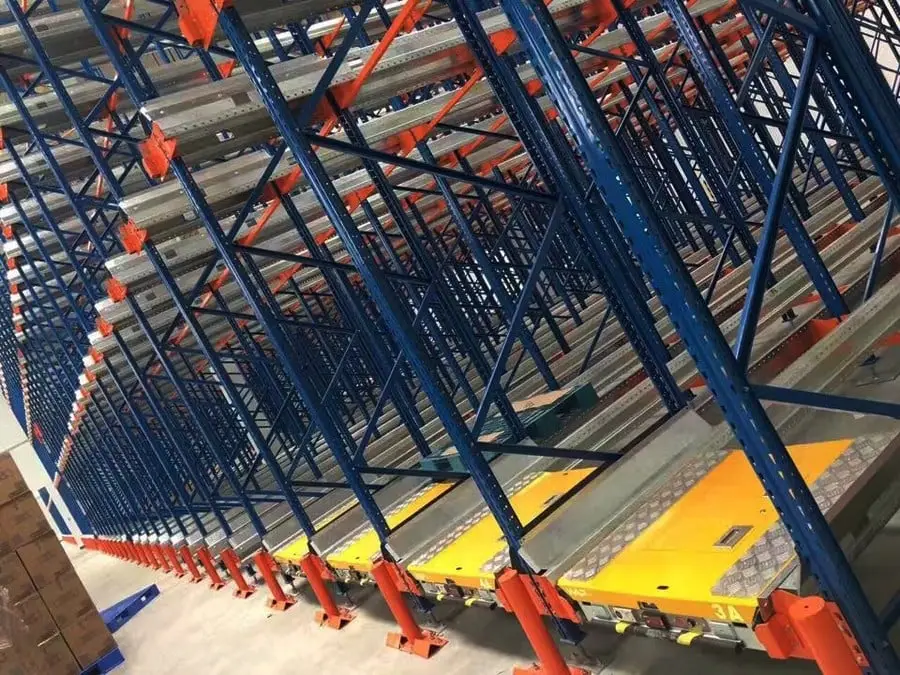
A Radio Shuttle Racking System consists of a series of racks equipped with rails that accommodate a remote-controlled shuttle. Here’s a detailed breakdown of how it operates:
1. Loading: A forklift places a pallet onto the shuttle at the front of the racking lane.
2. Transport: The shuttle moves along the rails to transport the pallet to the desired location within the racking system.
3. Storage: The shuttle deposits the pallet in the correct position and returns to the front of the lane, ready for the next pallet.
4. Retrieval: When a pallet is required, the shuttle retrieves it and brings it to the front of the rack, where a forklift can collect it.
This system can operate in both First-In-First-Out (FIFO) and Last-In-First-Out (LIFO) modes, depending on the inventory management strategy of the business. It is particularly well-suited for high-density storage of homogeneous products and can accommodate different pallet sizes and weights, making it a versatile solution for many types of warehouses.

Applications Across Diverse Industries
The versatility of Radio Shuttle Racking Systems has made them valuable across a wide range of industries. Here’s how different sectors are leveraging this technology to optimize their warehousing operations:
1. Food and Beverage Industry
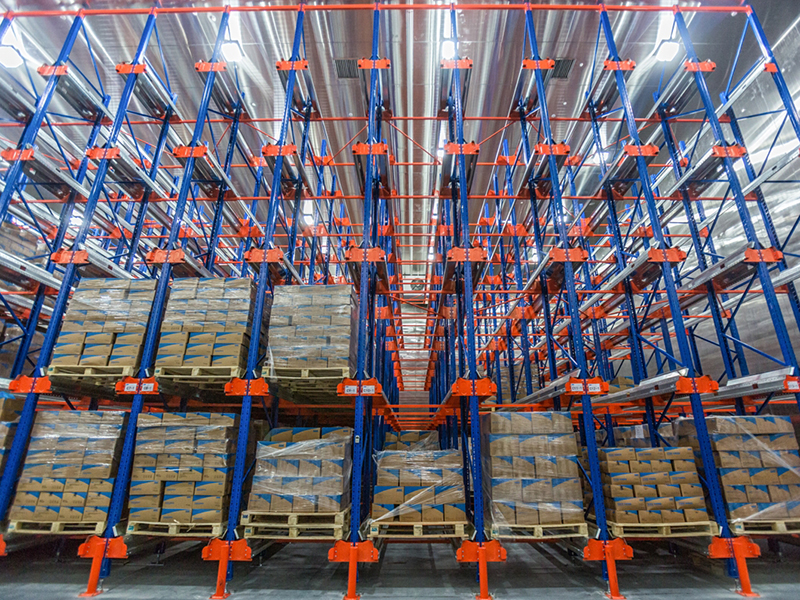
In the food and beverage industry, Radio Shuttle Racking Systems are used extensively in both ambient and temperature-controlled environments. For example, in cold storage facilities where every square meter is costly, the system’s ability to maximize storage density is invaluable. The fast and precise movement of pallets minimizes the time that cold air escapes from storage rooms, resulting in significant energy savings. Companies storing products like dairy, ទំនិញក្លាសេ, and beverages have reported space savings of up to 80% and energy cost reductions of around 25%.
2. Automotive and Manufacturing Industry
For the automotive sector, which deals with a diverse range of parts from small components to large assemblies, Radio Shuttle Racking Systems provide the flexibility to store different types and sizes of inventory in a single location. This reduces the need for multiple storage systems and streamlines inventory management. In one case, an automotive parts manufacturer in China increased its storage density by 70% while reducing retrieval times by 50%, leading to faster production cycles and less downtime on the assembly line.
3. Pharmaceutical and Healthcare Industry
The pharmaceutical industry requires precise inventory management to comply with strict regulatory standards. Radio Shuttle Racking Systems help ensure that products are stored and retrieved in compliance with these standards, reducing the risk of errors. In a pharmaceutical distribution center in Singapore, the system has enabled better space utilization by 60% and improved inventory accuracy by nearly 99%, ensuring that medications and medical supplies are always available when needed.
4. E-Commerce and Retail Industry
In the fast-paced world of e-commerce and retail, speed and accuracy are essential. Radio Shuttle Racking Systems facilitate rapid order fulfillment by allowing quick and easy access to a wide range of products. An e-commerce giant in the United States has integrated these systems into their distribution centers, achieving a 30% increase in picking speed and reducing labor costs by 40%. The system’s adaptability to handle fluctuating inventory levels during peak seasons also contributes to higher customer satisfaction.
5. Chemical and Hazardous Materials Industry
Storing chemicals and hazardous materials requires a high degree of safety and compliance. Radio Shuttle Racking Systems provide a secure way to store such products, reducing the risk of accidents by minimizing human interaction. In a chemical storage facility in Brazil, these systems have helped optimize space while ensuring safe storage and handling of flammable and toxic materials. The facility reported a 50% reduction in storage footprint and improved compliance with safety regulations.
6. Electronics and High-Tech Industry
The electronics industry, known for its delicate and high-value products, benefits from the precise control and gentle handling provided by Radio Shuttle Racking Systems. A leading electronics manufacturer in Vietnam implemented this system to manage the storage of sensitive components, resulting in a 40% reduction in product damage and a 25% increase in inventory turnover rates.
7. Textile and Apparel Industry
For textile and apparel warehouses that manage large volumes of seasonal inventory, Radio Shuttle Racking Systems offer a flexible and scalable solution. A major apparel retailer in Cambodia adopted this system to handle the rapid turnover of seasonal collections, increasing their storage capacity by 50% and reducing labor costs associated with inventory management by 30%.
8. Agriculture and Agri-Food Industry
The agriculture sector often deals with bulky, seasonal goods that require efficient storage. A grain storage facility in Indonesia utilized Radio Shuttle Racking Systems to enhance its storage efficiency, achieving a 60% increase in storage density while maintaining the quality and freshness of its products.
Key Benefits of Radio Shuttle Racking Systems
1. Maximizing Storage Capacity
Radio Shuttle Racking Systems eliminate the need for multiple aisles, allowing for maximum use of available warehouse space. This is particularly beneficial in high-cost urban warehouses and temperature-controlled environments. Companies have reported storage capacity increases of up to 85% compared to conventional pallet racking systems.
2. Enhancing Operational Efficiency
These systems significantly reduce the time required for loading and unloading pallets. Automated shuttles can move goods quickly to and from their designated locations, allowing forklifts to focus on entry and exit points rather than navigating aisles. This leads to faster turnaround times and increased throughput. In one warehouse in Vietnam, the adoption of a Radio Shuttle Racking System resulted in a 45% improvement in order fulfillment speed.
3. Improving Inventory Management and Accuracy
By integrating Radio Shuttle Racking Systems with advanced Warehouse Management Systems (WMS), businesses can gain real-time visibility of inventory levels, reducing the risk of errors and ensuring accurate stock management. In an American distribution center, the system improved inventory accuracy to nearly 99%, minimizing the risk of stockouts and overstock situations.
4. Lowering Labor Costs
With less manual handling required, Radio Shuttle Racking Systems reduce the need for labor, lowering costs and minimizing the risk of human error. A large retailer in Singapore reduced its workforce requirements by 30% while maintaining high productivity levels, resulting in substantial cost savings.
5. Flexibility and Scalability
These systems offer unmatched flexibility, allowing for easy adjustments to storage configurations to accommodate different products or changes in inventory levels. Businesses can expand the system by adding more shuttles or racks, providing scalability as their operations grow. A company in Cambodia, dealing with seasonal agricultural products, expanded its system to accommodate a 200% increase in inventory during peak harvest periods.
6. Reducing Energy and Environmental Costs
Optimizing space use reduces the need for extensive lighting, heating, or cooling in unutilized warehouse areas, leading to significant energy savings. For example, a cold storage facility in the United States cut its energy consumption by 20% after installing a Radio Shuttle Racking System, contributing to its sustainability goals.
7. Boosting Warehouse Safety
By minimizing forklift movements and reducing manual handling, Radio Shuttle Racking Systems enhance overall warehouse safety. They lower the risk of accidents, injuries, and damage to products and infrastructure. In a Brazilian automotive parts warehouse, accident rates fell by 30% after switching to a Radio Shuttle Racking System.
The Future of Radio Shuttle Racking Systems
As the demand for smarter, more efficient warehousing solutions grows, the future of Radio Shuttle Racking Systems looks promising. Several trends and technological advancements are expected to shape their development:
1. Integration with IoT and AI Technologies
The future of Radio Shuttle Racking Systems will be heavily influenced by the integration of IoT and AI technologies. IoT sensors will provide real-time data on inventory, environmental conditions, and shuttle performance, while AI algorithms will optimize storage layouts, predict demand, and automate decision-making. This will make warehouses more intelligent and adaptive to changing market conditions.
2. Expansion to New Markets and Applications
While these systems are already popular in several industries, their adoption is expected to spread further to sectors such as construction, mining, aerospace, and defense. For example, construction firms could use them to store heavy materials more efficiently, while defense contractors might adopt them for secure storage of sensitive equipment.
3. Development of Hybrid Solutions
Future developments may see the creation of hybrid storage solutions that combine Radio Shuttle Racking with other automation technologies, such as Automated Guided Vehicles (AGVs) and robotics, to provide even greater flexibility and efficiency. These hybrid systems could enable warehouses to handle a wider range of products and adapt to different operational requirements.
4. Sustainable and Eco-Friendly Designs
With the global focus on sustainability, future designs of Radio Shuttle Racking Systems will likely incorporate eco-friendly materials and energy-efficient technologies, such as solar-powered shuttles or shuttles with regenerative braking systems. This will help businesses meet their sustainability goals while reducing operating costs.
5. Customized Solutions for Small and Medium-Sized Enterprises (SMEs)
As the technology matures and becomes more affordable, it is expected that smaller warehouses and SMEs will adopt Radio Shuttle Racking Systems to improve their operational efficiency and competitiveness. Manufacturers will likely develop cost-effective, modular solutions tailored to the specific needs and budgets of smaller operations.
Conclusion
Radio Shuttle Racking Systems have revolutionized the way companies manage their inventory, providing a flexible, efficient, and scalable solution for a wide range of industries. From food and beverage to automotive, pharmaceuticals, e-commerce, and beyond, these systems offer significant benefits in terms of storage density, operational efficiency, សុវត្ថិភាព, and cost savings. As technology continues to evolve, the potential applications and capabilities of these systems will only expand, making them an integral part of the future of warehousing.
By embracing Radio Shuttle Racking Systems, businesses can stay ahead of the curve, ensuring their warehousing operations are optimized for growth, profitability, and sustainability in an increasingly complex and competitive market.
Remarks:
This article is selected from this website: