中国における高密度ストレージ ソリューションの専門製造サプライヤー


| 最新の化学物質および先端材料の保管施設で稼働する SSTC 自動保管および取り出しシステム中国語/中国

Sub-Zero Optimization: Why Cold Chain Enterprises Invest In Factory-Direct Four Way Pallet Shuttle Storage Systems | SSTC インテリジェンス

Sub-Zero Optimization: Why Cold Chain Enterprises Invest in Factory-Direct Four Way Pallet Shuttle Storage Systems

コンテンツ 隠蔽

In the contemporary landscape of global temperature-controlled logistics, industrial real estate expenditures and soaring commercial refrigeration energy expenses have converged into a formidable financial challenge for supply chain executives. For cold chain operators, frozen food distributors, and pharmaceutical warehousing directors managing deep-freeze facilities at -25°C or lower, every cubic meter of unoccupied airspace represents an economic drain—manifested as wasted refrigeration capacity, inflated utility overhead, and compromised operational margins. Traditional low-density storage configurations, which rely on conventional selective pallet racking serviced by manual reach trucks or cumbersome wide-aisle equipment, are fundamentally unequipped to satisfy the volumetric and thermal demands of modern cold supply chains. As land acquisition costs escalate and cold storage construction expenses routinely triple those of ambient distribution centers, maximizing cubic storage density while shielding human operators from hazardous sub-zero environments has become an absolute operational priority.

Amidst this high-stakes industrial transformation, Four Way Pallet Shuttle Storage has established itself as the definitive technological breakthrough for cold storage and temperature-controlled logistics automation. Defined as an advanced material handling ecosystem where intelligent robotic carriers travel orthogonally across storage channels and cross-aisles without requiring fixed crane masts, a Four Way Pallet Shuttle Storage installation eliminates redundant service corridors and compresses up to 90% of available cubic volume into active, thermally managed inventory capacity. For multinational corporations and enterprise buyers seeking uncompromising structural reliability, factory-direct pricing, and guaranteed sub-zero endurance, partnering with a trusted manufacturing partner is paramount. Engineered for extreme thermal contraction resistance, mechanical precision, and maximum capital return, the advanced Four Way Pallet Shuttle Storage solutions provided by SSTC インテリジェンス (世胜通仓) represent the pinnacle of modern cold logistics engineering. Operating as an established direct manufacturer and custom-engineered solution provider, SSTC Intelligence eliminates intermediary markups, delivering tailor-made automated cold storage ecosystems from initial thermodynamic simulation to final on-site commissioning. This comprehensive industrial report examines the unique thermodynamic and mechanical demands of cold chain automation, analyzes the 2026 global cold storage application landscape with verified institutional research data, details regional adoption across Southeast Asia, and maps out the strategic growth trajectory through 2031.

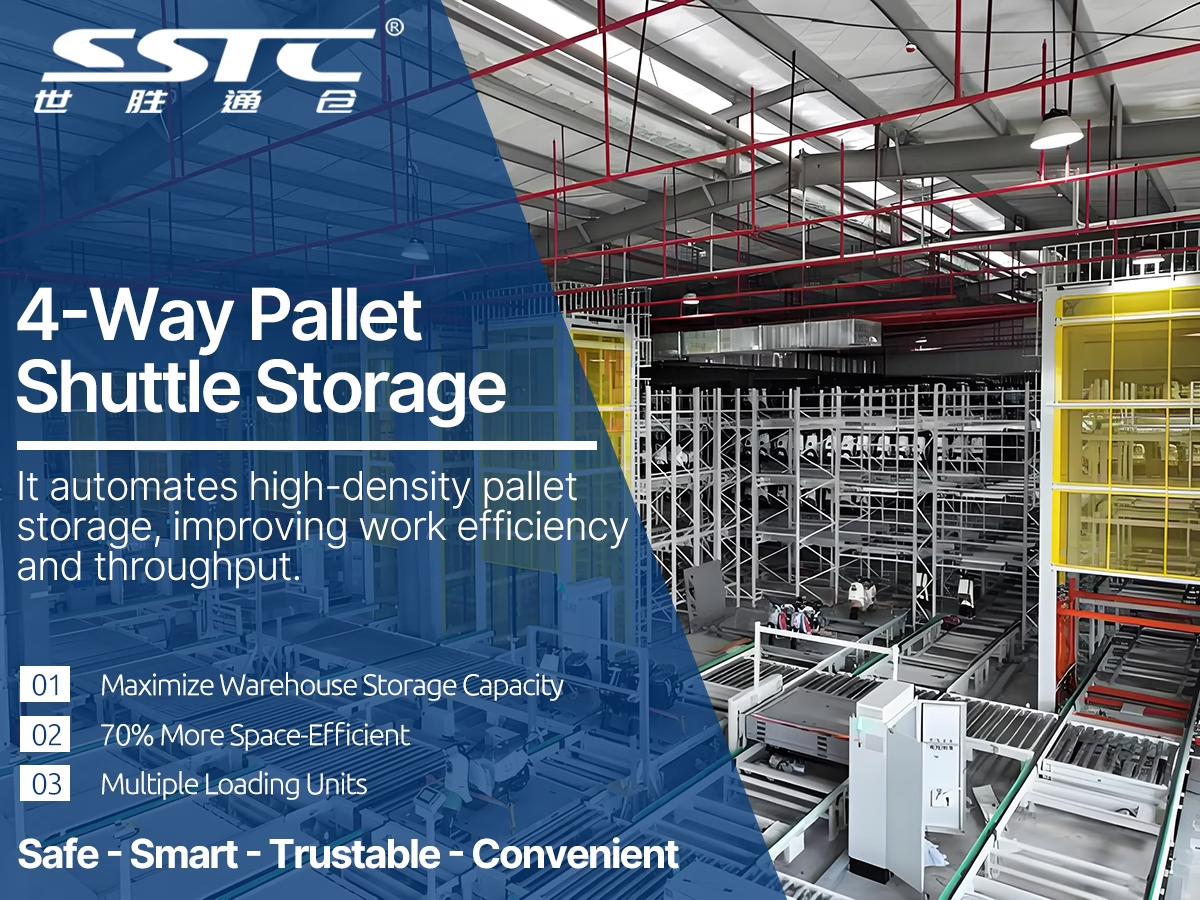
SSTC Intelligence enterprise-grade winterized four-way pallet shuttle operating in a -25°C sub-zero cold storage warehouse

Part 1: The Thermodynamic and Economic Diagnostic of Modern Cold Storage

To understand why enterprise cold chain buyers are aggressively replacing legacy infrastructure with Four Way Pallet Shuttle Storage, one must first diagnose the severe inefficiencies plaguing conventional low-density refrigeration facilities.

1. The Cost of Empty Airspace in Sub-Zero Environments

Maintaining a commercial freezer at -25°C requires immense electrical power for compressor racks, evaporator fans, and thermal insulation barriers. In a traditional warehouse layout where wide forklift aisles account for 40% に 50% of the total floor plan, operators are essentially paying to refrigerate empty air. さらに, every time a forklift operator opens a freezer door or navigates a wide corridor, massive thermal exchange occurs, forcing refrigeration systems to work overtime and driving energy overhead to unsustainable levels.

2. Human Capital Constraints and Harsh Operating Conditions

Working in a -25°C deep-freeze environment is physically punishing. High labor turnover, mandatory thermal rotation breaks, reduced manual dexterity caused by heavy protective gear, and the heightened risk of product damage or workplace accidents create persistent operational bottlenecks. Automated storage systems remove human personnel from the deep-freeze core entirely, ensuring uninterrupted 24/7 throughput without health hazards or safety liabilities.

3. The SSTC Intelligence Thermal Engineering Advantage

As an established direct manufacturer, SSTC Intelligence designs cold storage racking and robotic grids specifically tailored to withstand extreme thermal contraction and expansion forces. By eliminating aisles and consolidating inventory into dense blocks, our systems reduce the refrigerated cubic footprint by up to 60%, drastically cutting down energy consumption per pallet position.

To explore detailed engineering blueprints, technical specifications, and project portfolios of our specialized sub-zero systems, 訪問 SSTC Storage and our regional portal SSTC China.


Part 2: Mechanical Subsystems and Sub-Zero Engineering of Four Way Shuttles

Deploying automated robotics in sub-zero freezers requires far more than standard commercial hardware; it demands specialized materials engineering and rigorous thermal testing.

1. Sub-Zero Battery Chemistry and Thermal Management

Standard lithium-ion batteries suffer severe capacity degradation and internal short-circuit risks when operated below freezing. SSTC Intelligence equips its sub-zero four-way shuttles with specialized lithium iron phosphate (LiFePO4) cells integrated with intelligent thermal management blankets, winterized electronics, and automated low-temperature charging docks positioned in tempered buffer zones.

2. Anti-Condensation Metallurgy and Precision Kinematics

When automated carriers transition between sub-zero storage zones and tempered staging areas, condensation formation is a primary mechanical hazard. Our engineering teams utilize specialized anti-corrosion coatings, sealed waterproof optical encoders, and low-temperature synthetic lubricants to prevent frost crystallization, ensuring flawless multi-directional movement and reliable vertical elevator transfers.

Part 3: の 2026 Global Cold Chain & Cold Storage Application Matrix

The global cold chain logistics market is expanding rapidly, projected to reach over USD 340 10億まで 2026, driven by soaring consumer demand for perishable foods, frozen proteins, and temperature-sensitive biological pharmaceuticals.

To provide enterprise decision-makers with certified empirical data, the following matrix outlines the 2026 global application landscape and operational drivers for Four Way Pallet Shuttle Storage within cold chain sectors, supported by leading institutional research references:

Table 1: Global Cold Storage & Cold Chain Application Matrix (2026)

Cold Chain SectorPrimary Four Way Shuttle Deployment2026 Market Dynamics & Operational DriversKey Thermal & Regulatory StandardsProfessional Research Source Reference
Deep-Freeze Cold Storage (-25°C)Sub-Zero Shuttles, High-Density Racking Blocks, Vertical HoistsCompressing facility footprints by 90% to slash skyrocketing commercial refrigeration electricity bills.HACCP, ISO 22000, EN 15629, GB/T 22532Mordor Intelligence Cold Chain Report
医薬品 & Vaccine FreezersCleanroom-Compatible Freezing Grids, Serialized Mini-Load BuffersStrict temperature validation (+2°C to -80°C), zero-error traceability, and compliance with stringent healthcare mandates.GMP, FDA 21 CFR Part 11, ISO 14644, WHO GuidelinesGlobal Cold Chain Alliance (GCCA) Insights
Food Processing & Protein DistributionBlast Freezer Buffering Shuttles, Multi-Tier Staging GridsRapid post-processing inventory turnover, strict FIFO inventory control, and elimination of manual handling in sub-zero zones.ISO 9001, CE Certification, EN 15512ScienceDirect Cold Logistics Repository
E-Commerce Grocery & Dark FreezersHigh-Velocity Shuttle Fleets, Goods-to-Person Freezing StationsManaging omnichannel frozen grocery fulfillment, high-frequency picking, and extreme seasonal surges.HACCP, UL Listed Components, ISO 9001Mordor Intelligence ASRS Market
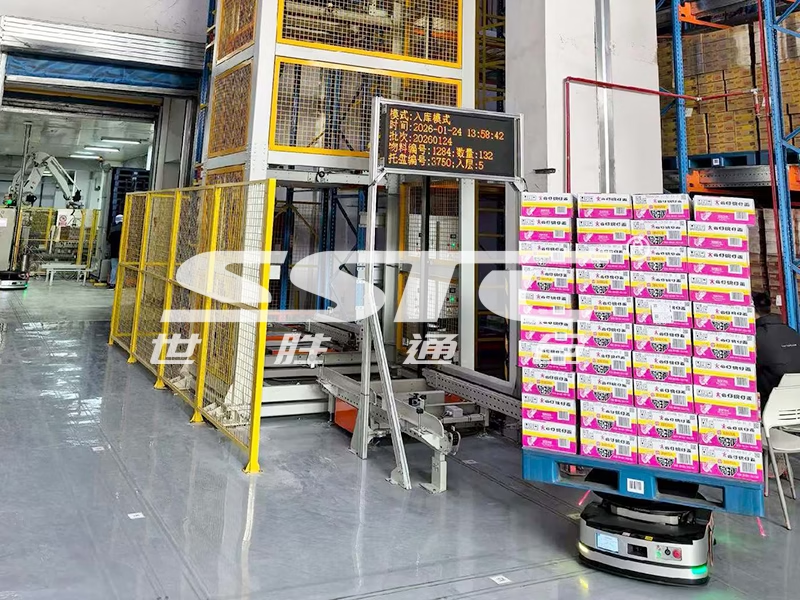
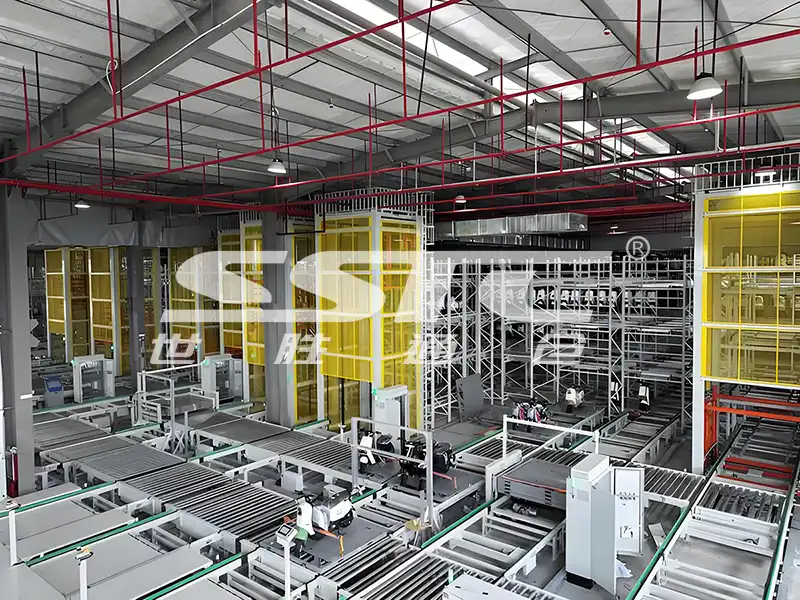
Turnkey sub-zero four-way pallet shuttle storage deployment across Southeast Asian cold chain facilities by SSTC Intelligence
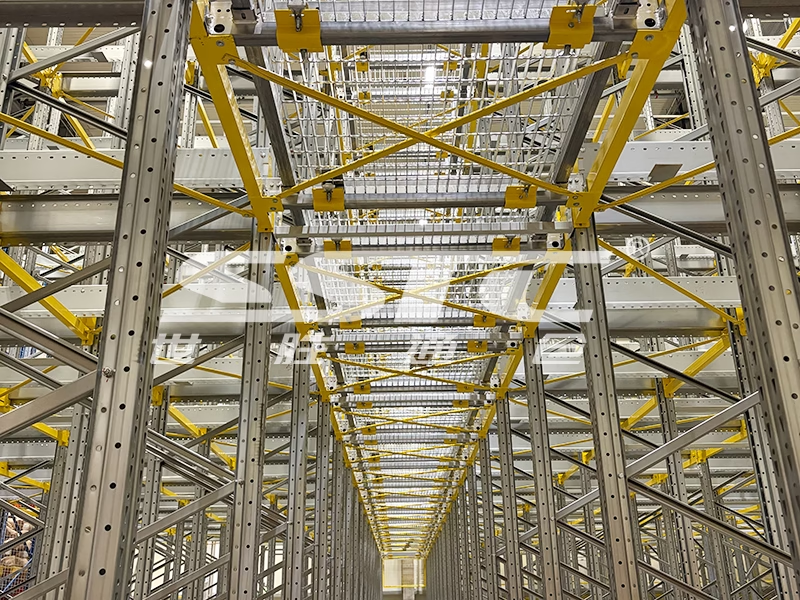
High-density cold chain automated racking structure engineered by direct manufacturer SSTC Intelligence

Part 4: Regional Spotlight: Cold Chain Transformation Across Southeast Asia (2026–2031)

Southeast Asia’s burgeoning middle class, rapid urbanization, and exponential growth in modern organized retail have triggered a massive boom in cold chain infrastructure development. As tropical climates demand rigorous temperature-controlled distribution networks, ASEAN nations are aggressively modernizing their cold logistics corridors.

1. Singapore: High-Tech Biomedical and Perishable Hubs

  • Current Landscape (2026): As a premier biomedical and perishable food import hub, Singapore faces severe land constraints. Cold storage facilities in Jurong and Tuas rely exclusively on ultra-high-density Four Way Pallet Shuttle Storage systems to maximize vertical storage capacity and maintain strict pharmaceutical temperature validations.

  • 5-Year Outlook (2026–2031): Backed by government-backed Smart Nation incentives, Singapore’s cold chain sector will achieve near-complete automation, integrating predictive thermal monitoring and digital twin simulations.

2. Thailand: The Regional Cold Chain Anchor in the EEC

  • Current Landscape (2026): Thailand serves as the agricultural and food processing powerhouse of Southeast Asia. The Eastern Economic Corridor (EEC) hosts state-of-the-art cold storage complexes utilizing heavy-duty automated shuttle systems to handle massive seafood, poultry, and fruit export volumes.

  • 5-Year Outlook (2026–2031): Driven by the Thailand 4.0 strategy, demand for automated cold storage solutions will surge at a CAGR exceeding 9.5%, as agribusinesses eliminate perishable supply chain losses.

3. Malaysia: Halal Food Export and Cold Logistics Expansion

  • Current Landscape (2026): Malaysia has emerged as a global hub for Halal food manufacturing and distribution. Klang Valley and Johor logistics parks are rapidly deploying temperature-controlled shuttle grids to manage certified food exports under stringent hygiene and thermal standards.

  • 5-Year Outlook (2026–2031): Supported by the National Industrial Master Plan (NIMP), Malaysian cold chain operators will increasingly adopt touchless, automated warehousing to overcome chronic labor shortages.

4. Indonesia: Archipelago Cold Chain Modernization and FMCG Growth

  • Current Landscape (2026): As Indonesia’s domestic consumer market expands, the demand for refrigerated distribution centers around Jakarta and Surabaya has skyrocketed. Cold chain logistics is critical for bridging the geographical spans of the archipelago.

  • 5-Year Outlook (2026–2031): Infrastructure decentralization will drive robust double-digit growth for automated cold storage racking and sub-zero shuttle systems, significantly reducing national food spoilage rates.

5. Vietnam: Seafood Processing and Export Staging Automation

  • Current Landscape (2026): Vietnam is a dominant global exporter of seafood and agricultural commodities. Industrial parks in the Mekong Delta and southern provinces are adopting modular cold storage automation to manage high-throughput blast freezing and staging.

  • 5-Year Outlook (2026–2031): Capital expenditure on turnkey automated cold storage will accelerate as Vietnamese processors transition from labor-intensive cold rooms to fully automated, energy-efficient facilities.

6. Philippines: Retail Cold Chain and Pharmaceutical Distribution Evolution

  • Current Landscape (2026): The Philippines is experiencing rapid expansion in modern supermarket retail and healthcare distribution. Metro Manila’s logistics corridors are upgrading regional cold storage facilities to handle imported perishables and temperature-sensitive medicines.

  • 5-Year Outlook (2026–2031): Strategic investments in cold chain infrastructure will trigger widespread adoption of compact, flexible Four Way Pallet Shuttle Storage solutions designed to maximize constrained urban real estate footprints.

Part 5: Future-Proofing Cold Logistics (2026–2031)

Looking ahead through 2031, the intersection of automation and thermal engineering will introduce revolutionary capabilities to cold storage facilities:

  1. AI-Driven Thermal Slotting: Advanced Warehouse Execution Systems (WES) will analyze inventory turnover velocity to position high-frequency items closer to thermal air curtains, minimizing the duration freezer access doors remain open.

  2. Net-Zero Solar-Powered Refrigeration Microgrids: Cold storage operators will increasingly couple high-density automated racking with on-site rooftop solar arrays and battery energy storage systems (BESS) to offset daytime refrigeration energy spikes.

  3. Autonomous Frost-Mitigation Robotics: Integration of automated cleaning and frost-scraping attachments on shuttle fleets will ensure maintenance-free operations in extreme sub-zero environments.

結論: Partnering with SSTC Intelligence for Automated Cold Storage Excellence

Investing in a Four Way Pallet Shuttle Storage system for a sub-zero cold storage facility is a monumental strategic decision that defines enterprise profitability, energy efficiency, and operational resilience for decades. By pairing rigorous thermal engineering with direct manufacturing expertise, SSTC インテリジェンス (世胜通仓) ensures your cold chain warehouse is built on an uncompromised foundation of precision and reliability. As a trusted direct manufacturer and custom-engineered solution provider, SSTC Intelligence delivers world-class automated cold storage solutions tailored to your exact operational requirements—from engineering design to global deployment and lifetime support.

よくある質問 (よくある質問)

Q1: How does Four Way Pallet Shuttle Storage reduce energy costs in a -25°C cold storage warehouse?

A1: By eliminating wide forklift aisles and compressing storage blocks, Four Way Pallet Shuttle Storage reduces the refrigerated cubic volume of the warehouse by up to 60%, drastically cutting down the electrical energy required to run commercial refrigeration compressors and evaporators.

第2四半期: How do SSTC Intelligence shuttles operate reliably under extreme sub-zero freezing conditions (-25°C)?

A2: Our sub-zero shuttles are equipped with specialized low-temperature lithium iron phosphate (LiFePO4) batteries, internal thermal heating blankets, winterized metallurgy, and anti-condensation seals to prevent frost accumulation and ensure continuous operation.

Q3: What is the typical return on investment (ROI) timeline for a cold storage automated shuttle installation?

A3: Due to massive energy savings from reduced cubic volume, complete elimination of deep-freeze labor constraints, and zero product damage, most industrial cold storage shuttle projects achieve full capital payback within 3 に 5 年.

Q4: Does SSTC Intelligence provide custom engineering and on-site installation support for overseas cold chain projects?

A4: はい. As a direct manufacturer, SSTC Intelligence provides comprehensive enterprise-grade services—including structural design, thermal compatibility analysis, 製造業, export logistics, on-site installation supervision, system commissioning, and localized technical training across Singapore, Thailand, Malaysia, Indonesia, Vietnam, and the Philippines.

Contact Information

SSTC ASRS シャトル システムを活用した高密度パレット保管

前へ:

次:

伝言を残す