Tecnologia dell'intelligence SSTC - 4-Produttore di scaffalature per navette e sistemi AS/RS

Entrare in un moderno centro di distribuzione oggi sembra completamente diverso rispetto a dieci anni fa. The relentless pressure of same-day fulfillment, soaring commercial real estate lease rates, and a structural shortage of warehouse labor have permanently altered the logistics landscape. Across both domestic and international shipping hubs, supply chain directors are no longer debating whether to automate; they are racing to deploy high-density infrastructure that can extract maximum efficiency from every square meter of floor space. Amidst this technological shift, logistics professionals continually return to a foundational question: Cos'è un sistema di scaffalature AS/RS? At its core, an Automated Storage and Retrieval System (AS/RS) is an engineered ecosystem combining high-bay structural steel framework, precision computer-controlled material handling equipment (such as stacker cranes or multi-directional robotic shuttles), and sophisticated warehouse management software. Far from being a simple metal storage rack, a contemporary AS/RS transforms passive vertical air into an intelligent, high-velocity inventory powerhouse. This comprehensive industry report examines how AS/RS technology is performing across 2026 global project applications, analyzes verified market data from leading research institutions, and outlines the five-year trajectory shaping the future of supply chain automation.
The Macro Pressures Driving Global Automation in 2026
To understand why AS/RS technology has become the gold standard in modern warehousing, è necessario esaminare i gravi ostacoli economici e operativi che la logistica di terze parti deve affrontare (3PL) fornitori, imprese manifatturiere, e rivenditori omnicanale in tutto il mondo.
Le valutazioni immobiliari e l’alto costo dell’espansione dell’impronta
La scarsità di terreni industriali nei principali corridoi metropolitani e logistici ha portato i costi dei terreni e degli affitti a livelli senza precedenti. Nelle strutture tradizionali che si affidano a scaffalature portapallet selettive e carrelli retrattili manuali, fino a 60% del volume interno dell'edificio si spreca in ampi corridoi di manovra e vuoti verticali sopra i dieci metri. Quando le aziende affittano o costruiscono centri di distribuzione, pagare per lo spazio aereo che non genera entrate è un silenzioso killer dei profitti. Le installazioni AS/RS risolvono questa barriera economica scalando le altezze di stoccaggio verticale fino a 30 metri o più, tripling usable storage density within the same physical building envelope.
The Persistent Labor Crisis and Safety Imperatives
Warehouse labor markets globally remain tight, characterized by high employee turnover, wage inflation, and strict safety regulations. Manual material handling at elevated heights exposes workers to ergonomic strain, fatigue, and potential collision hazards. Automated systems remove human operators from hazardous high-bay storage zones, ensuring continuous 24/7 operations that are immune to shift changes, fatigue, or recruitment deficits.
Deconstructing the Engineering Anatomy: Cos'è un sistema di scaffalature AS/RS?
Answering Cos'è un sistema di scaffalature AS/RS? requires looking past standard brochures into the rigorous mechanical and software architecture that makes sub-second automated retrieval possible.
High-Bay Structural Frameworks
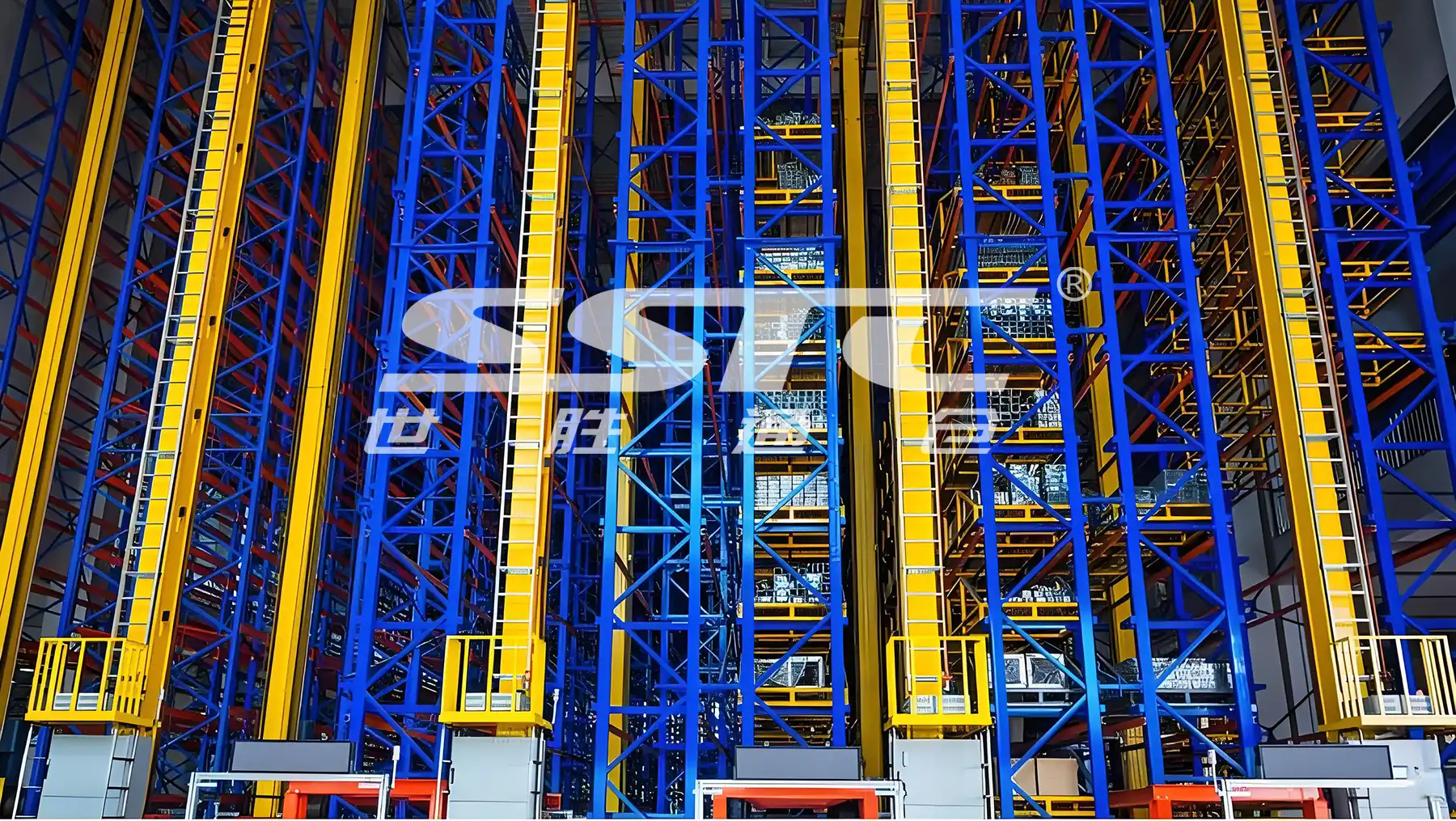
Unlike conventional selective racks that top out when a human forklift driver can no longer see or reach safely, AS/RS structures are engineered like industrial skyscrapers. Vertical uprights, heavy-duty load-bearing beams, and diagonal seismic bracings are fabricated from high-tensile steel. Tolerances for plumbness and levelness are measured in fractions of a millimeter to ensure smooth, high-speed travel without structural binding.
Dynamic Handling Machinery
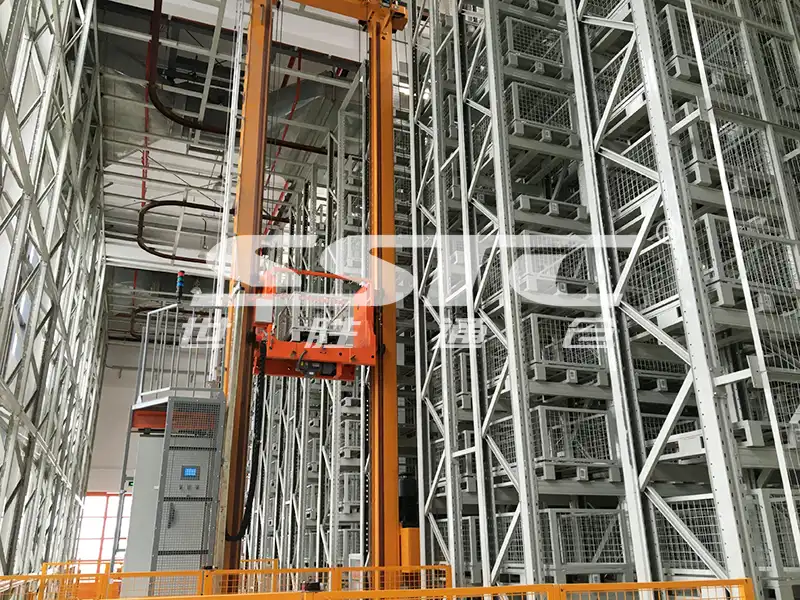
Gru impilatrici: Operating in dedicated narrow aisles, vertical mast cranes equipped with telescopic forks travel horizontally along floor rails while hoisting loads vertically to target storage tiers with absolute mathematical precision.
Shuttle Grids and Satellite Robots: In high-throughput configurations, multi-directional robotic shuttles glide beneath pallet loads, separating vertical lift operations from horizontal channel transport to achieve extreme transactional velocity.
For industrial engineering benchmarks and structural specifications regarding automated storage frameworks, professional resources hosted on platforms like SSTC Storage AS/RS Solutions fornire un'ampia documentazione tecnica.
2026 Domestic and International Project Applications
The deployment of automated storage and retrieval systems in 2026 spans diverse geographical regions and industry verticals, reflecting a mature, globally integrated technology stack. According to comprehensive market assessments by leading research institutions such as Fortune Business Insights AS/RS Market Report, the global automated storage and retrieval systems market is valued at USD 10.13 miliardi di dollari 2026, up from USD 9.58 miliardi di dollari 2025, expanding at a robust compound annual growth rate (CAGR).
Global Regional Distribution and Sector Highlights
America del Nord: Capturing a dominant market share (approximately 39.2%), North American distribution hubs focus heavily on massive e-commerce fulfillment centers, grocery cold chains, and omnichannel retail networks where throughput speed and labor reduction are paramount.
Europa: Driven by strict environmental regulations, high land costs, and advanced manufacturing sectors, European projects emphasize energy-aware AS/RS operations, automated cold storage, and sustainable high-bay construction.
Asia-Pacifico (APAC): Representing one of the fastest-growing regional markets, APAC installations—particularly in advanced manufacturing, automotive production, and automated warehousing clusters—prioritize ultra-dense high-bay racking and multi-shuttle integration to support rapid industrial expansion.
Verified Global AS/RS Market Metrics (2025–2026 Benchmark Data)
| Metric Category | 2025 Benchmark Value | 2026 Projected Value | Key Industry Drivers & Focus Areas | Authoritative Data Source |
| Global AS/RS Market Size | USD 9.58 Miliardi | USD 10.13 Miliardi | E-commerce acceleration, labor shortages, high-density space conservation | Fortune Business Insights |
| North America Market Revenue | USD 3.76 Miliardi | USD 3.99 Miliardi | Omnichannel retail expansion, advanced grocery fulfillment | Fortune Business Insights |
| Asia-Pacific Market Revenue | USD 2.07 Miliardi | USD 2.21 Miliardi | Industrial manufacturing growth, smart logistics parks | Fortune Business Insights |
| Europe Market Revenue | USD 3.06 Miliardi | USD 3.21 Miliardi | Energy-efficient cold chain automation, strict sustainability standards | Fortune Business Insights |
| Automotive Sector Share | 22.8% (Estimated) | 23.4% (Projected) | Heavy load handling, robotic assembly parts buffering | Fortune Business Insights |
The Next-Generation Technological Shift: AI, Computer Vision, and Digital Twins
In 2026, AS/RS installations are no longer static mechanical units; they are fully integrated digital ecosystems powered by artificial intelligence and advanced edge computing.
AI-Driven Slotting and Inventory Optimization
Traditional warehouse slotting relied on static historical averages. Modern AS/RS platforms utilize machine learning algorithms to analyze real-time purchasing patterns, fluttuazioni stagionali della domanda, and supply chain velocities. The Warehouse Management System (WMS) dynamically repositions fast-moving stock closer to vertical hoists during off-peak hours, dramatically reducing average retrieval cycle times.
Computer Vision and Edge Intelligence
Equipped with high-resolution 3D cameras and optical sensors, next-generation AS/RS machinery verifies pallet dimensions, inspects load stability, confirms empty slot availability, and detects packaging irregularities before initiating transport. This eliminates downstream jams and protects high-value inventory from handling damage.
For deep technical insights into future warehouse automation trends, pubblicazioni di ricerca ospitate su piattaforme come MarketsandMarkets ASRS Outlook provide extensive documentation on edge AI and digital twin integration.
Five-Year Industry Outlook: The Future of AS/RS (2026–2031)
As we look ahead over the next five years, the trajectory of Automated Storage and Retrieval Systems points toward exponential technological refinement and broader market penetration.
Robust Market Expansion and Valuation Growth
Industry analysts project that the global AS/RS market will continue its strong upward trajectory, scaling from its 2026 valuation toward an estimated USD 17.4 billion by the early 2030s, driven by a steady CAGR of approximately 7.0% A 8.0%. As land scarcity intensifies in developing economic zones, high-bay automated storage will transition from an enterprise luxury to an essential baseline infrastructure.
Modular and Scalable System Architectures
The rigid, monolithic automation installations of the past are giving way to modular, highly adaptable configurations. Operators increasingly demand AS/RS solutions that can be expanded vertically, reconfigured horizontally, or integrated seamlessly with autonomous mobile robots (AMR) as SKU profiles evolve.
Sustainability and Energy-Aware Engineering
With corporate ESG (Environmental, Social, and Governance) mandates becoming legally binding across major global economies, future AS/RS designs will prioritize energy-aware operation. Features such as regenerative braking on vertical hoists, intelligent power management during idle periods, and minimized HVAC cubic volume requirements in cold storage facilities will define the next generation of green logistics engineering.
Conclusione
Answering Cos'è un sistema di scaffalature AS/RS? reveals a transformative technology that bridges structural engineering, precision robotics, e software intelligente per risolvere i punti critici più acuti delle moderne catene di approvvigionamento. Sia che vengano implementati in enormi hub di e-commerce nordamericani o in strutture di conservazione frigorifera europee ad alta densità, Le installazioni AS/RS offrono un utilizzo dello spazio senza pari, resilienza operativa, e ottimizzazione del lavoro.
La collaborazione con SSTC Intelligence garantisce alle aziende l'accesso a soluzioni di storage automatizzato all'avanguardia supportate da rigorose competenze ingegneristiche e supporto tecnico dedicato. Trasforma le sfide operative del tuo magazzino in un vantaggio competitivo sostenibile con SSTC.
Domande frequenti (Domande frequenti)
Q1: Cos'è un sistema di scaffalature AS/RS nelle moderne operazioni di magazzino?
A1: Un AS/RS (Sistema di archiviazione e recupero automatizzato) Il sistema di scaffalature è una soluzione logistica integrata che combina la struttura in acciaio strutturale ad alta altezza, macchinari per la movimentazione automatizzata come trasloelevatori o navette robotizzate, e un software intelligente per immagazzinare e recuperare automaticamente le merci pallettizzate.
Q2: Qual è la dimensione prevista del mercato per AS/RS in 2026?
A2: Secondo i principali rapporti di ricerche di mercato, il mercato globale dei sistemi di stoccaggio e recupero automatizzati ha un valore di circa USD 10.13 miliardi di dollari 2026, mostrando una crescita costante guidata dall’accelerazione del commercio elettronico e dalla carenza di manodopera nei magazzini.
Q3: Quanto spazio può risparmiare una struttura implementando scaffalature AS/RS a scaffalature alte?
A3: Eliminando le ampie corsie di manovra dei carrelli elevatori e scalando le altezze di stoccaggio verticale fino a 30 metri, una configurazione AS/RS in genere aumenta la densità di storage cubica fino a 60% rispetto alla tradizionale svinatura selettiva.
Informazioni sui contatti
- Sito web: www.sstc-storage.com / www.sstc-china.com
- E-mail: [email protected] | [email protected]
- Whatsapp: +86-13671613032
Risorse:
- Fortune Business Insights AS/RS Market Report: https://www.fortunebusinessinsights.com/automated-storage-and-retrieval-systems-as-rs-market-109701
- MarketsandMarkets ASRS Outlook: https://www.marketsandmarkets.com/ResearchInsight/automated-storage-and-retrieval-system-future-outlook.asp