
 Tecnologia dell'intelligence SSTC - 4-Produttore di scaffalature per navette e sistemi AS/RS

Poiché sempre più aziende si rivolgono a SSTC massimizzando la capacità e migliorando l'utilizzo dello spazio di ogni centimetro del magazzino, la richiesta di SSTC Shuttle Racking, or radio shuttle racking as it is sometimes referred to, is increasing dramatically.
What is Rastrelliera per navette radiofoniche ?
Shuttle racking uses a combination of high-density pallet racking and a semi-automated shuttle device that runs on rails below the beam level and can pick up a pallet and move it along the rails. The shuttle carrier can either despatch pallets into the racking system or retrieve them from the racking and present them at the end of the lane, ready to be collected by the forklift.
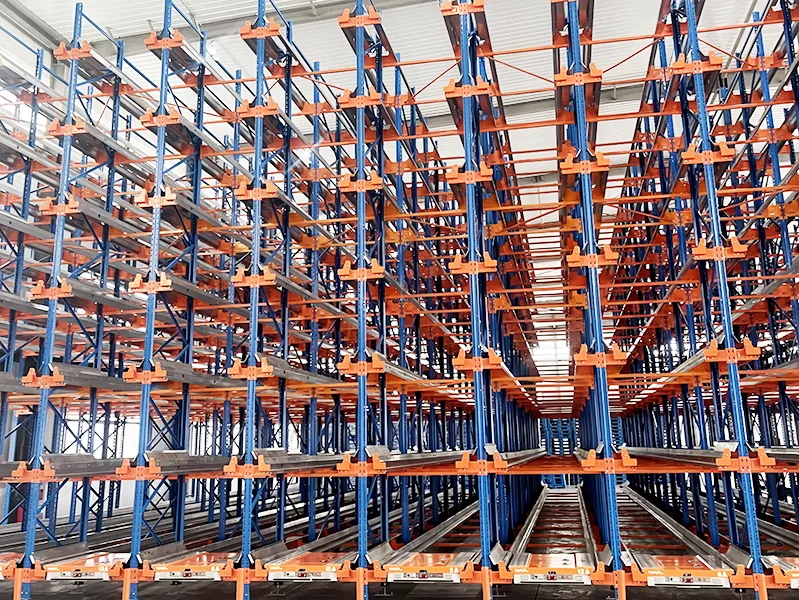
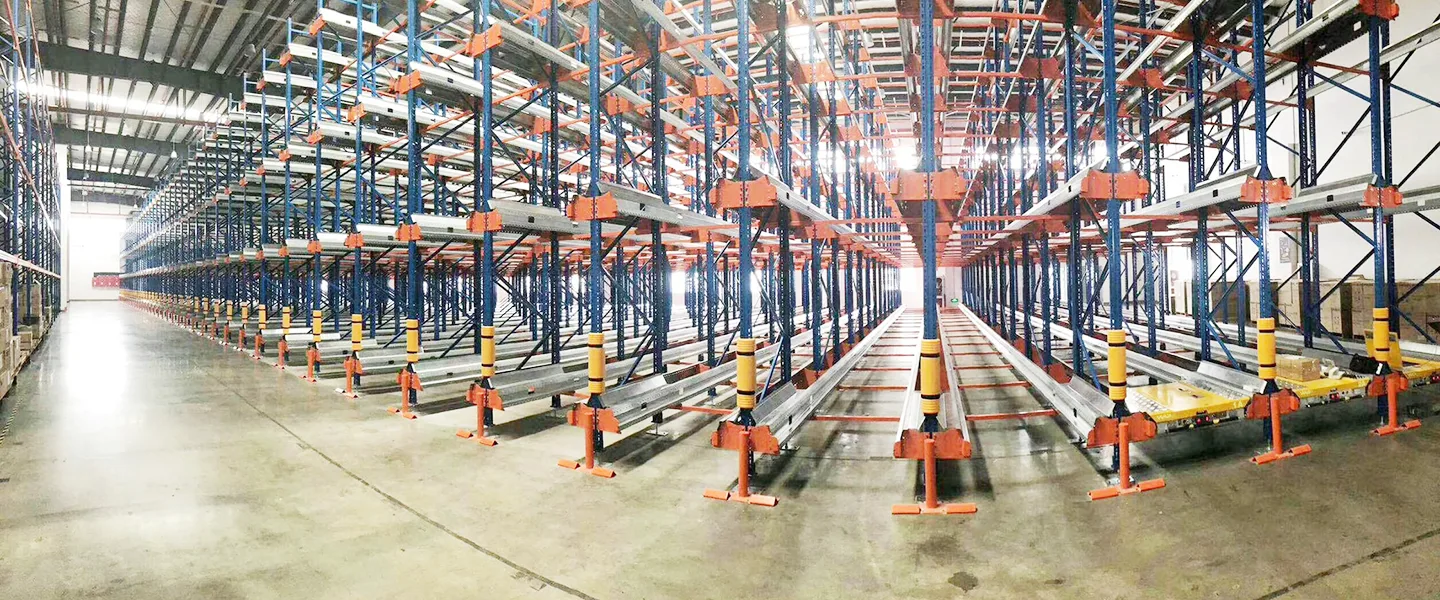
Key Benefits of Shuttle Racking
• Increased Capacity from Shuttle Racking
By designing large blocks of high-density racking with virtually zero aisles, you can dramatically increase the number of pallet positions over systems such as Selective Pallet Racking, push back racking and drive-in racking.
• Improved Space Utilisation
One of the major benefits offered by shuttle racking is the ability to improve space utilisation. This is achieved by a thorough understanding of the SKUs stored, their velocity and using the shuttle to continually move pallets to optimise capacity
• Reduced Forklift Travel Times
As the shuttle carrier does most of the work taking the pallet into or retrieving it from the racking system, the distances travelled by forklifts are significantly reduced.
• Faster Loading Times
The direct benefit of reduced forklift travel times is that it enables pallets to be loaded onto wagons or into the system much faster than other systems.
• Increased Pay Loads Per Operator Per Day
Reduced forklift travel times and faster loading times also enables forklift operators to dramatically increase the number of pay loads per day. Perciò, the solution will likely require fewer forklifts and operators, which can be deployed elsewhere in the organisation – delivering significant cost savings to the warehouse operations.
• Reduced Damage to Racking
Unlike Drive-In Racking, where the forklift has to enter the racking system, the shuttle racking approach reduces the likely contact with the racking structure and so dramatically reduces the likelihood of damage.
Damaged racking can not only be costly and dangerous, but it can also cause significant operational challenges for a warehouse. By reducing damage to racking, warehouses can become safer, more efficient and less costly to run.
• Reduced Damage to Stored Products
The shuttle racking solution reduces the likelihood of damage to products in 2 ways. Firstly, as the shuttle carrier moves the pallet with the goods in the racking, we reduce the manual handling element and, therefore, the likelihood of collisions.
Secondly, the reduced damage to the racking structure also reduces the possibility of collapses and, therefore, damage to the goods.
• Improved Safety in the Warehouse
Safety is a major priority in every warehouse. Reducing travel times and requiring fewer forklifts will automatically reduce the likelihood of accidents. Allo stesso modo, the reduced likelihood of damage to racking will also reduce the risk of collapses and potential safety issues.
• Potential to reduce energy consumption and CO2 emissions
Depending on the design and layout of the shuttle racking system, particularly with deep blocks of racking, there may be the opportunity to reduce the amount of lighting in the warehouse to focus it on purely working areas.
Combined with the reduction in the number of forklifts required, shuttle racking should be able to provide ongoing energy savings.
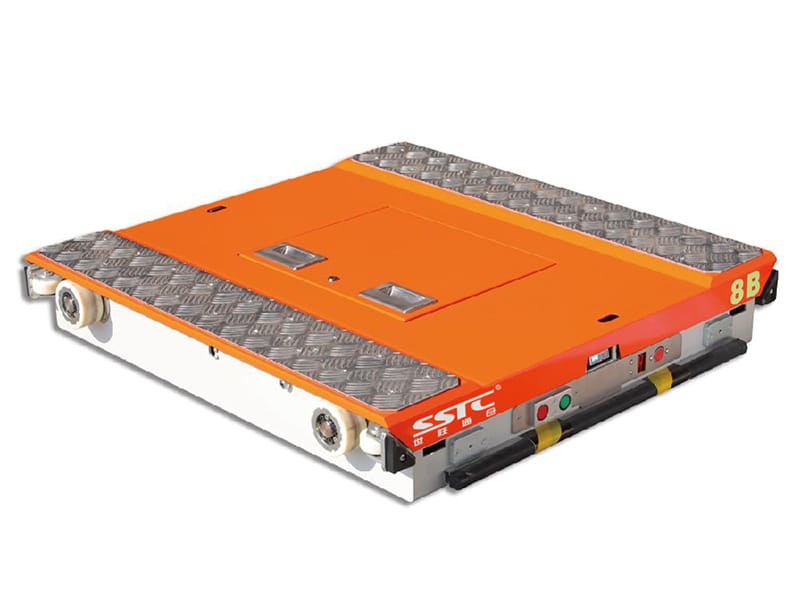
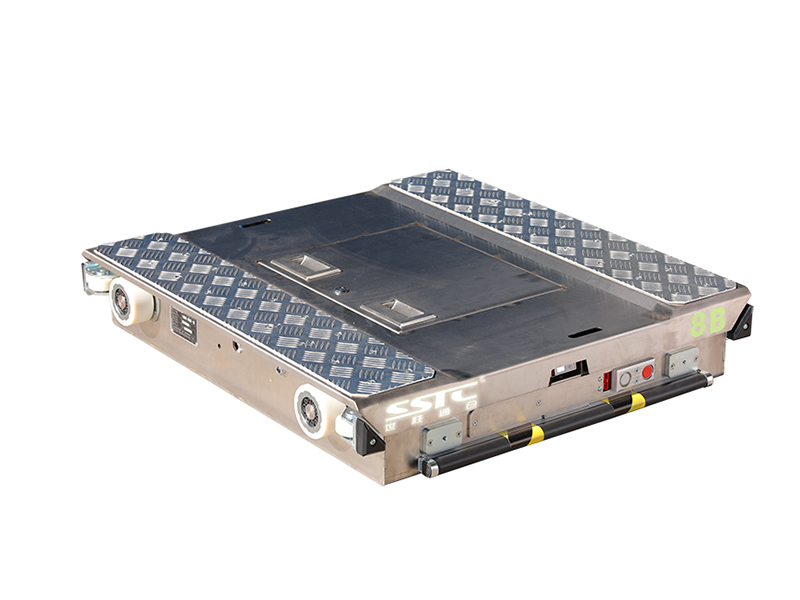
How Can Shuttle Racking Be Used?
• First in Last Out (FILO)
• First in First Out (FIFO)
• Picking Tunnels
• Despatch Areas
Shuttle racking can transform the warehouse’s performance and capacity, particularly with First in Last Out (FILO) and First in First Out (FIFO) sistemi.
The ability to create storage lanes of up to 100 pallets deep transforms the potential storage capacity of any warehouse using a FILO or FIFO system.
And with the shuttle carriers doing all of the work once the pallet is in the racking system, there are significant performance benefits with reduced travel times and maintenance issues.
Tuttavia, shuttle racking solutions can also transform the performance of Despatch Areas which often act as a key performance indicator of the overall efficiency of the warehouse.
By incorporating a radio shuttle system over a mezzanine, companies can minimise waiting and loading times by creating dedicated areas with pre-prepared pallets ready to be loaded onto the wagon.
Modern industrial logistics demands exceptional spatial efficiency and relentless operational reliability. Scaffalature per navette radiofoniche redefines high-density automated storage by deploying battery-powered shuttle vehicles inside deep pallet lanes. Unlike traditional selective racking or drive-in systems, Intelligenza SSTC engineered radio shuttle technology to eliminate forklift traffic inside storage blocks, unlocking massive capacity gains while protecting capital investments.
1. Massive Space Utilization and Volumetric Density
Spatial optimization remains critical priority in modern warehousing. Traditional racking wastes up to 50 percent of floor area on operating aisles required by manual forklifts. Scaffalature per navette radiofoniche condenses storage footprints by stacking multiple pallets deep within continuous rack bays. By removing access aisles, facilities achieve up to 90 percent space utilization, doubling pallet capacity within existing building footprints without costly expansions.
2. Elimination of Forklift Damage and Structural Safety
Forklift collisions create persistent maintenance overhead and safety hazards in industrial warehouses. In conventional drive-in systems, drivers navigate heavy machinery directly inside narrow metal structures, frequently damaging uprights, travi, and bracing. Scaffalature per navette radiofoniche isolates heavy equipment entirely. Forklifts deliver pallets exclusively to lane entry points, while automated shuttle carriers handle internal pallet transport. This decoupling eliminates structural impacts, cuts repair costs, and ensures bulletproof operator safety.
3. Flexible Stock Rotation (FIFO and LIFO) and SKU Management
Operational versatility distinguishes advanced storage solutions from rigid legacy systems. Scaffalature per navette radiofoniche supports both first-in-first-out (FIFO) and last-in-first-out (LIFO) inventory rotation methods depending on loading configuration. For high-volume operations managing bulk consumer goods, food products, and industrial materials, deep-lane flexibility optimizes inventory flow. When complex multi-SKU management is required, operations seamlessly integrate shuttle systems with broader Magazzino AS/RS frameworks or Sistema navetta a quattro direzioni automazione.
4. Sub-Zero Resilience and Cleanroom Reliability
Cold chain logistics and freezer warehousing impose severe environmental stress on material handling equipment. Sub-zero temperatures (-25°C) degrade standard battery performance and thicken hydraulic fluids in conventional vehicles. Scaffalature per navette radiofoniche utilizes specialized low-temperature lithium power packs and robust mechanical drive architectures engineered specifically for extreme cold storage environments. Inoltre, pure mechanical movement eliminates oil leak risks, ensuring pristine cleanliness required by pharmaceutical and food processing facilities.
5. Economic Value and Superior ROI
Evaluating storage infrastructure requires looking beyond initial procurement figures. Scaffalature per navette radiofoniche delivers exceptional return on investment through compounded operational savings:
Real Estate Optimization: Maximizing vertical and horizontal density avoids expensive warehouse expansions or off-site leasing expenses.
Labor Efficiency: Streamlined material handling reduces personnel requirements and minimizes shift-change bottlenecks.
Energy Reduction: Compact storage volumes require less lighting, ventilazione, and refrigeration energy in temperature-controlled facilities.
Equipment Longevity: Minimized forklift wear and tear lowers fleet maintenance expenditures.
| Parameter | Scaffalature per navette radiofoniche | Stacker Crane AS/RS | Sistema navetta a quattro direzioni |
| Primary Advantage | High density & cost efficiency | Height & individual selectivity | Multi-directional flexibility & phased growth |
| SKU Strategy | High volume per lane / low SKU count | High SKU variety / individual access | Moderate to high SKU variety / grid routing |
| Operating Environment | Ambiente, conservazione frigorifera, stoccaggio in massa | High-bay automated warehouses | Irregular layouts, multi-tier zones |
| Stock Rotation | FIFO or LIFO by lane | Universal random access | Universal random access via WCS |
Domande frequenti
Q1: What makes Radio Shuttle Racking superior to traditional drive-in racking?Scaffalature per navette radiofoniche eliminates forklifts entering rack structures entirely, preventing structural collision damage while increasing lane depth and storage density up to 90 per cento.
Q2: Can Radio Shuttle Racking operate in sub-zero freezer environments? SÌ. Specialized low-temperature shuttle variants operate reliably down to -25°C using frost-resistant electronics and ruggedized lithium power cells.
Q3: How does inventory rotation work in shuttle lanes? Lanes support both FIFO (first-in-first-out) e LIFO (last-in-first-out) configurations based on loading orientation and warehouse execution rules.
Q4: How does Radio Shuttle Racking compare with Gru impilatrice sistemi?Scaffalature per navette radiofoniche excels at high volume per SKU with lower capital expenditure, whereas Stacker Crane AS/RS suits very tall buildings requiring individual pallet selectivity across numerous SKUs.
Avviare la valutazione della progettazione del magazzino automatizzato
Transform facility logistics with industry-leading automated storage solutions. Connettiti direttamente con i direttori dell'ingegneria tecnica tramite i canali globali ufficiali:
Richieste dirette via e-mail
Linea diretta WhatsApp: +86 136 7161 3032
Portali Web Ufficiali: www.sstc-storage.com www.sstc-china.com