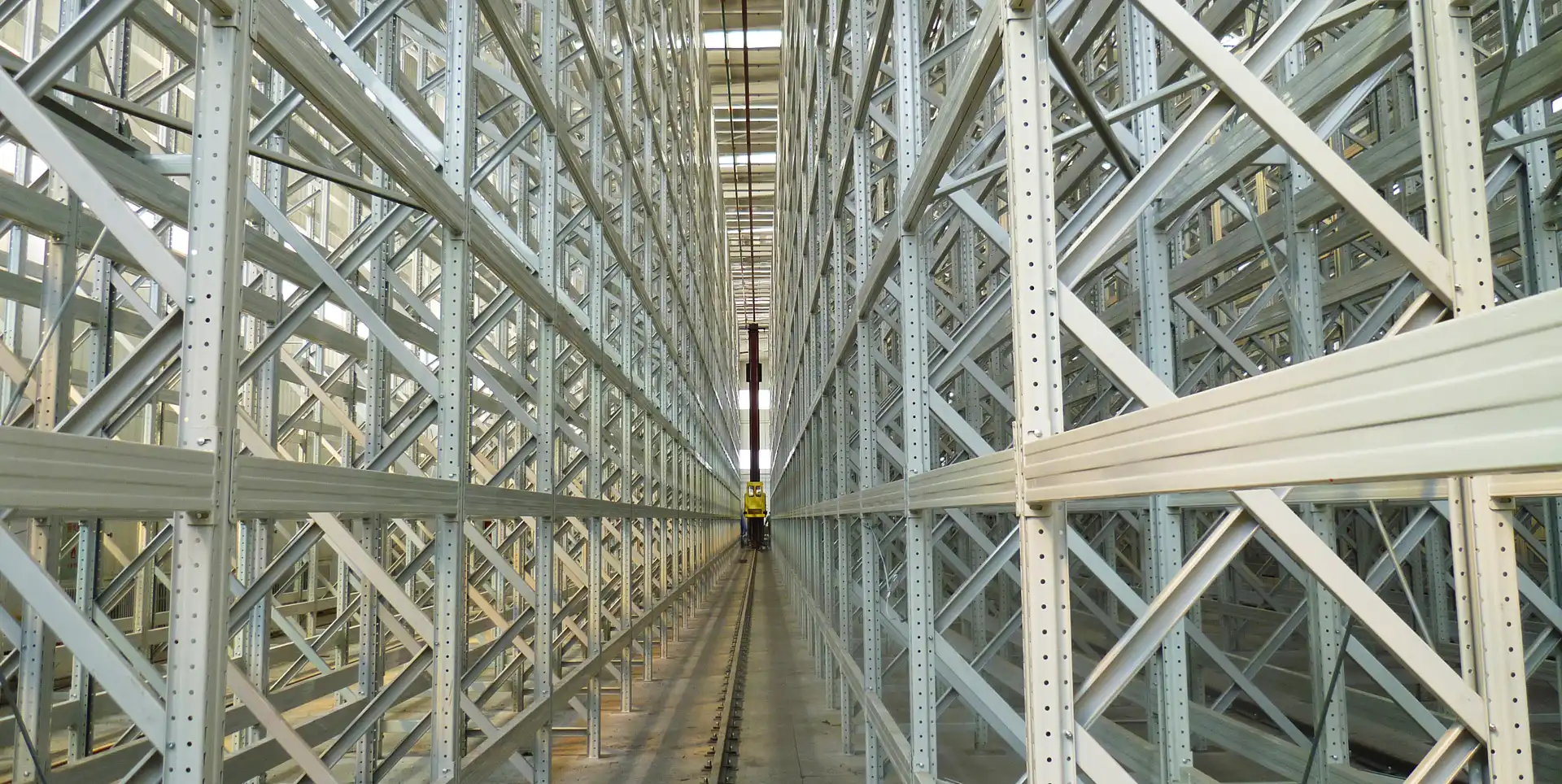
Teknologi Intelijen SSTC - 4-Way Shuttle Racking & Produsen Sistem AS/RS

Di era modern manufaktur cerdas, volatilitas rantai pasokan global, dan melonjaknya biaya tenaga kerja, the deployment of an Automated Storage and Retrieval System (AS/RS) is no longer a luxury—it is a vital operational necessity. Namun, designing, engineering, and commissioning a high-bay automated warehouse involves monumental structural, mechanical, and safety challenges. When global enterprises evaluate automated storage solutions, one critical question invariably arises during technical procurement: Why do leading automated system integrators strictly require AS/RS infrastructure to be primarily referenced to FEM, DI DALAM, and GB standards?
The answer lies in the uncompromising physics of high-density vertical storage. An industrial AS/RS is not merely a collection of steel shelves; it is a dynamic, high-velocity electro-mechanical ecosystem where stacker cranes accelerate at high G-forces, multi-directional pallet shuttles navigate complex multi-tier channels, and steel columns bear hundreds of tons of vertical load under strict deflection tolerances. Without internationally recognized engineering benchmarks, the risks of structural fatigue, mechanical jamming, catastrophic collapse, and severe legal liability multiply exponentially. Engineered for absolute safety, structural integrity, and regulatory compliance, the advanced AS/RS solutions provided by Intelijen SSTC (Shisheng Tongcang) strictly adhere to these rigorous global standards. Operating as an experienced direct manufacturer and turnkey solution provider, SSTC Intelligence bridges the gap between theoretical compliance and real-world operational excellence. This comprehensive industrial report explores the vital importance of AS/RS standards—specifically detailing active FEM, DI DALAM, and GB codes—analyzes the 2026 global application landscape across key sectors, and evaluates the five-year growth trajectory across Southeast Asia through 2031.
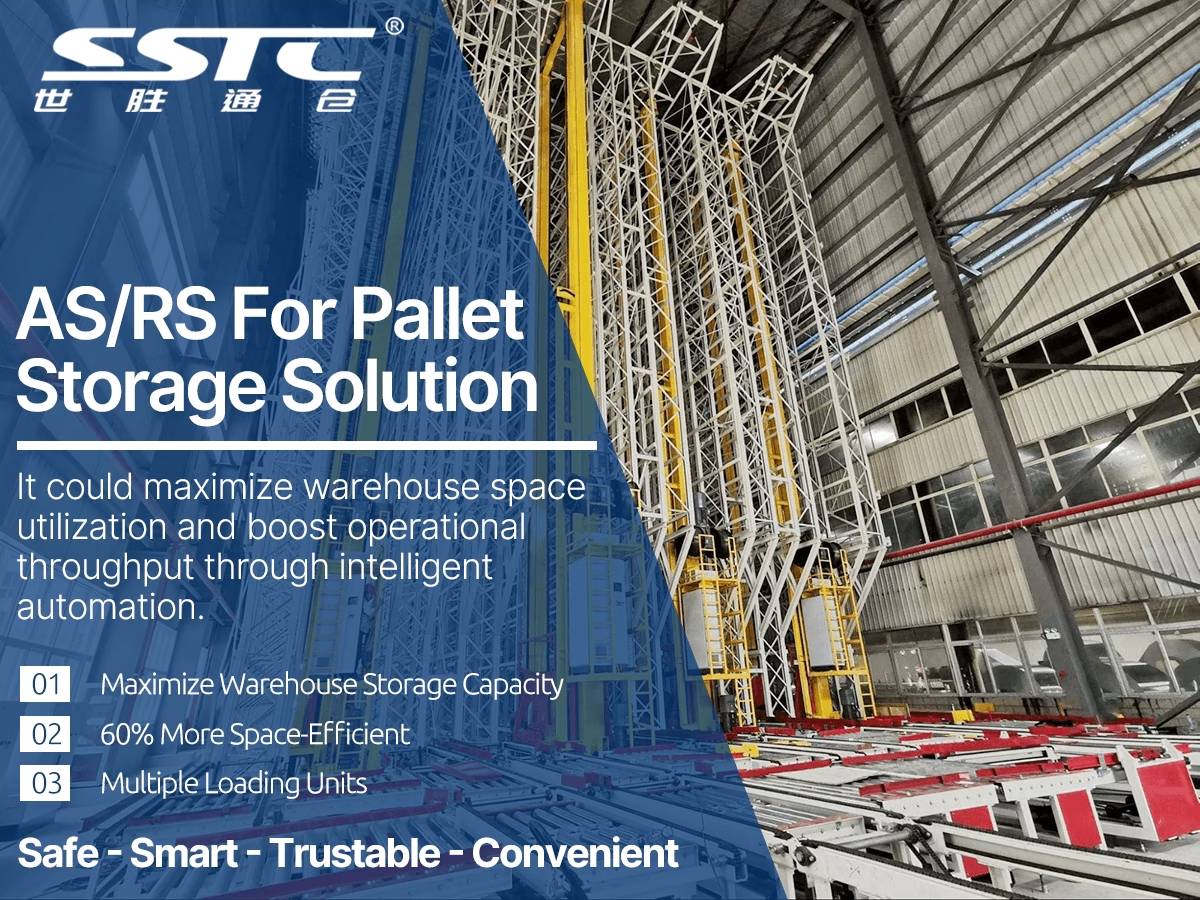
The Engineering Imperative: Decoding FEM, DI DALAM, and GB Standards in AS/RS
Automated material handling equipment operates under conditions vastly different from traditional static pallet racking. While conventional selective pallet racks rely heavily on human forklift operators who can instinctively adapt to minor structural deformations or floor irregularities, an AS/RS stacker crane or automated shuttle operates with automated precision along fixed vertical and horizontal coordinates. A deviation of mere millimeters can cause catastrophic collisions, damaging expensive inventory and halting entire manufacturing lines.
To mitigate these risks, professional system integrators enforce compliance with three pillars of global standardization: FEM (European Racking Federation), DI DALAM (European Norms), Dan GB (Chinese National Standards). Below is a detailed breakdown of the active, official standard numbers and specific scopes governing modern AS/RS engineering:
1. FEM Standards: The Benchmark for European Racking and Storage Design
The European Racking Federation (FEM) R&S Product Group establishes some of the most rigorous voluntary and structural design guidelines utilized worldwide.
FEM 10.2.02 (Design of Static Steel Pallet Racks): This foundational code dictates the calculation methods for structural components, koneksi balok, and upright frames under static and repetitive loading conditions.
FEM 10.2.08 (Recommendations for the Design of Static Steel Pallet Racks in Seismic Conditions): Essential for earthquake-prone regions, this standard provides specialized mathematical models and ductility criteria to ensure AS/RS structures withstand seismic accelerations without progressive collapse.
FEM 9.831 / FEM 9.841 (Guidelines for the Testing of Storage Systems and Safe Use): These documents govern the operational safety parameters, load testing protocols, and safety factors required for automated handling equipment interacting with high-bay racking.
2. EN Standards (European Norms): Legally Binding Harmonized European Regulations
While FEM provides specialized design guidelines, European Norms (DI DALAM) represent legally harmonized standards adopted across the European Union and widely specified by international engineering firms:
DI DALAM 15512 (Steel static storage systems — Adjustable pallet racking systems — Principles for structural design): The primary European standard for calculating structural steel strength, member buckling, and frame stability in storage systems.
DI DALAM 15620 (Steel static storage systems — Tolerances, deformations and clearances): Arguably the most critical standard for AS/RS integration, DI DALAM 15620 sets strict maximum limits on rack verticality, beam deflection under load, and operational clearances to ensure stacker cranes and shuttles never collide with upright structures.
DI DALAM 15629 (Steel static storage systems — Specification of storage equipment) & DI DALAM 15635 (Application and maintenance of storage equipment): These standards define the operational responsibilities, safe loading limits, damage classification protocols, and routine maintenance mandates for warehouse operators.
DI DALAM 15095 (Power-operated mobile racking and shelving, carousels and storage lifts — Safety requirements): Governs the safety of motorized and automated mobile storage systems.
3. GB Standards (Chinese National Standards): Rigorous Engineering and Material Science
As China has risen as the global epicentre of automated logistics manufacturing, Chinese National (GB) standards have achieved parity with Western standards, offering exhaustive testing regimens and stringent material grade requirements.
GB/T 22532 (Storage equipment — Adjustable pallet racking — Tolerances, deformations and clearances): The Chinese national equivalent to EN 15620, ensuring precise manufacturing tolerances for automated warehouses.
GB 50009 (Load code for the design of building structures) & GB 50011 (Standard for seismic design of buildings): Mandate structural response calculations against wind, dead loads, live loads, and regional seismic intensities.
GB 50017 (Standard for design of steel structures): Establishes the ultimate limit states and fatigue design rules for high-strength structural steel utilized in multi-tier AS/RS clad-rack buildings.
By strictly designing and manufacturing in compliance with these active FEM, DI DALAM, and GB standards, Intelijen SSTC guarantees that every AS/RS installation delivers uncompromised structural safety, seamless system integration, and long-term durability. To explore our certified engineering solutions and actual project videos, mengunjungi Penyimpanan SSTC dan portal regional kami SSTC Cina.
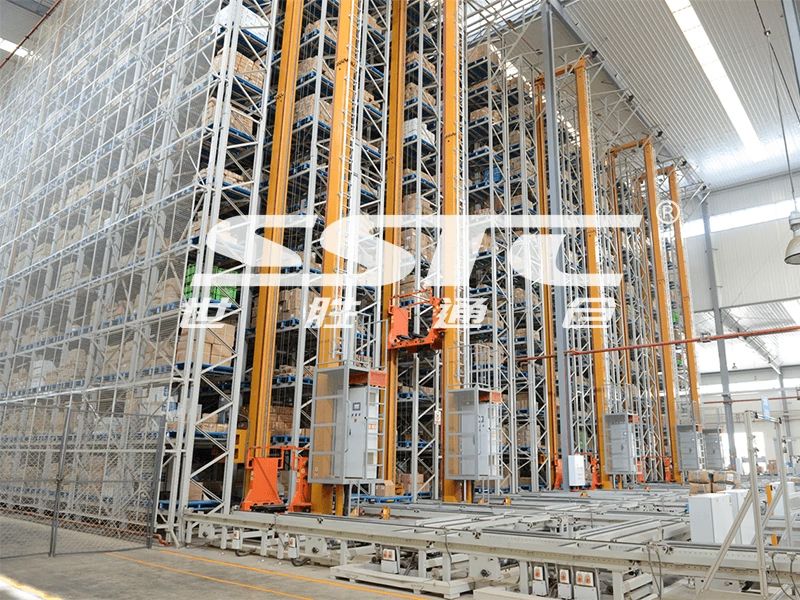
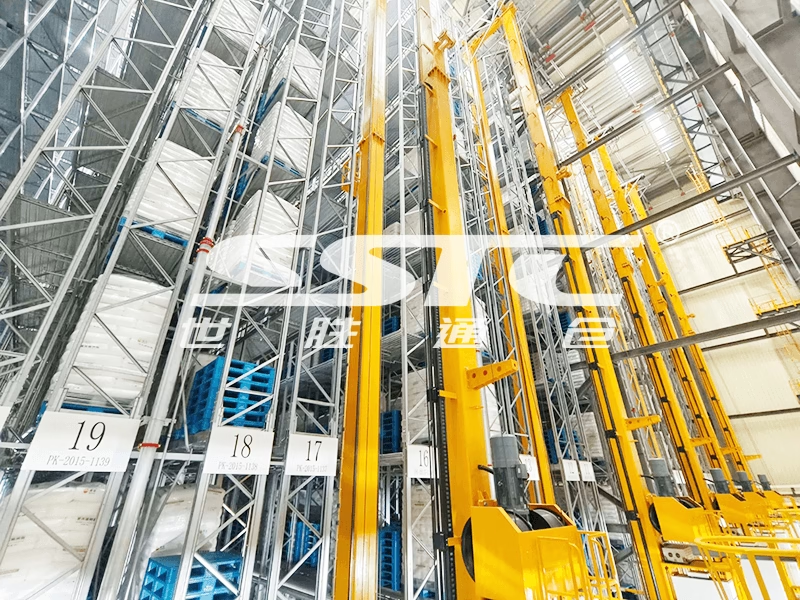
Itu 2026 Global AS/RS Industry Application Matrix & Market Outlook
The global automated storage and retrieval system market has expanded rapidly, reaching an estimated valuation of USD 11.39 billion in 2026, driven by a robust compound annual growth rate (CAGR) of 8.34% toward USD 16.99 miliar oleh 2031. High-stakes industries—particularly pharmaceuticals, hazardous chemicals, and cold-chain logistics—are the primary catalysts for this growth.
To provide empirical clarity, the following data table outlines the 2026 global application landscape, primary operational drivers, and institutional data references for AS/RS deployment across key industrial sectors:
Table 1: Global AS/RS Industry Application Matrix & Market Insights (2026)
| Industry Sector | Primary AS/RS Technology Deployment | 2026 Market Dynamics & Operational Drivers | Key Regulatory & Engineering Standards | Professional Research Source Reference |
| Farmasi & Biologics | Unit-Load AS/RS, Mini-Load Tote Systems, Automated Cold-Room Shuttles | Strict serialization, temperature-controlled validation (-25°C to +8°C), zero-contamination cleanroom environments, labor scarcity in sterile zones. | GMP, FDA 21 CFR Part 11, ISO 14644, DI DALAM 15620 | Mordor Intelligence ASRS Report |
| Specialty & Industrial Chemicals | Heavy-Duty Unit-Load Cranes, Explosion-Proof Four-Way Shuttles, Pallet Flow AS/RS | Explosion-proof (ATEX/IECEx) kepatuhan, corrosive material handling, strict segregation of reactive compounds, trace-and-recall security. | OSHA, ATEX Directives, GB 50017, FEM 10.2.02 | Mordor Intelligence ASEAN Chemical Logistics |
| Rantai Dingin & Food Logistics | High-Density Radio Shuttle AS/RS, Automated Stacker Cranes | Mitigating soaring energy costs of refrigeration by maximizing cubic density up to 90%, eliminating empty cubic airspace. | HACCP, ISO 22000, DI DALAM 15629, GB/T 22532 | Industri Penanganan Material (MHI) Insights |
| Advanced Manufacturing & Elektronik | VLM (Modul Pengangkatan Vertikal), Micro-Load AS/RS, Barang-ke-Orang (G2P) Stations | High-mix, low-volume component storage, ESD (electrostatic discharge) perlindungan, rapid micro-component retrieval. | IPC Standards, ISO 9001, DI DALAM 15095 | ScienceDirect Research Repository |
Regional Spotlight: AS/RS Transformation Across Southeast Asia (2026–2031)
Southeast Asia has transformed into one of the world’s most dynamic manufacturing and logistics powerhouses. Driven by supply chain diversification, surging foreign direct investment (FDI), and rapid industrialization, nations across the ASEAN bloc are modernizing their infrastructure at an unprecedented pace.
Below is an in-depth analysis of AS/RS adoption and future outlook across key Southeast Asian markets:
1. Singapura: The Regional Hub for Smart Pharma and High-Tech Logistics
Lanskap Saat Ini (2026): Singapore stands as Southeast Asia’s advanced biomedical and pharmaceutical capital. With land scarcity driving industrial real estate costs to astronomical highs, horizontal warehousing is economically unviable. Singaporean facilities heavily rely on ultra-high-density AS/RS, Modul Pengangkatan Vertikal (VLM), and automated goods-to-person picking stations.
5-Pandangan Tahunan (2026–2031): Driven by government initiatives under Smart Nation and Industry 4.0 grants, Singapore will see near-saturation of fully autonomous dark warehouses, with artificial intelligence-driven predictive maintenance and digital twin integration becoming standard across all new pharma distribution hubs.
2. Thailand: The Detroit of Asia Pivoting to Chemical & Automotive Automation
Lanskap Saat Ini (2026): Thailand anchors regional automotive and chemical processing. Koridor Ekonomi Timur (MEE) has attracted massive investments in petrochemical complexes and specialty chemical manufacturing. Facilities in Rayong and Chonburi are actively upgrading to heavy-duty AS/RS systems to manage hazardous pallet storage safely.
5-Pandangan Tahunan (2026–2031): Supported by the Thailand 4.0 economic model, demand for automated chemical warehousing will surge at a projected CAGR exceeding 9%, as chemical producers seek to eliminate manual forklift handling in hazardous storage yards.
3. Malaysia: Semiconductor and Medical Device Logistics Expansion
Lanskap Saat Ini (2026): Penang and Selangor have emerged as premier global electronics packaging and medical device manufacturing centers. Cleanroom-compliant AS/RS mini-load systems are seeing massive deployment to manage delicate wafer boxes, medical consumables, and high-purity chemical components.
5-Pandangan Tahunan (2026–2031): Malaysia’s National Industrial Master Plan (NIMP) is accelerating smart factory automation. Over the next five years, domestic and multinational corporations will integrate AS/RS with automated guided vehicles (AGV) to create fully integrated touchless supply chains.
4. Indonesia: Archipelago Logistics Optimization and Cold Chain Growth
Lanskap Saat Ini (2026): As Southeast Asia’s largest economy, Indonesia menghadapi tantangan logistik yang unik di wilayah kepulauannya yang luas. Kawasan industri Jakarta dan sekitarnya (seperti Cikarang) sedang mengalami lonjakan logistik rantai dingin dan pusat distribusi farmasi untuk melayani pasar layanan kesehatan domestik yang berkembang pesat.
5-Pandangan Tahunan (2026–2031): Desentralisasi infrastruktur dan modernisasi rantai dingin akan mendorong pertumbuhan dua digit yang kuat untuk AS/RS antar-jemput palet otomatis dan rak berpendingin dengan kepadatan tinggi, secara signifikan mengurangi tingkat pembusukan obat-obatan dan obat-obatan secara nasional.
5. Vietnam: Masuknya Manufaktur yang Pesat dan Logistik E-Commerce
Lanskap Saat Ini (2026): Vietnam telah memantapkan dirinya sebagai kekuatan manufaktur global untuk barang elektronik konsumen, pakaian, dan bahan kimia ringan. Kawasan industri di Binh Duong dan Bac Ninh dengan cepat mengadopsi AS/RS modular untuk menangani buffer manufaktur dengan throughput tinggi dan pementasan ekspor.
5-Pandangan Tahunan (2026–2031): Seiring dengan meningkatnya rantai nilai manufaktur Vietnam menuju rekayasa presisi dan pemrosesan kimia, belanja modal untuk solusi turnkey AS/RS akan meningkat pesat, mengubah logistik lokal dari model yang bergantung pada tenaga kerja menjadi ekosistem yang sepenuhnya otomatis.
6. Filipina: Modernisasi Distribusi Ritel dan Farmasi Berbasis BPO
Lanskap Saat Ini (2026): Filipina sedang mengalami lonjakan konsumsi ritel dan layanan kesehatan. Metro Manila dan koridor logistik di sekitarnya sedang memodernisasi pusat distribusi regional untuk mengatasi kemacetan perkotaan dan ekspansi e-commerce yang pesat.
5-Pandangan Tahunan (2026–2031): Investasi pada infrastruktur penyimpanan dingin dan jaringan distribusi farmasi akan memicu adopsi compact secara luas, flexible AS/RS solutions designed to maximize constrained urban real estate footprints.
The 5-Year Forward Outlook (2026–2031): What Global Supply Chain Leaders Must Anticipate
Melihat ke depan 2031, the AS/RS market will undergo profound technological metamorphosis. Several transformative trends will dictate how enterprises design their automated facilities:
AI-Driven Dynamic Slotting and Predictive Routing: Next-generation Warehouse Execution Systems (BARAT) will utilize machine learning algorithms to anticipate seasonal inventory fluctuations, automatically shifting high-velocity SKUs closer to egress points.
Autonomous Mobile Robots (AMR) Integrated with Crane AS/RS: The rigid boundaries between fixed-aisle cranes and flexible mobile robots will dissolve. Hybrid systems combining high-bay AS/RS cranes with swarm-navigating AMRs will offer unprecedented scalability.
Green Warehousing and Energy Regeneration: With global net-zero mandates tightening, AS/RS manufacturers will increasingly deploy advanced kinetic energy recovery systems (ERS), ultra-low energy lighting grids, and solar-integrated DC microgrids.
Kesimpulan: Partnering with SSTC Intelligence for Your Turnkey AS/RS Journey
Investing in an automated storage and retrieval system is a pivotal strategic decision that shapes an enterprise’s operational efficiency, safety compliance, and profitability for decades. By adhering strictly to FEM, DI DALAM, and GB standards, Intelijen SSTC (Shisheng Tongcang) ensures that your automated warehouse is built on a foundation of uncompromised engineering excellence.
As an experienced direct manufacturer and turnkey solution provider, SSTC Intelligence delivers world-class AS/RS solutions tailored to your exact operational realities—from initial engineering design to global deployment and lifetime support.
Pertanyaan yang Sering Diajukan (Pertanyaan Umum)
Q1: Why do automated integrators insist on specific AS/RS standards like FEM, DI DALAM, and GB?
A1: Automated storage equipment operates under tight mechanical tolerances and high acceleration forces. Adhering to standards like EN 15620, FEM 10.2.02, and GB 50017 ensures structural stability, prevents equipment collisions, and guarantees legal compliance.
Q2: How do SSTC Intelligence AS/RS systems comply with both European and Chinese standards?
A2: SSTC Intelligence operates advanced manufacturing lines that simultaneously satisfy international quality benchmarks (CE, ISO9001), harmonized European norms (DI DALAM 15512, DI DALAM 15620), and rigorous Chinese national structural codes (GB 50017, GB/T 22532), ensuring global project acceptance.
Q3: Berapa laba atas investasi yang khas (ROI) timeline for an industrial AS/RS installation?
A3: Due to dramatic labor reduction, hingga 90% pemanfaatan ruang, zero product damage, and eliminated inventory shrinkage, most industrial AS/RS deployments achieve full capital payback within 3 ke 5 bertahun-tahun.
Q4: Does SSTC Intelligence provide turnkey engineering support for overseas projects in Southeast Asia?
A4: Ya. As a direct manufacturer, SSTC Intelligence provides end-to-end turnkey services—including structural design, manufaktur, export logistics, on-site supervision, komisioning, dan pelatihan teknis lokal di seluruh Singapura, Thailand, Malaysia, Indonesia, Vietnam, dan Filipina.
Informasi Kontak
- Situs web: www.sstc-storage.com / www.sstc-china.com
Global Email: [email protected]
China Regional Email: [email protected]
Ada apa: +86-13671613032