Le fournisseur de fabrication professionnel de solutions de stockage haute densité en Chine


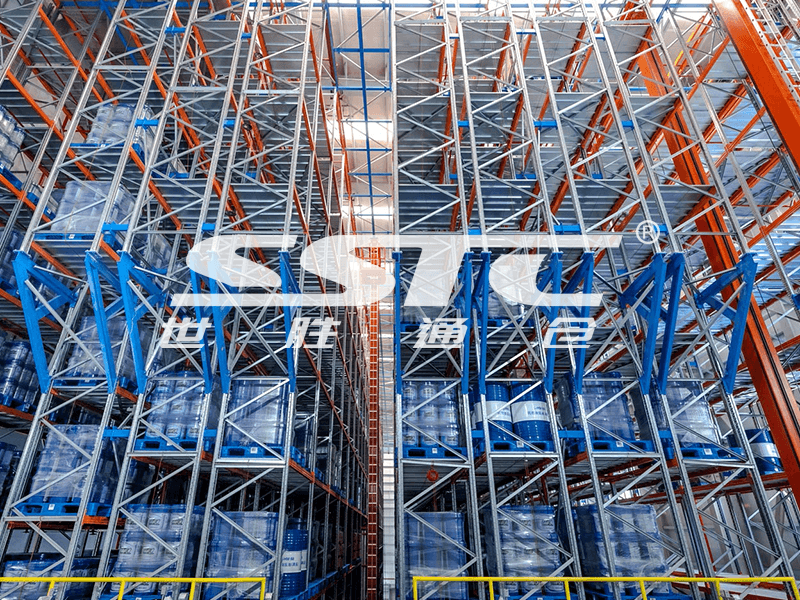
| Système automatisé de stockage et de récupération SSTC fonctionnant dans une installation moderne de stockage de produits chimiques et de matériaux avancésChinois/CN

Optimizing Supply Chains: The Ultimate Guide To ASRS For Food And Beverages Warehousing

Optimizing Supply Chains: The Ultimate Guide to ASRS for Food and Beverages Warehousing

In the modern global economic landscape, ASRS for food and beverages warehousing has transitioned from an advanced technological upgrade into an absolute operational lifeline. The food and beverage (F&B) sector operates under some of the most rigorous, fast-paced, and unforgiving supply chain constraints in existence. Unlike dry goods or durable industrial components, food and beverage items are burdened by strict expiration dates, stringent health and safety regulations, high turnover velocity, et, in many cases, extreme temperature-controlled requirements.

For decades, traditional F&B distribution centers relied heavily on conventional selective pallet racking, multi-tier manual shelving, and extensive fleets of human-operated forklifts. Aujourd'hui, that conventional operational framework is buckling under the compounding pressures of skyrocketing urban real estate costs, chronic labor shortages in distribution hubs, and escalating consumer demands for instantaneous, damage-free product delivery.

To overcome these structural roadblocks, forward-thinking food processors, beverage conglomerates, et logistique tierce (3PL) providers are pivoting toward intelligent automation. À Technologie de renseignement SSTC, our engineering division specializes in engineering robust, high-performance Automated Storage and Retrieval Systems (AS/RS) designed explicitly to resolve the complex intralogistics bottlenecks unique to the food and beverage industry. This comprehensive industry report explores the critical functions, economic justifications, and transformative impacts of deploying modern AS/RS architectures across contemporary F&B supply chains.

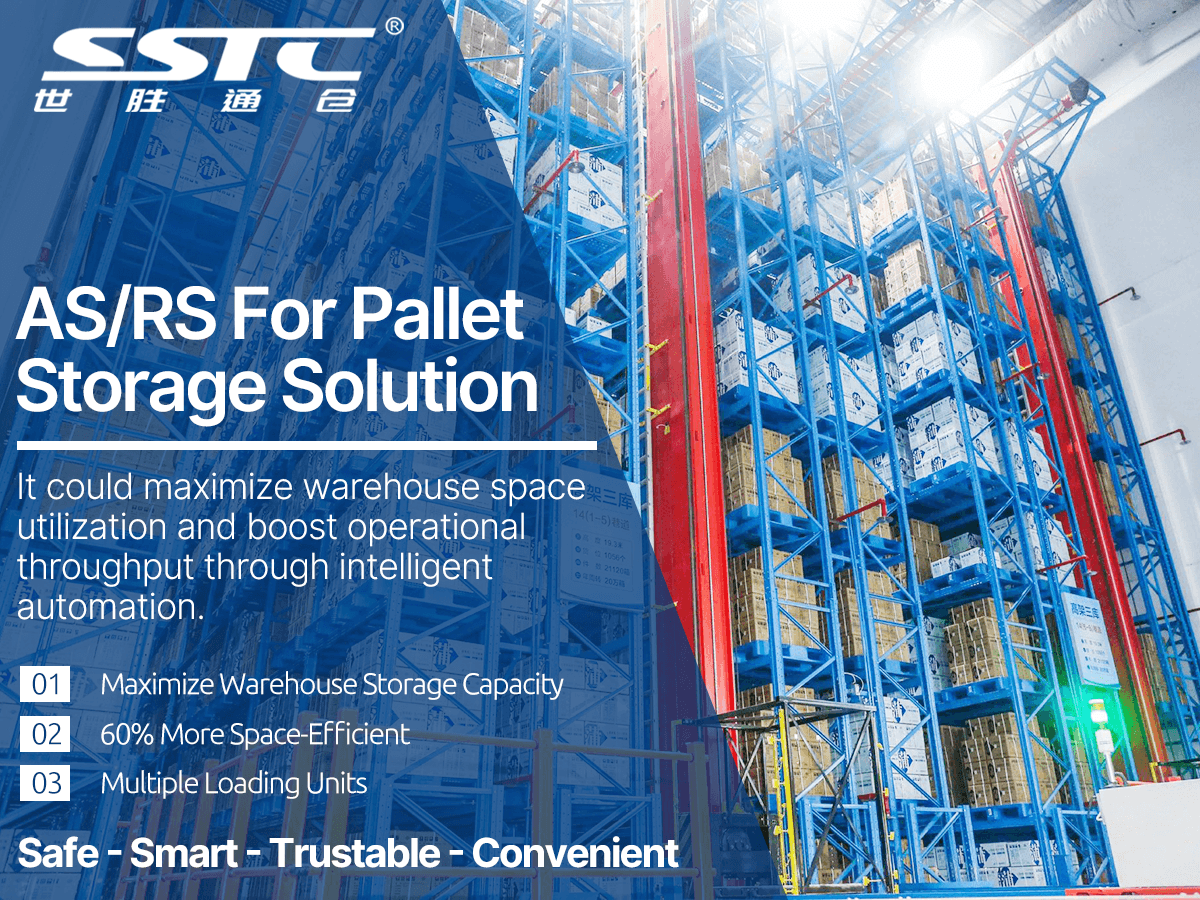
SSTC automated storage and retrieval system AS/RS operating efficiently in a modern food and beverage cold chain warehouse

Chapter 1: The Intralogistics Crisis in Food & Beverage Distribution

Before evaluating the technical mechanics of automated solutions, it is essential to dissect the primary pain points that plague facility directors and supply chain executives in the food and beverage sector on a daily basis.

1. The Strict Imperative of FIFO Compliance and Perishability Management

In the food and beverage supply chain, inventory is a race against time. Whether dealing with dairy products, fresh produce, bottled beverages, or packaged processed foods, maintaining strict FIFO (Premier arrivé, Premier sorti) inventory rotation is non-negotiable. A failure in batch tracking can lead to expired stock, massive product write-offs, costly health compliance violations, and irreversible damage to brand reputation. Manual record-keeping and traditional warehouse management setups are highly susceptible to human error, often resulting in buried stock and lost inventory.

2. The Harsh Realities of Cold Chain Logistics (-30°C Operations)

A massive percentage of food and beverage inventory requires temperature-controlled storage, ranging from chilled storage (2°C to 4°C) to deep sub-zero freezers (-25°C to -30°C). Operating manual forklifts and human labor in sub-zero freezers is notoriously inefficient and hazardous. Human workers cannot endure prolonged shifts in extreme cold without frequent rotations, leading to high labor turnover, reduced productivity, and severe safety liabilities. Furthermore, standard material handling equipment often suffers from battery drain, lubrication breakdown, and structural fatigue in sub-zero environments.

3. High-Volume Seasonal Surges and SKU Proliferation

The modern consumer market demands an ever-expanding variety of flavors, packaging sizes, and private-label variations. This SKU proliferation, combined with massive seasonal demand spikes (such as beverage surges during summer months or holiday confectionery rushes), creates severe capacity crunches. Traditional warehouses frequently run out of footprint during peak seasons, forcing companies to lease expensive off-site temporary storage facilities.


Chapter 2: Core Functions of ASRS for Food and Beverages Warehousing

Implementing AS/RS for food and beverages warehousing introduces a transformative layer of mechanical precision and software intelligence that directly neutralizes these operational hurdles.

  • Maximizing Vertical Cubic Space Utilization

Real estate acquisition and leasing costs in major logistics and distribution hubs have reached historic highs. Traditional selective pallet racking wastes up to 50% of a facility’s total volume on wide forklift aisles. AS/RS high-bay structures, by contrast, leverage vertical headroom up to 25 meters or higher. By utilizing high-speed stacker cranes and compact automated shuttle grids, SSTC installations achieve up to 95% volumetric space utilization, enabling enterprises to store exponentially more pallet loads within their existing physical footprints.

  • Absolute Traceability via WMS and WCS Integration

Hardware automation is only as effective as the software orchestrating it. SSTC’s advanced Warehouse Management Systems (WMS) and Warehouse Control Systems (WCS) integrate seamlessly with enterprise ERP platforms. Every single pallet entering the facility is scanned, logged, and assigned an optimized storage coordinate. The software automatically enforces strict FIFO or LIFO protocols, tracks batch numbers, monitors expiration timelines, and guarantees 100% inventory visibility in real-time.

  • Environmental Efficiency in Cold Chain Operations

Compressing storage footprints through high-density AS/RS automation drastically reduces the total cubic volume of air that requires active refrigeration or heating. In sub-zero cold chain facilities, this volumetric optimization translates directly into massive, ongoing reductions in energy consumption and electrical utility expenditures.

sstc asrs for pallet storage 2026080802
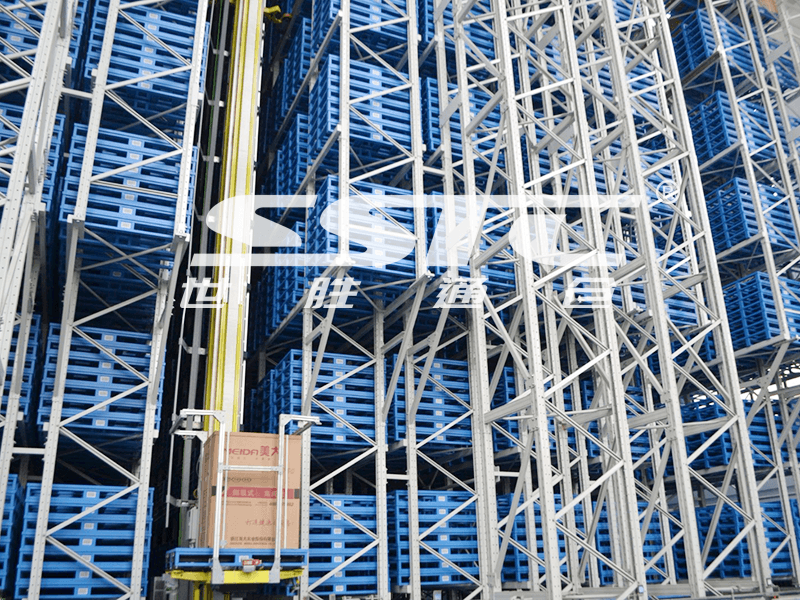
as rs palletized products storage indonesia 206080902

Chapter 3: Technological Architecture: Stacker Cranes vs. Four-Way Pallet Shuttles

Different F&B facilities possess distinct throughput, SKU profile, and building layout requirements. SSTC engineers tailor automation strategies utilizing two primary technological pillars:

1. High-Bay Stacker Crane Systems

For high-throughput distribution centers managing massive volumes of standardized pallet loads (such as major bottled water plants, brewery distribution hubs, or large-scale dairy facilities), AS/RS Stacker Crane Systems represent the pinnacle of speed and reliability. Equipped with telescopic forks, high-speed vertical lifting motors, and precision laser guidance, stacker cranes handle heavy pallet loads smoothly across towering narrow aisles. For broader insights into optimizing high-speed industrial storage, explore our core solutions at the SSTC Storage Solutions Portal.

2. Four-Way Pallet Shuttle Systems

For warehouses requiring maximum storage density combined with multi-directional routing flexibility, le Four-Way Pallet Shuttle System is the ultimate choice. These autonomous robotic vehicles travel in all four directions across modular rail grids, seamlessly interacting with vertical lifts to transport pallets to any designated bay. To examine the technical specifications and engineering mechanics of this technology, read our detailed analysis on SSTC’s Four-Way Pallet Shuttle Solution. Furthermore, industry benchmarks highlighted by international logistics research platforms such as the Global Cold Chain Alliance (GCCA) et Supply Chain Dive consistently demonstrate that multi-directional shuttle automation is vital for maximizing cold storage throughput and energy efficiency.

Chapter 4: Economic Impact and Total Cost of Ownership (TCO)

When corporate executive boards evaluate automation initiatives, discussions frequently center around initial Capital Expenditure (Investissements). However, evaluating an intralogistics transformation solely on upfront costs overlooks the profound, long-term savings delivered across the Total Cost of Ownership (TCO):

  • Dramatic Labor Overhead Reduction: By automating storage and retrieval lifecycles, facilities reduce manual handling labor requirements by up to 70%, insulating operations from the ongoing global labor crisis.

  • Elimination of Product Spoilage and Write-Offs: Software-enforced FIFO protocols and precision handling eliminate expired stock and crushed packaging, saving companies thousands of dollars annually.

  • Avoidance of Real Estate Expansion Costs: Achieving 95% space utilization eliminates the need to construct new buildings or lease expensive external warehouses.

  • Enhanced Workplace Safety: Removing human workers and heavy manual forklifts from hazardous high-bay and sub-zero storage zones reduces accident rates to near zero, stabilizing insurance premiums.

Conclusion: Partner with SSTC for Future-Ready Food Logistics

The food and beverage industry demands absolute reliability, uncompromising hygiene compliance, and relentless supply chain efficiency. Clinging to outdated, manual, horizontal warehouses exposes businesses to escalating labor costs, space constraints, and costly inventory spoilage. Transitioning to an advanced automated storage architecture is no longer a futuristic luxury—it is an immediate operational imperative for sustainable market leadership.

Explore our comprehensive engineering capabilities today at the SSTC Official Website, or review our specialized technical guides on SSTC’s Four-Way Pallet Shuttle Solution.

Connect with Our Global Engineering Experts

Ready to elevate your food and beverage warehousing capacity and eliminate supply chain bottlenecks? Reach out to our technical consulting team today:

SSTC Intelligence Technology — Redefining Space, Enhancing Efficiency, Empowering Global Supply Chains.

Foire aux questions (FAQ)


T1: How does ASRS for food and beverages warehousing help manage expiration dates and FIFO compliance?

UN: Integrated WMS/WCS software tracks every pallet’s entry date and batch details, automatically prioritizing older inventory for outbound dispatch to enforce strict FIFO protocols.


T2: Can SSTC’s AS/RS systems operate in sub-zero cold chain environments?

UN: Oui. SSTC designs specialized automated stacker cranes and shuttle systems engineered with cold-resistant metallurgy and specialized lubricants to ensure flawless 24/7 performance in freezer environments down to -30°C.


T3: How much space can an AS/RS save compared to conventional racking?

UN: By eliminating wide forklift driving aisles and utilizing vertical height up to 24 meters, SSTC AS/RS solutions achieve up to 95% cubic space utilization, significantly reducing real estate footprints.

Précédent:

Suivant:

Laisser un message