Le fournisseur de fabrication professionnel de solutions de stockage haute densité en Chine


| Système automatisé de stockage et de récupération SSTC fonctionnant dans une installation moderne de stockage de produits chimiques et de matériaux avancésChinois/CN

Optimizing Chemical Warehousing And Logistics With AS/RS In Chemical Industry

Optimizing Chemical Warehousing and Logistics with AS/RS in Chemical Industry

Discover how advanced AS/RS in chemical industry facilities engineered by SSTC Intelligence solves hazardous storage bottlenecks, ensures strict safety compliance, and maximizes pallet storage efficiency.

The chemical processing and manufacturing sector operates under a punishing set of operating conditions. From highly volatile materials and corrosive chemical compounds to strict regulatory compliance, extreme environmental controls, and the imperative of absolute inventory traceability, chemical intralogistics leaves zero margin for error. Yet, despite the inherent risks and complexities, a significant number of chemical enterprises continue to rely on legacy warehouse models—conventional selective racking serviced by manual forklift fleets. These traditional structures waste up to fifty percent of valuable floor space in wide service aisles, expose personnel to severe workplace hazards, and struggle to keep pace with the high-throughput demands of modern global supply chains.

To overcome these structural limitations, industry leaders are aggressively modernizing their infrastructure by deploying an Système automatisé de stockage et de récupération (AS/RS in chemical industry). Unlike multi-directional shuttles or semi-automated configurations, a heavy-duty, unit-load AS/RS centered around precision-engineered stacker cranes and high-bay racking provides the ultimate backbone for large-scale, high-density, and completely unmanned chemical pallet management. Renseignement SSTC delivers end-to-end automated storage and retrieval systems tailored specifically to the harsh, high-stakes realities of chemical manufacturing and distribution.

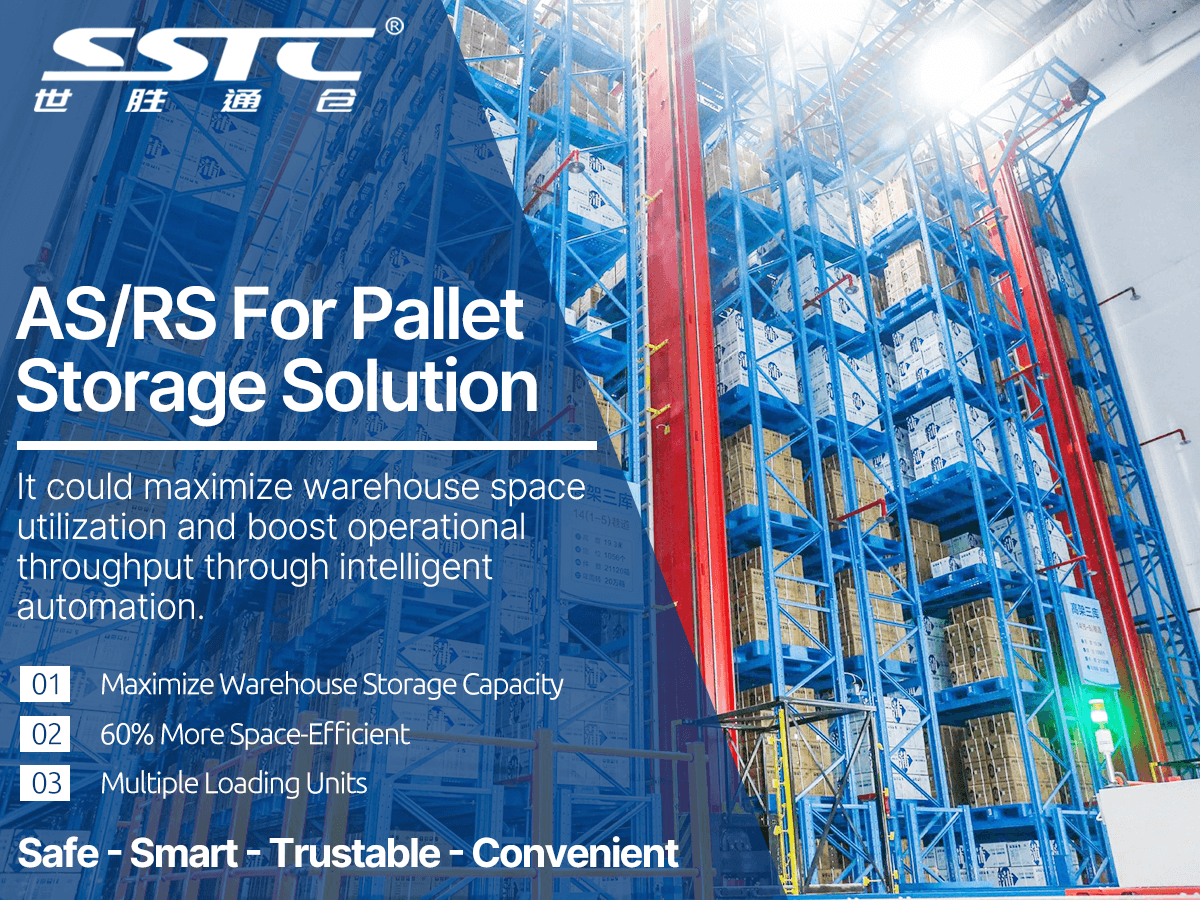
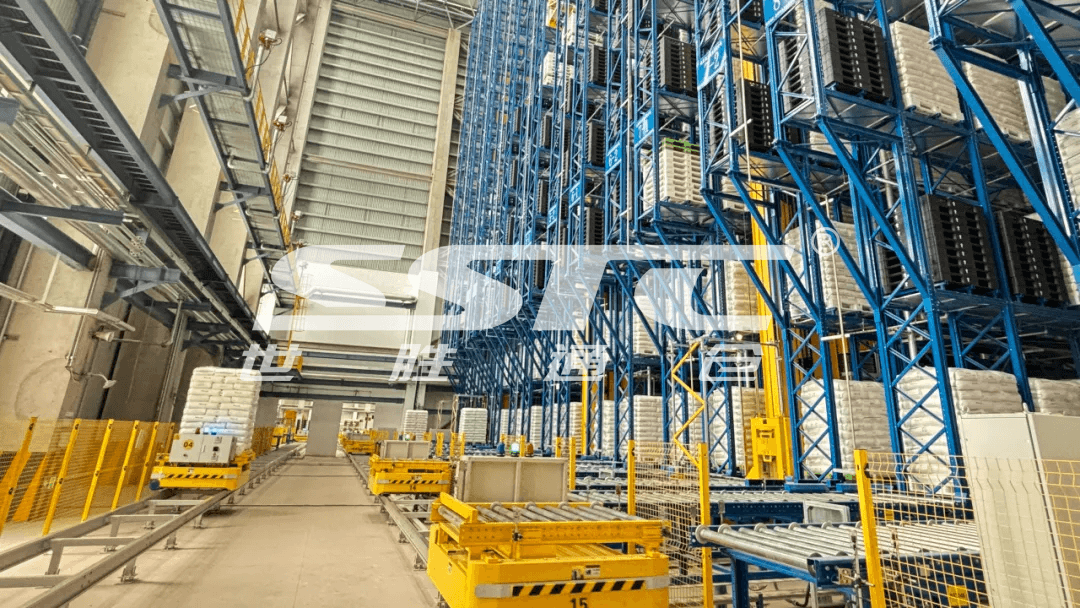
Système automatisé de stockage et de récupération (AS/RS) handling heavy palletized goods in a modern chemical industry warehouse engineered by SSTC Intelligence

1. The Complex Operational Realities of Chemical Intralogistics

Before evaluating modern technological interventions, it is essential to deconstruct the unique friction points that plague chemical storage facilities worldwide. Chemical warehouses are fundamentally distinct from standard e-commerce fulfillment centers or dry-goods distribution hubs.

  • Hazardous Environments and Safety Compliance

Chemical storage frequently involves combustible gases, flammable liquids, reactive polymers, corrosive acids, and toxic reagents. Exposing human operators and manual material handling machinery to high-bay storage racks under these conditions escalates the risk of catastrophic workplace accidents, chemical spills, structural rack impacts, and container ruptures. Global occupational safety frameworks, such as those enforced by the Occupational Safety and Health Administration (OSHA) Hazardous Materials Standards, continuously mandate the reduction of direct human exposure in hazardous storage zones.

  • Real Estate Pressures and Footprint Economics

Building new chemical plants, processing complexes, or distribution terminals requires extraordinary capital expenditure. Real estate acquisition costs, coupled with strict environmental zoning laws that limit expansion footprints, make square footage an intensely premium asset. Conventional selective pallet racking systems require extensive aisle clearances for forklift maneuverability, resulting in severe volumetric under-utilization.

  • Traceability, FIFO/LIFO, and Expiration Management

Chemical raw materials and finished goods—ranging from industrial resins and agricultural fertilizers to pharmaceutical precursors—are highly sensitive to environmental degradation, shelf-life expiration, and batch-mixing errors. Manual inventory logging and visual stock rotation frequently introduce human error, leading to compromised product integrity, severe compliance penalties, and expensive inventory write-offs.

According to comprehensive supply chain analyses published by platforms like Supply Chain Digital Logistics Insights, facilities failing to transition their high-density buffering to fully automated systems suffer from an escalating Total Cost of Ownership (Coût total de possession) driven entirely by manual labor inefficiencies and regulatory compliance overhead.

2. Engineering the Solution: How AS/RS Transforms Chemical Pallet Storage

The deployment of an AS/RS in chemical industry environments represents a paradigm shift from manual intervention to closed-loop, precision automation. A robust unit-load AS/RS consists of high-bay structural steel racking, high-speed automated stacker cranes, precision conveyor systems, automated identification stations (profile checking and barcoding), and an integrated Warehouse Management System (WMS) paired with a Warehouse Control System (WCS).

  • Maximizing Volumetric Efficiency in High-Bay Structures

Chemical manufacturing outputs are typically heavy, bulky, and palletized in standardized configurations (such as EUR-pallets, industrial GMA pallets, or specialized chemical IBCs). Traditional warehouses rarely exceed 8 to 10 meters in height due to forklift reach limits and safety risks.

In contrast, an AS/RS engineered by Renseignement SSTC can scale vertically up to 25 meters or higher. By replacing wide forklift aisles with narrow storage bays serviced by dedicated vertical-horizontal moving stacker cranes, enterprises can maximize volumetric storage density by over 80%. This dramatic vertical consolidation allows chemical producers to store significantly more inventory within their existing building footprint, entirely eliminating the need for expensive greenfield real estate expansion.

  • Unmanned Safety and Isolation of Hazardous Zones

Safety is the absolute cornerstone of chemical plant operations. By implementing a high-bay AS/RS, human personnel are physically removed from the high-risk vertical storage environment. The movement of heavy, palletized chemical loads from receiving docks into deep storage bays and back out to shipping zones is handled entirely by automated stacker cranes and intelligent conveyor networks. This complete separation of man and machine drastically reduces structural impacts, equipment collisions, and the potential for accidental chemical container breaches.

  • Flawless Traceability Through Integrated WMS and WCS

Compliance in the chemical sector requires absolute accountability from the moment raw materials enter the plant until finished goods leave the dock. An AS/RS integrates deeply with enterprise software to automate data capture. As soon as a pallet of chemical goods enters the receiving bay, automated profile scanners verify dimensions, weights, and barcode labels (such as GS1 DataMatrix or hazardous material classification markings).

The WMS records the exact physical coordinate within the high-bay racking structure and manages strict First-In, Premier sorti (FIFO) or Last-In, Premier sorti (LIFO) rotation rules automatically. This eliminates human error in inventory placement, prevents expired stock from reaching production or distribution, and provides instantaneous audit trails for regulatory inspectors.

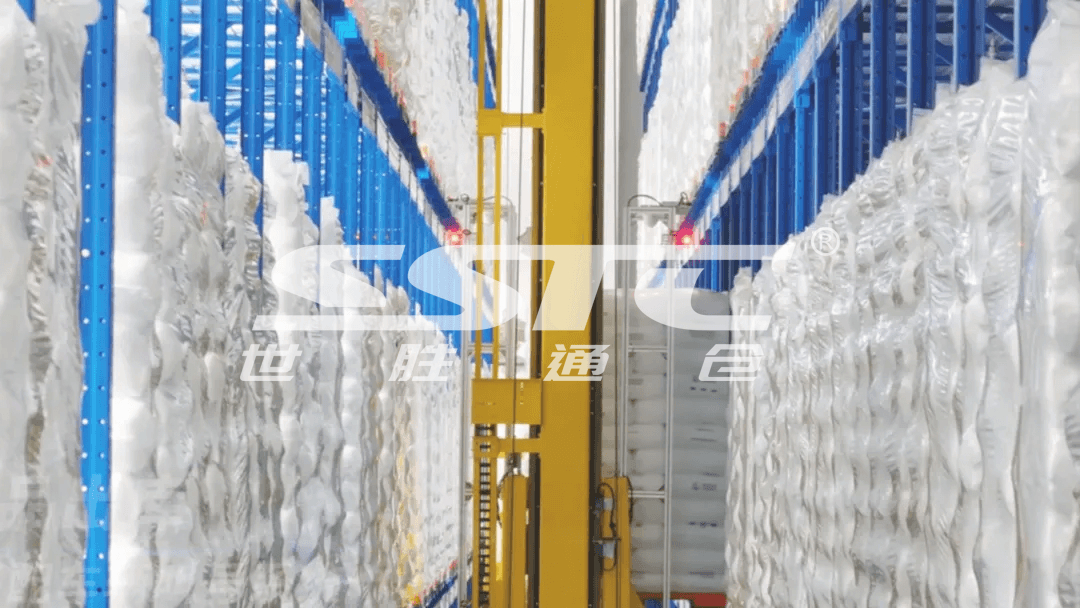
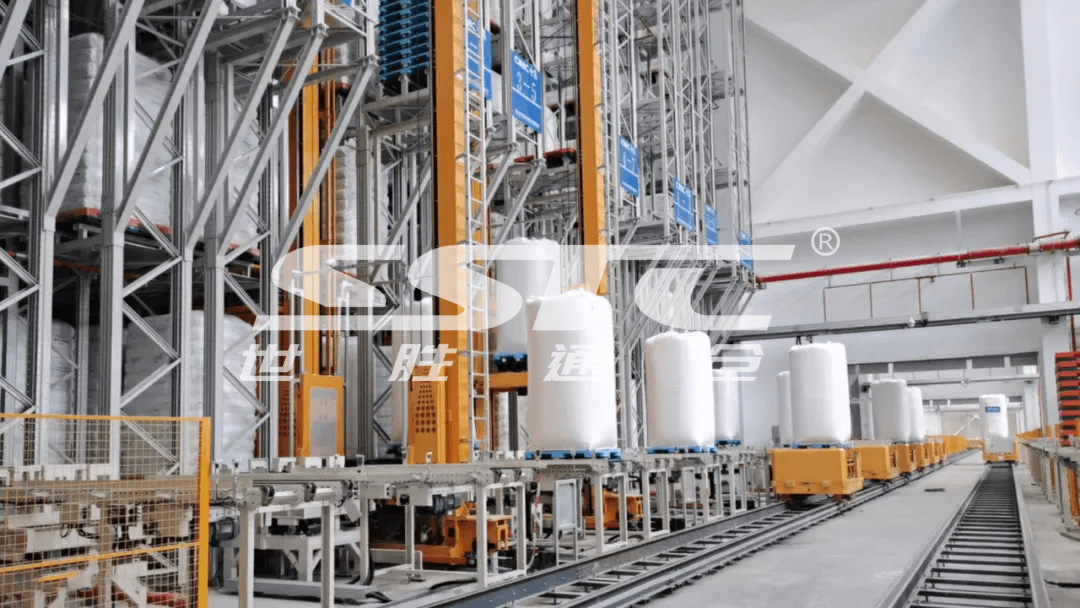
High-bay unit-load AS/RS stacker crane operating in a secure chemical industry storage facility

3. Structural and Mechanical Superiority of AS/RS in Corrosive Environments

Chemical plants present severe environmental challenges that standard warehouse equipment cannot survive. Acid vapors, moisture, chemical residues, and extreme temperature variations (ranging from sub-zero cold-storage spaces for volatile reagents to high-ambient manufacturing floors) demand specialized engineering.

  • Corrosion-Resistant Materials and Surface Treatments

Racking structures and stacker crane chassis deployed within chemical environments must withstand aggressive chemical exposure. Renseignement SSTC utilizes high-tensile structural steel coated with specialized multi-layer anti-corrosion finishes, hot-dip galvanization, or acid-resistant polymer coatings. Electrical enclosures housing crane drives and control PLCs are built to high IP ratings (such as IP65 or IP67) to prevent moisture and vapor ingress.

  • Heavy-Load Stacker Crane Precision

Chemical pallets are notoriously heavy—often weighing between 1,000 kg and 2,500 kg per pallet position. Standard material handling equipment experiences severe mechanical fatigue under these loads. AS/RS stacker cranes are engineered with rigid, computer-optimized mast structures, dual-drive motors with regenerative braking, and precision laser positioning systems. This ensures smooth, sub-millimeter positioning accuracy even at heights exceeding 20 meters, preventing load swaying and structural destabilization.

4. Economic Impact: Quantifying ROI and TCO Reduction

Investing in an AS/RS requires substantial initial capital expenditure (Investissements), yet industrial financial models consistently demonstrate that it delivers a rapid and substantial Return on Investment (Retour sur investissement) by systematically lowering Operational Expenditure (OpEx) and mitigating hidden risk costs.

  • Drastic Reduction in Labor Expenses: By automating the entire storage and retrieval cycle, reliance on specialized, high-cost certified chemical forklift operators is minimized, insulating the enterprise from labor shortages and rising wage pressures.

  • Minimized Equipment Maintenance: Precision-guided stacker cranes operating on fixed rails experience vastly lower mechanical wear and tear compared to manual forklifts navigating rough, chemical-spilled concrete floors.

  • Elimination of Inventory Shrinkage and Damage: Automated handling eliminates forklift-induced rack collisions and dropped pallet incidents, directly protecting high-value chemical products and expensive packaging infrastructure.

  • Optimized Energy Consumption: Modern AS/RS installations incorporate energy-efficient drives, intelligent sleep modes, and regenerative braking systems that feed kinetic energy back into the facility grid during crane deceleration.

5. Implementation Framework and Turnkey Integration by SSTC Intelligence

Executing an automated warehousing project within an active chemical manufacturing environment requires meticulous engineering, rigorous project management, and deep domain expertise. Renseignement SSTC operates as a full-service turnkey integrator, managing every phase of the lifecycle from initial spatial analysis and structural FEA (Finite Element Analysis) simulation to custom manufacturing, on-site installation, and software commissioning.

  1. Consultation and Simulation: Analyzing throughput requirements, peak inventory volumes, and facility dimensional constraints to design an optimized AS/RS layout.

  2. Custom Engineering and Manufacturing: Producing high-tensile racking profiles, automated stacker cranes, and conveyor routing systems within our advanced 90,000 m² smart manufacturing base.

  3. Seamless Software Integration: Customizing WMS/WCS modules to interface smoothly with existing enterprise ERP platforms (such as SAP or Oracle) used by chemical corporations.

  4. Commissioning and Operator Training: Conducting rigorous load testing, safety audits, and comprehensive training programs to ensure safe, autonomous facility handover.

Foire aux questions (FAQ)

To assist technical buyers and supply chain directors in evaluating automation strategies, here are answers to common questions regarding the implementation of an AS/RS in chemical industry applications:

T1: How does an AS/RS handle hazardous or volatile chemical storage safely?

UN: An AS/RS removes human operators entirely from high-bay storage zones through unmanned stacker cranes and automated conveyors. En outre, systems can be customized with explosion-proof (Ex-rated) electrical components, corrosion-resistant coatings, and specialized fire-suppression interface protocols to ensure complete safety when handling volatile substances.

T2: What is the maximum height and load capacity of an AS/RS engineered by SSTC Intelligence?

UN: SSTC Intelligence high-bay AS/RS solutions can be engineered to heights exceeding 25 meters, with stacker crane unit-load capacities designed to handle heavy industrial pallet weights ranging from 1,000 kg to over 2,500 kg per storage position.

T3: How does AS/RS integrate with our existing enterprise software (ERP)?

UN: The AS/RS is controlled via an advanced Warehouse Control System (WCS) and Warehouse Management System (WMS) that features standard API and middleware gateways, allowing seamless, real-time data synchronization with enterprise ERP platforms like SAP, Oracle, and Microsoft Dynamics.

T4: Can an AS/RS be retrofitted into an existing chemical manufacturing facility?

UN: Oui. While greenfield installations offer maximum layout freedom, SSTC Intelligence specializes in brownfield retrofits, adapting high-bay AS/RS architecture to integrate with existing building envelopes and production line layouts.


Conclusion: Future-Proofing Your Chemical Supply Chain

As global chemical markets grow increasingly competitive and regulatory frameworks tighten, supply chain resilience, absolute safety, and spatial optimization are non-negotiable prerequisites for corporate survival. Transitioning from legacy manual storage to an intelligent, automated infrastructure allows chemical enterprises to protect their workforce, eliminate storage bottlenecks, and scale operations seamlessly.

Renseignement SSTC delivers world-class, turnkey AS/RS solutions tailored to the rigorous demands of the chemical industry. Whether you are planning a high-bay warehouse retrofit or designing a new automated facility, our engineering team is ready to help you optimize your infrastructure.

To explore how our custom automated solutions can transform your facility, visit our official website at www.sstc-storage.com.


Contact Information

Ready to discuss your chemical warehousing project? Reach out to our technical specialists directly:

High-bay unit-load AS/RS stacker crane operating in a secure chemical industry storage facility

Précédent:

Suivant:

Laisser un message