


In the contemporary landscape of global supply chain management, distribution facilities face unprecedented pressures. Surging order volumes, escalating real estate costs, acute labor shortages, and demanding delivery SLAs have exposed the structural limitations of conventional, manual storage methodologies. Traditional wide-aisle selective pallet racking, while historically reliable, wastes up to fifty percent of valuable cubic real estate on empty transit corridors and subjects warehouse personnel to physically demanding, error-prone material handling routines. To remain competitive, enterprise logicians and facility directors must look beyond incremental improvements and embrace structural automation. At the core of this industrial paradigm shift is the Sistema de lanzadera ASRS, a sophisticated technology-driven architecture that redefines spatial efficiency, inventory velocity, and operational resilience. Designed specifically to resolve complex pallet handling bottlenecks, the high-performance Sistema de lanzadera ASRS engineered by SSTC Storage Solutions delivers a transformative approach to modern warehousing.
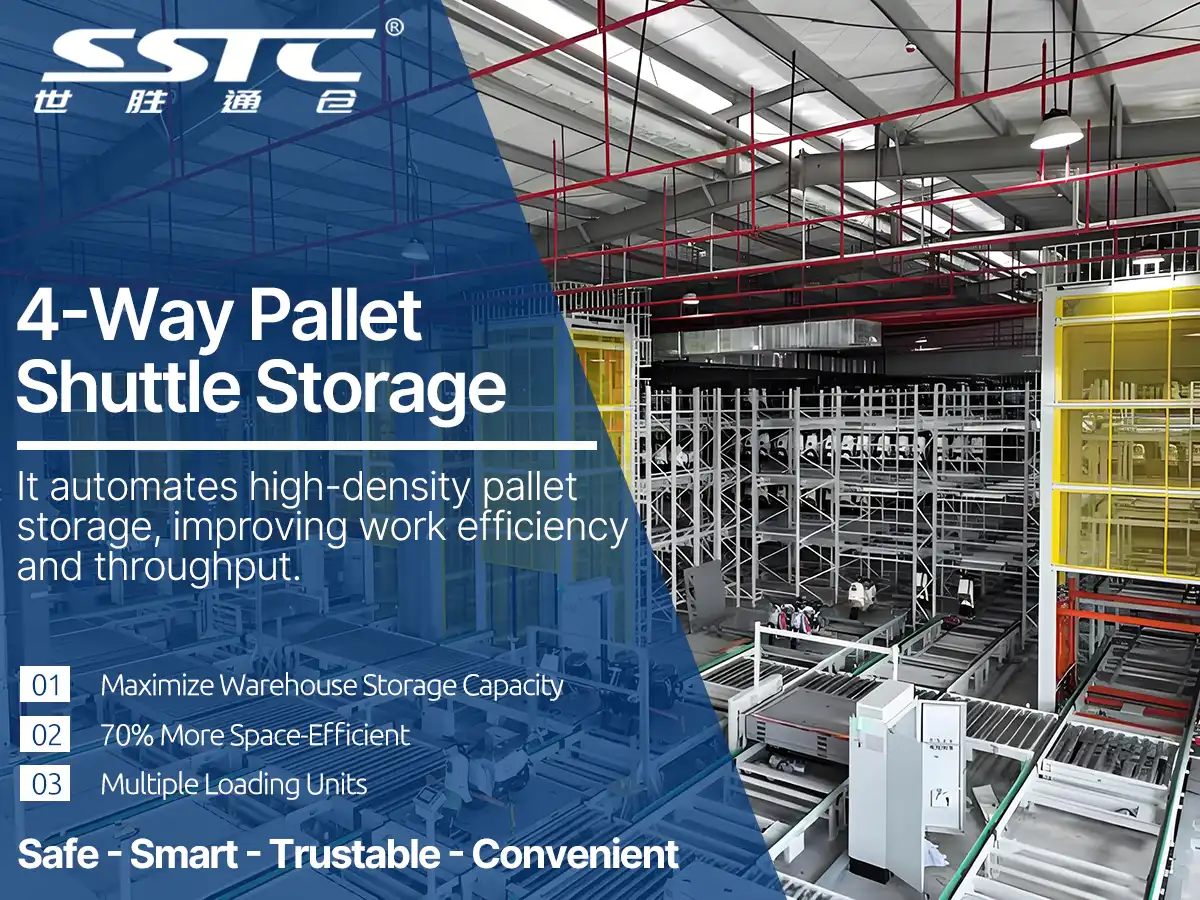
1. Deconstructing the Architecture: ¿Qué es un sistema de lanzadera ASRS??
To understand the operational leap represented by modern automated logistics, one must first examine the engineering anatomy of an Sistema de lanzadera ASRS. Defined broadly within material handling engineering standards—as referenced by industry authorities like the MHI Automated Storage/Retrieval Systems Industry Group—an Automated Storage and Retrieval System integrates computer-controlled mechanical hardware and software to buffer, almacenar, and recover inventory with absolute precision.
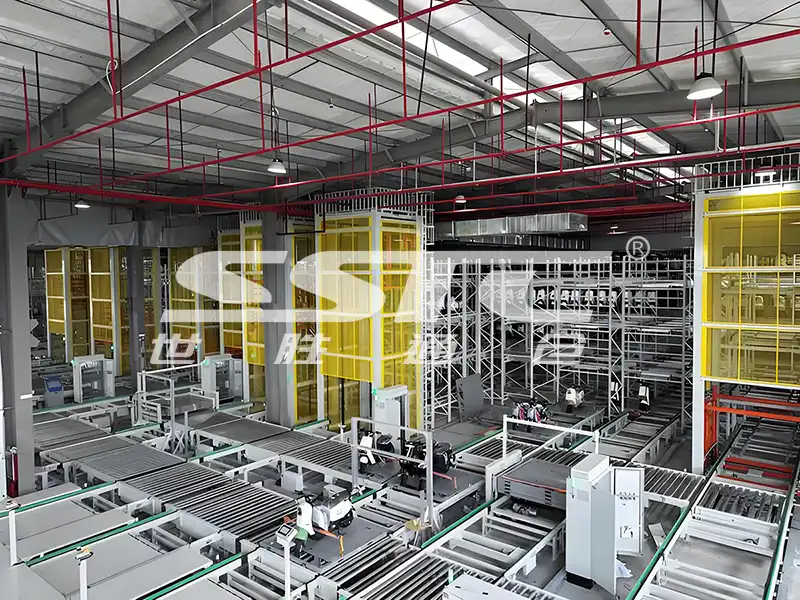
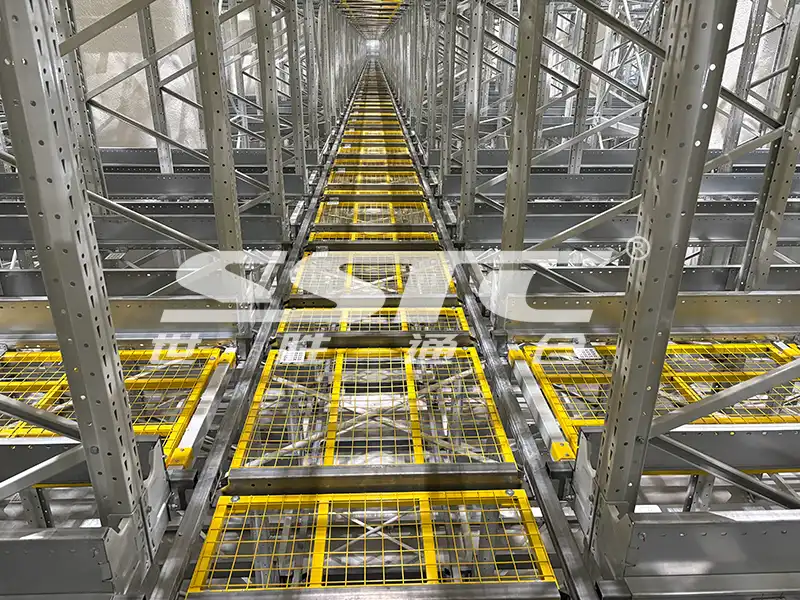
Specifically, un Sistema de lanzadera ASRS utilizes autonomous, battery-powered robotic carriers (lanzaderas) that travel along precision-engineered tracks within deep-lane high-density racking structures. Unlike conventional stacker crane systems that rely on a single heavy mast operating within a dedicated aisle, shuttle-based architectures decouple vertical lifting from horizontal transport. Vertical lifts or elevators position the shuttle and its payload to the designated tier, whereupon the autonomous shuttle accelerates into deep storage channels to execute deposit or retrieval cycles.
This modular division of labor creates parallel processing capabilities. While an elevator manages vertical transitions, multiple shuttles operate concurrently across different rack levels. According to industrial automation research published by institutions such as Supply Chain 247, this multi-tier parallel execution increases throughput exponentially compared to single-crane fixed-aisle models, eliminating queuing delays and maximizing duty-cycle efficiency.
2. Resolving Critical Warehouse Bottlenecks and Operational Pain Points
Global distribution hubs face severe operational frictions that compromise profitability and throughput. The implementation of an Sistema de lanzadera ASRS directly targets and neutralizes these persistent logistical pain points.
Spatial Depletion and High Real Estate Costs
Warehousing land acquisition and construction expenditures have reached historical highs. Traditional facilities struggle with volumetric utilization, often leaving upper-level cubic meters entirely vacant. Un Sistema de lanzadera ASRS compresses deep-lane storage lanes up to 40 meters deep while operating at heights exceeding 20 metros. By eliminating human traversal aisles, this technology recovers up to 85% of usable floor space, allowing enterprises to drastically increase pallet holding capacity within existing facility footprints without incurring costly expansion or relocation overhead.
Labor Scarcity, Ergonomic Risk, and Human Error
Manual forklift navigation in high-bay racking is inherently hazardous, slow, and prone to catastrophic inventory damage or personal injury. Además, chronic labor shortages in logistics hubs make recruitment and retention exceedingly difficult. Deploying an Sistema de lanzadera ASRS removes personnel from repetitive, high-risk vertical picking zones. Automated execution guarantees near-perfect inventory accuracy (exceeding 99.9%), eradicating misplacement errors, reducing shrinkage, and redirecting human capital toward high-value supply chain management and quality control tasks.
Thermal Efficiency Challenges in Cold Chain Environments
For cold storage and frozen food distribution centers operating at temperatures as low as -25°C (-13°F), manual operations incur massive energy penalties due to HVAC loss and require specialized, costly cold-weather protective gear for personnel. Un Sistema de lanzadera ASRS operates flawlessly in deep-freeze environments. Industrial-grade lithium battery management and specialized low-temperature lubricants ensure that the automated hardware maintains peak mechanical performance without human endurance limitations, drastically reducing conditioned air loss and operational energy costs per pallet stored.
3. Core Functional Capabilities and Technical Superiority of SSTC Solutions
The engineering philosophy behind the SSTC Sistema de lanzadera ASRS centers on relentless reliability, robust structural integrity, and high-speed kinematics. Every mechanical component and software algorithm is engineered to withstand rigorous, multi-shift industrial duty cycles.
Kinematic Performance and Dual-Cycle Velocity
Speed and acceleration parameters dictate overall warehouse throughput. The SSTC Sistema de lanzadera ASRS utilizes lightweight yet ultra-rigid alloy chassis coupled with brushless DC drive motors. Unloaded travel speeds reach up to 1.6 meters per second, while loaded speeds maintain a stable 1.5 meters per second. Precision optical sensors and laser positioning feedback systems ensure millimeter-level alignment accuracy during pallet transfer, preventing structural binding or load destabilization during high-frequency cycles.
Intelligent Power Management and Regenerative Braking
Energy consumption remains a critical metric for sustainable warehousing. The onboard power units of the SSTC Sistema de lanzadera ASRS feature advanced state-of-charge monitoring and rapid inductive or contact-based charging stations integrated into the lift towers. Además, regenerative braking technology captures kinetic energy during deceleration and descent cycles, feeding power back into the onboard capacitors and significantly extending operational shifts between recharges.
Advanced Safety and Structural Redundancy
Industrial safety compliance is non-negotiable. The SSTC Sistema de lanzadera ASRS incorporates multi-layered safety architectures, including LIDAR-based obstacle detection, mechanical anti-collision bumpers, real-time current overload sensing, and acoustic-visual warning arrays. The associated high-density structural racking is fabricated from high-tensile structural steel, engineered to withstand seismic loads, dynamic shuttle vibration forces, and exact vertical plumb tolerances required for automated vertical transport.
4. Seamless Software Integration: WMS, WCS, and Autonomous Orchestration
Physical hardware is only as effective as the intelligence governing it. An advanced Sistema de lanzadera ASRS requires sophisticated software orchestration to translate enterprise commands into physical material movements.
The system operates through a hierarchical software framework:
Planificación de recursos empresariales (ERP) & Sistema de Gestión de Almacén (WMS): Manages high-level inventory data, order priorities, SKU profiling, and inbound/outbound scheduling.
Sistema de control de almacén (WCS): Acts as the real-time bridge, translating WMS pick and putaway orders into optimized task sequences for individual lifts and shuttles.
Embedded Shuttle Firmware: Executes low-level motor control, path planning, obstacle avoidance, and diagnostic self-monitoring.
Through intelligent slotting algorithms, the system dynamically assigns incoming pallets based on ABC inventory velocity principles—placing high-turnover goods closer to retrieval stations while relegating slow-moving stock to deeper lane positions. Además, functions such as Continuous Outbound Operation (COO) and automated periodic lane consolidation ensure that buffer queues never experience deadlock, maintaining uninterrupted workflow across peak seasonal surges.
5. Industry Applications and Sector-Specific Impact
The versatility of the Sistema de lanzadera ASRS makes it an indispensable asset across diverse industrial sectors, each benefiting from tailored material handling characteristics.
Automotive and Heavy Manufacturing
In automotive component manufacturing and heavy machinery production, raw materials, pressing dies, and finished sub-assemblies demand high weight-capacity storage. The heavy-duty variant of the Sistema de lanzadera ASRS easily manages pallet loads weighing up to 1,500 kilograms per unit. Just-in-time (JIT) manufacturing lines rely on the rapid retrieval and staging capabilities of the system to feed assembly stations without production interruption.
Alimento, Bebida, and Cold Chain Logistics
Food and beverage distributors manage massive SKU volumes with strict FIFO (Primero en llegar, Primero en salir) or LIFO inventory rotation rules and expiration date controls. The multi-deep lane configuration of the Sistema de lanzadera ASRS enables exceptionally high storage densities for homogeneous pallet batches. In refrigerated and frozen food depots, maximizing cubic storage density directly translates into lower refrigeration utility expenditures per pallet position.
Pharmaceuticals and Medical Distribution
Pharmaceutical supply chains demand flawless traceability, stringent environmental control, and zero-error fulfillment. The closed-loop automation of the Sistema de lanzadera ASRS integrates advanced barcode scanning, RFID tracking, and serial number validation at every transfer point. This eliminates manual pick errors, safeguards sensitive therapeutics, and complies fully with FDA and global health authority validation standards.
6. Strategic Implementation and Economic Return on Investment (retorno de la inversión)
Transitioning from manual storage to an automated Sistema de lanzadera ASRS represents a strategic capital investment that yields profound long-term financial dividends. Facility directors evaluating automation must look beyond upfront capital expenditures to calculate total cost of ownership (costo total de propiedad) and payback periods.
Quantifiable Financial Benefits
Labor Cost Reduction: Eliminating manual forklift transit and order-picking overhead reduces direct warehousing labor requirements by 60% a 80%.
Damaged Goods Mitigation: Automated handling removes human driving errors, virtually eliminating forklift-induced pallet strikes, product spoilage, and rack impact damage.
Overhead Minimization: Reducing the required physical footprint lowers lease or construction capital outlays, property taxes, and lighting/HVAC energy expenditures.
Implementation Lifecycle and Project Planning
Successful deployment of an Sistema de lanzadera ASRS follows a rigorous engineering methodology, typically spanning 3 a 6 months from initial site survey to final commissioning:
Requirements Analysis & Simulation: Evaluating SKU profiles, seasonal inbound/outbound velocity, peak cycle rates, and facility seismic parameters.
Detailed Engineering Design: CAD layout optimization, structural finite element analysis (FEA) of racking frames, and electrical load planning.
Installation & Cold Commissioning: Precision mechanical erection of high-bay uprights, rail alignment calibration, and network cabling.
Integración de software & Testing: Rigorous interface testing between the WMS/WCS and physical shuttle controls, followed by stress testing under simulated peak load scenarios.
Operator Training & Handover: Comprehensive training programs for facility engineering and supervisory staff to ensure autonomous oversight proficiency.
Preguntas frecuentes (Preguntas frecuentes)
Q1: What is an ASRS shuttle system and how does it work? An ASRS shuttle system is an advanced automated storage and retrieval technology that utilizes high-speed autonomous robotic shuttles running on specialized rails within high-density racking structures to deposit and retrieve palletized goods without manual forklift intervention. Vertical lifts handle tier-to-tier transitions while shuttles execute deep-lane horizontal movements orchestrated by real-time software.
Q2: What core warehouse bottlenecks does the SSTC ASRS shuttle system solve? It eliminates critical warehousing bottlenecks such as severe floor space constraints, high labor dependency, slow manual putaway/retrieval cycles, inventory tracking errors, and high energy overheads in cold storage environments by compressing storage footprints and automating high-density throughput.
Q3: How does the SSTC ASRS shuttle system integrate with enterprise logistics software? The system integrates seamlessly with Warehouse Management Systems (WMS) y sistemas de control de almacenes (WCS) via real-time data exchange, orchestrating automated inventory routing, dynamic ABC slotting, and continuous inbound/outbound execution without manual intervention.
Q4: Can the ASRS shuttle system operate in sub-zero cold chain facilities? Sí. The SSTC ASRS shuttle system is specifically engineered with industrial-grade low-temperature components, specialized lubricants, and robust battery management systems to operate reliably in frozen warehouses down to -25°C (-13°F) without performance degradation.
Conclusión: Future-Proofing Your Supply Chain with SSTC
As global commerce accelerates toward hyper-efficient, automated fulfillment models, traditional warehousing methods represent a compounding operational liability. Organizations that continue to rely on manual material handling and inefficient floor-stacking will find themselves increasingly uncompetitive against agile, automated market leaders.
El Sistema de lanzadera ASRS is not merely an equipment upgrade; it is a foundational infrastructural commitment to operational excellence, spatial mastery, and long-term profitability. By partnering with SSTC Storage Solutions, industrial enterprises gain access to world-class engineering expertise, robust automation hardware, and tailored integration support designed to solve complex logistics challenges.
Transform your warehouse from a static cost center into an agile, high-velocity engine of growth. To discuss your facility’s specific layout parameters, objetivos de rendimiento, and automation roadmap with our senior logistics engineering team, reach out directly through our official channels:
Sitio web: www.sstc-storage.com
Correo electrónico: [email protected] o [email protected]
WhatsApp: +86-13671613032