2. Seven Ways AS/RS Revolutionizes Cold Chain Logistics
Implementing an AS/RS in cold chain industry facilities completely redefines how perishable and frozen inventory is stored, rastreado, y recuperado. By combining precision high-bay steel structures, automated stacker cranes, y control de software integrado, Los sistemas automatizados ofrecen siete avances operativos principales.:
2.1. Massive Footprint Reduction and Energy Optimization
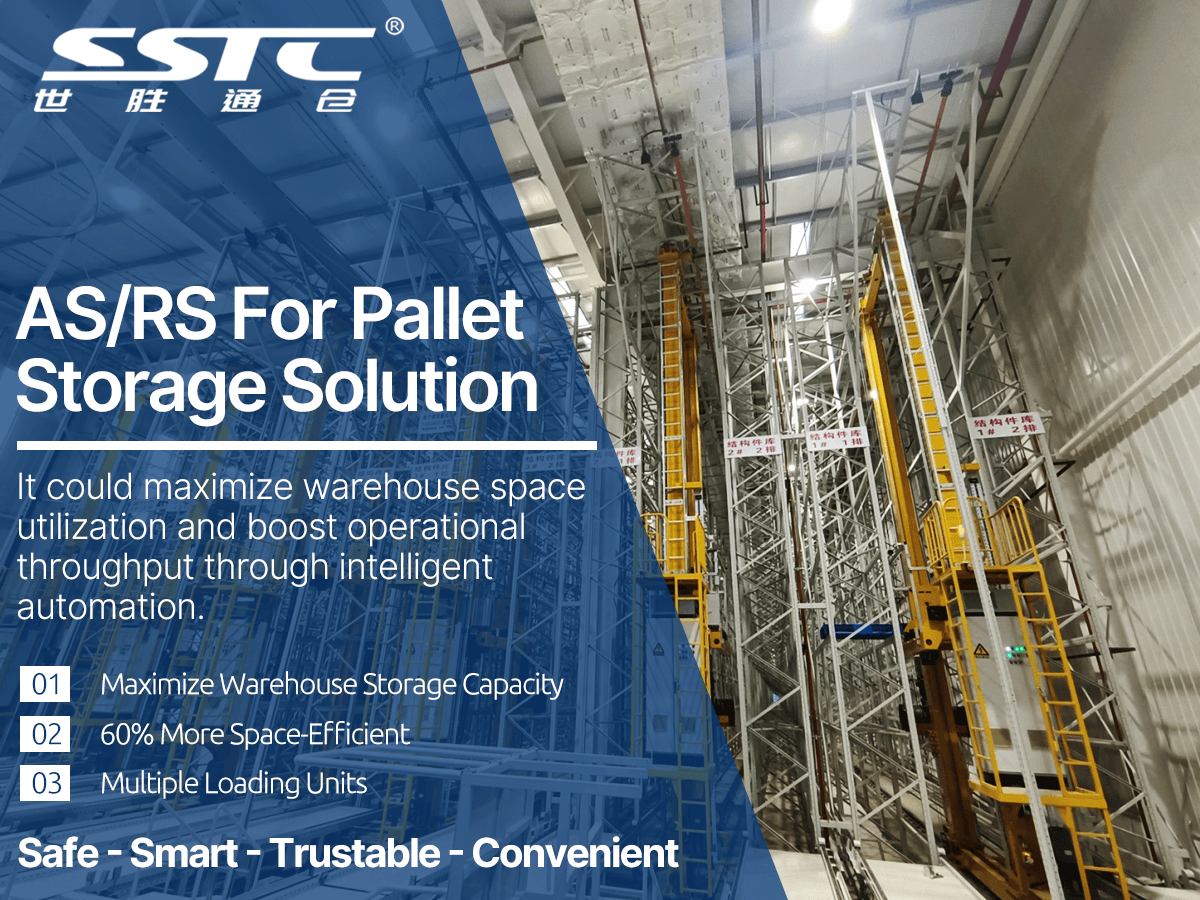
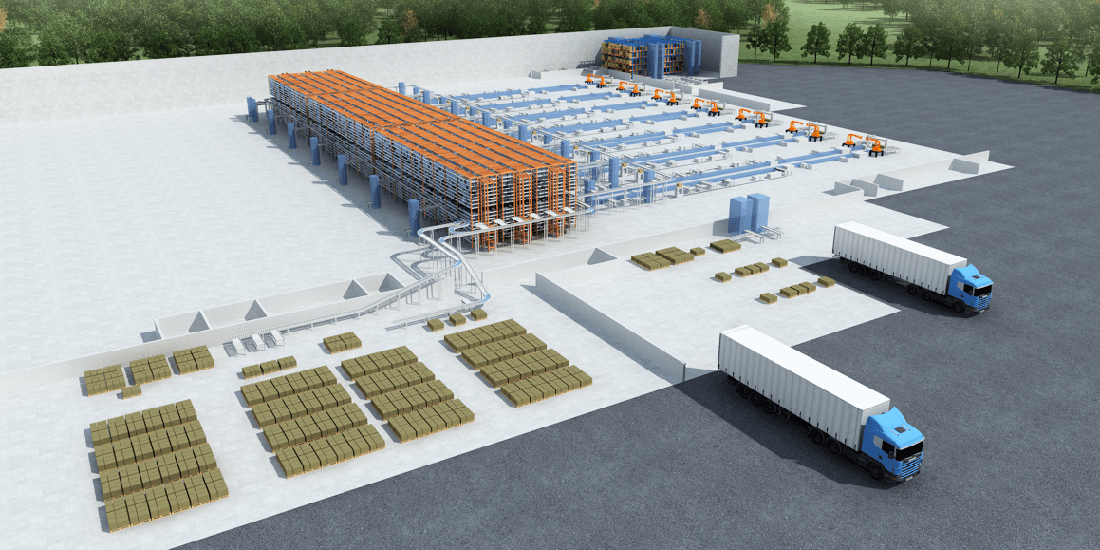
By utilizing vertical space and scaling high-bay racking up to 25 metros o más, an AS/RS allows cold storage operators to store the exact same volume of palletized goods within a fraction of the building footprint. Shrinking the physical building footprint—and consequently the roof surface area—drastically reduces thermal heat gain. Esta eficiencia geométrica permite que los sistemas de refrigeración funcionen con cargas eléctricas significativamente reducidas., reducir el consumo total de energía de las instalaciones hasta en 60% compared to sprawling manual warehouses.
2.2. Complete Elimination of Human Presence in Sub-Zero Zones
An AS/RS removes human operators entirely from the freezing storage vault. Automated stacker cranes and high-speed conveyor lines handle the storage and retrieval of heavy pallets autonomously. Los empleados salen de peligrosos congeladores bajo cero y se trasladan a cómodas, Funciones de supervisión y control de calidad en clima controlado., Eliminando eficazmente la fatiga inducida por el frío., lesiones, y alta rotación laboral.
2.3. Sub-Millimeter High-Bay Density and Vertical Maximization
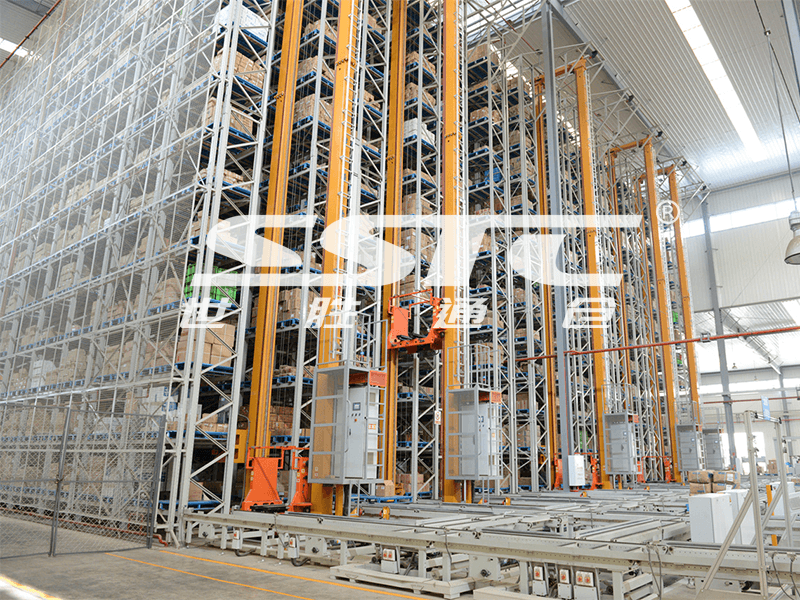
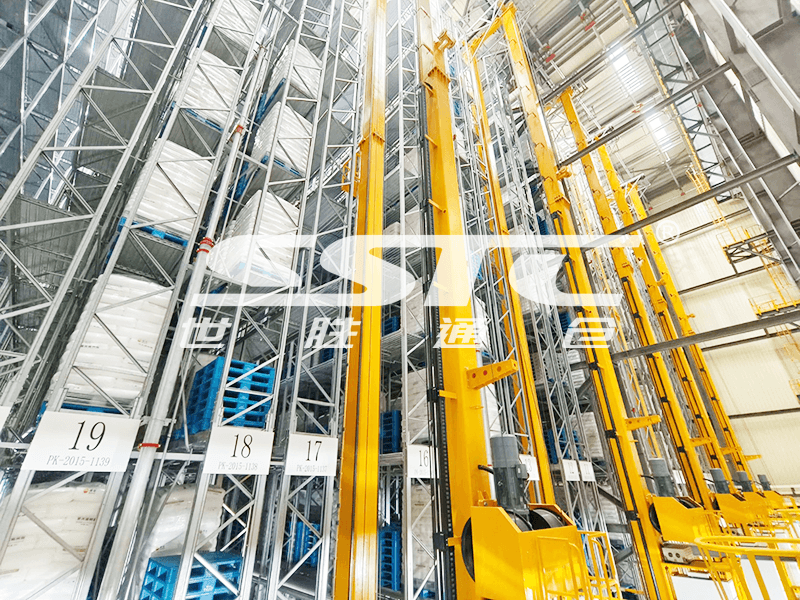
Conventional forklifts are structurally limited by mast heights and stability constraints, typically topping out at 6 a 8 metros. En contraste, heavy-duty AS/RS stacker cranes operate within narrow, high-density aisles stretching up to 30 metros de altura. Esto desbloquea la máxima densidad de almacenamiento volumétrico, transforming wasted vertical air space into highly profitable storage capacity.
2.4. Flawless FIFO Rotation and Inventory Traceability
An AS/RS integrates deeply with advanced Warehouse Management Systems (WMS) y sistemas de control de almacenes (WCS). When temperature-sensitive food or pharmaceutical pallets enter the receiving dock, they are scanned, profiled, and assigned an optimal storage location. The software enforces strict FIFO protocols automatically, ensuring that older stock is retrieved first. This eliminates human picking errors and guarantees 100% exactitud del inventario.
2.5. Elimination of Door-Opening Thermal Surges
En almacenes manuales, El tráfico constante de montacargas requiere que las puertas grandes del muelle y del congelador permanezcan abiertas durante períodos prolongados., permitir que el aire ambiente cálido entre y provoque fluctuaciones de temperatura que amenacen la integridad del producto perecedero. An AS/RS operates within a fully enclosed, envolvente compacta de estanterías de gran altura donde la transferencia automatizada se produce rápidamente a través de pequeños, interfaces de obturador sellado, mantener temperaturas internas bajo cero estables.
2.6. Zero Rack Collisions and Product Damage
Forklift-induced impacts against storage racks and pallets are a leading cause of inventory loss and structural damage in manual cold storage facilities. AS/RS stacker cranes travel on precision-guided floor rails and overhead guides under computerized control, eliminating accidental collisions, dropped loads, and damaged packaging.
2.7. Scalability and Future-Proofing
As cold chain enterprises expand, scaling a manual warehouse requires acquiring adjacent land and constructing additional buildings. An AS/RS allows facilities to maximize existing vertical real estate, providing a highly scalable infrastructure that adapts effortlessly to fluctuating seasonal inventory demands without physical footprint expansion.
 Tecnología de inteligencia SSTC - 4-Fabricante de sistemas AS/RS y estanterías Way Shuttle

 Chino/CN