The modern supply chain operates under relentless pressure. As e-commerce acceleration, global trade expansion, and rising real estate costs converge, warehouse operators are forced to rethink how they utilize every cubic meter of available facility space. At the center of this technological revolution is a fundamental architectural innovation: the AS/RS racking system. Far exceeding the structural limitations of conventional selective pallet racking, a high-bay AS/RS racking system serves as the steel backbone of fully automated warehousing, integrating structural engineering, heavy-duty load dynamics, and mechanical crane interaction into a singular, high-performance ecosystem. SSTC Intelligence specializes in engineering and manufacturing high-precision AS/RS racking systems designed to solve complex inventory challenges, protect heavy palletized goods, and future-proof enterprise logistics operations.
1. Defining the Core: What Is an AS/RS Racking System?
To fully appreciate the engineering sophistication of modern automated storage, one must first deconstruct the exact mechanics of an Automated Storage and Retrieval System warehouse.
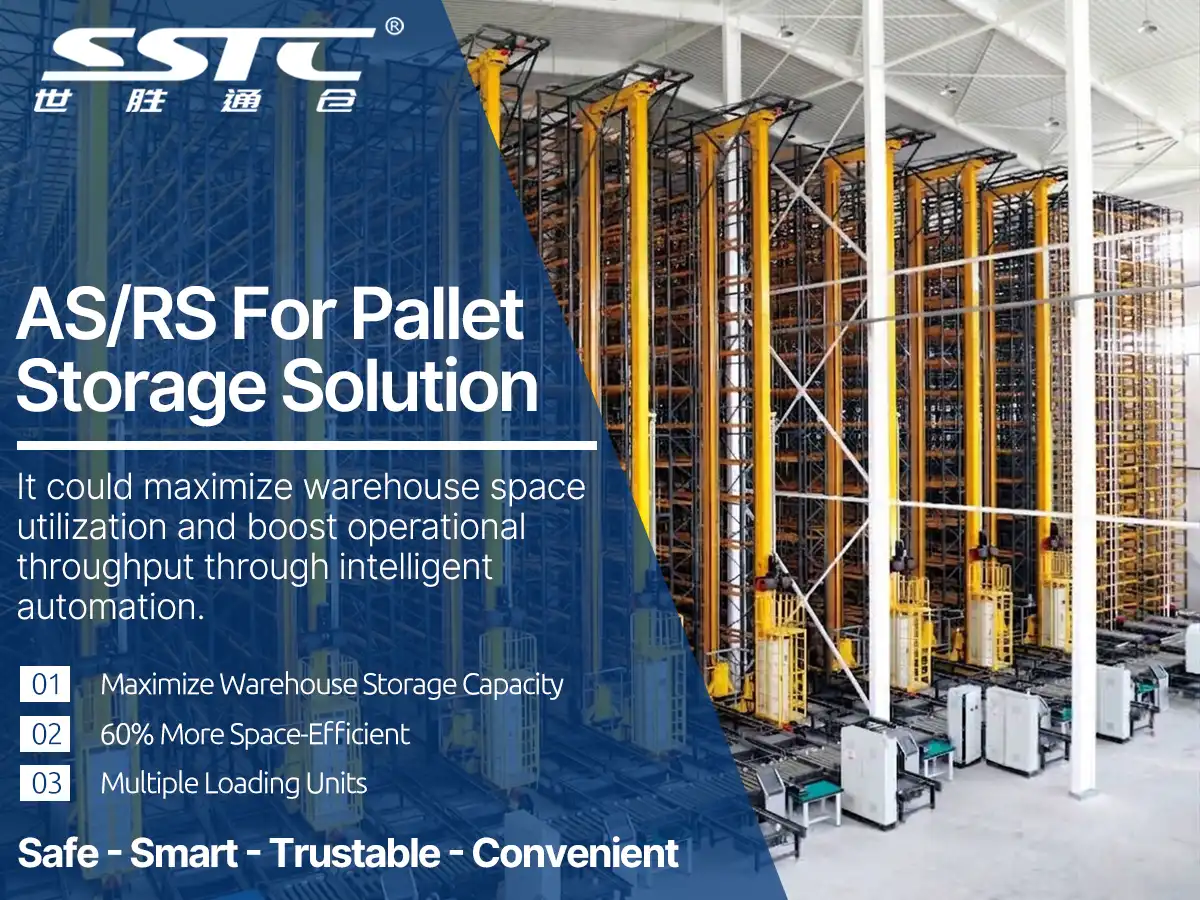
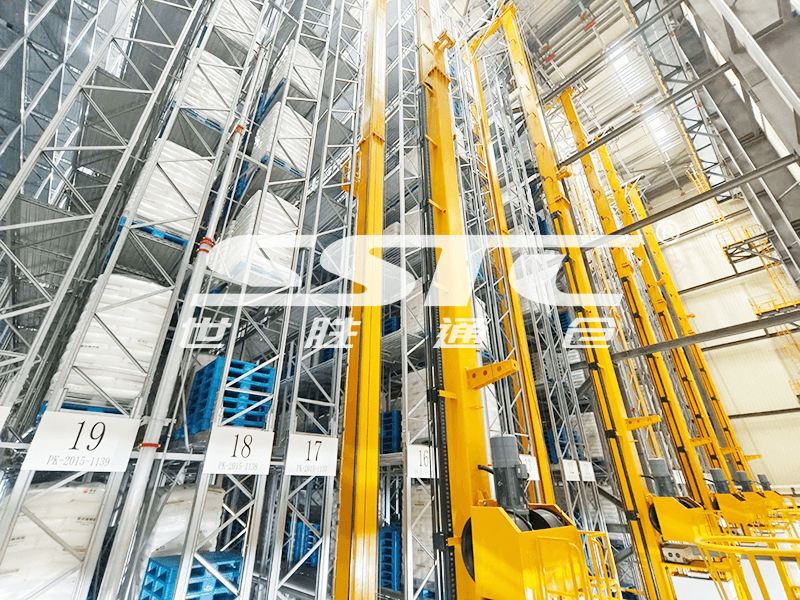
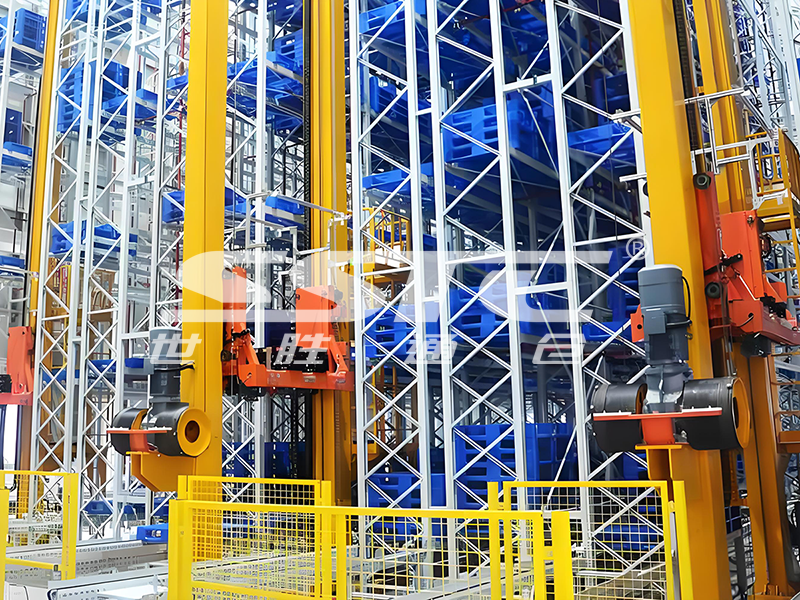
An AS/RS racking system is a specialized, heavy-duty steel structure designed to operate in tandem with automated stacker cranes, high-speed elevators, and automated conveyor interfaces. Unlike manual or semi-automated warehouses where human forklift drivers navigate wide aisles, an AS/RS racking structure acts as a towering, high-density matrix of storage bays. Stacker cranes travel vertically and horizontally within narrow, dedicated aisles between towering rows of steel racks, storing and retrieving palletized inventory with millimeter-level precision without human intervention.
According to technical benchmarks published by the Material Handling Industry (MHI), automated high-bay racking installations can elevate storage heights up to 40 meters, transforming what was once a sprawling horizontal real estate footprint into a compact, highly optimized vertical powerhouse. Furthermore, industry insights compiled by the Warehousing Education and Research Council (WERC) indicate that enterprises transitioning to automated high-bay structures reduce their physical facility footprint by up to 60%, drastically cutting long-term real estate acquisition and lease expenditures.
2. Deconstructing the Structural Anatomy of an AS/RS Racking System
A high-bay AS/RS racking system is not merely a collection of bolted steel beams; it is a complex civil-mechanical engineering structure subject to extreme static loads, dynamic crane forces, and stringent geometric tolerances. The structural integrity of an AS/RS racking installation depends on several critical engineering components:
High-Precision Upright Frames and Columns
The vertical load-bearing columns of an AS/RS racking system must withstand immense vertical loads combined with lateral forces exerted by stacker cranes operating at high speeds. Fabricated from high-tensile structural steel (such as Q355B or equivalent international grades), these uprights are roll-formed to exact dimensional tolerances to prevent localized buckling under multi-ton pallet loads.
Rigid Beam-to-Column Connectors and Safety Locks
The horizontal load beams support the pallet loads. In an automated environment, the connection between the beam and the upright must be exceptionally rigid. SSTC utilizes multi-hook connector clips secured with robust safety pins to eliminate any possibility of beam dislodgement caused by the dynamic vibrations of high-speed stacker cranes.
Guide Rails and Base Anchorage
Because stacker cranes run on floor-mounted guide rails within narrow aisles, the alignment tolerance of the AS/RS racking system is exceptionally tight—often measured in millimeters across tens of meters of travel. High-strength expansion anchors and precision shims ensure that the base plates distribute the colossal weight of the racking and stored goods evenly onto the reinforced concrete foundation.
3. Solving the Critical Pain Points of Traditional Warehousing
Traditional, manual warehouses relying on standard selective racks and counterbalance forklifts face severe operational bottlenecks that erode profit margins. An engineered AS/RS racking system systematically eliminates these vulnerabilities:
Eliminating Wasted Space Caused by Wide Aisles
In a conventional manual warehouse, up to 50% of the total floor space is consumed by wide service aisles required for forklift maneuverability. An AS/RS racking system reduces aisle widths to the absolute minimum required by the stacker crane chassis, packing thousands of additional pallet locations into the exact same building envelope.
Mitigating Labor Scarcity and Human Error
Operating heavy forklifts in high-bay environments is hazardous, prone to human error, and plagued by high labor turnover. By automating storage and retrieval through an AS/RS racking system, human workers are removed from dangerous high-bay picking zones and transitioned into safe, climate-controlled supervisory and quality control roles.
Eradicating Inventory Inaccuracies and Stock Damage
Manual stock placement often leads to misplaced pallets, lost inventory, and damaged goods caused by forklift collisions with racking uprights. The automated integration between the Warehouse Management System (WMS) and the AS/RS racking system guarantees 100% inventory traceability and flawless, damage-free pallet handling.
4. Key Functional Roles of AS/RS Racking Systems in Modern Logistics
Implementing a world-class AS/RS racking system delivers immediate, transformative operational functions across diverse industrial sectors:
Maximizing Cubic Storage Density
By reaching vertical heights up to 40 meters, an AS/RS racking system utilizes vertical air space that is completely wasted in conventional facilities. This high-density storage capacity enables manufacturing plants and third-party logistics (3PL) providers to consolidate multiple regional warehouses into a single, highly efficient automated distribution center.
Seamless Integration with Stacker Cranes and Conveyors
An AS/RS racking system functions as a seamless mechanical partner to automated guided vehicles (AGVs), conveyor lines, and stacker cranes. Incoming palletized goods are automatically scanned, transferred to the crane inlet, and deposited into their designated racking slot with absolute repeatability.
Supporting High-Throughput Inventory Turnover
For fast-moving consumer goods (FMCG), automotive components, and pharmaceutical supply chains, rapid order fulfillment is critical. Dual-mast and single-mast stacker cranes operating within high-density AS/RS racking system aisles execute hundreds of storage and retrieval cycles per hour, dramatically accelerating warehouse throughput velocity.
5. Engineering Resilience: Tolerances, Dynamics, and Seismic Design
Building a towering multi-story steel structure that interacts with autonomous machinery requires uncompromising engineering discipline. SSTC Intelligence applies rigorous analytical standards to every AS/RS racking system project:
Finite Element Analysis (FEA): Every custom racking design undergoes advanced structural simulation to model maximum load stress distribution, harmonic resonance, and wind/seismic deflection.
Strict Verticality Tolerances: Unlike standard manual racks, an AS/RS racking system requires verticality and levelness tolerances within strict millimeter thresholds to ensure smooth, friction-free stacker crane operation.
Seismic and Dynamic Load Adaptation: In earthquake-prone regions, racking structures are engineered with specialized sway-resistance configurations and dynamic dampening elements to absorb seismic energy without structural collapse.
6. Turnkey Customization and Execution by SSTC Intelligence
As an industry leader in automated storage solutions, SSTC Intelligence provides comprehensive, turnkey execution for every AS/RS racking system project:
Consultation and Layout Simulation: Analyzing client throughput requirements, SKU profiles, and building dimensions to design the optimal racking geometry.
Precision Manufacturing: Fabricating high-tensile steel components in our advanced 90,000 m² production facility, ensuring rigorous quality control at every stage.
Software and Control Synchronization: Integrating the physical racking and crane interfaces seamlessly with enterprise WMS/WCS platforms.
Professional Installation and Commissioning: Deploying certified installation engineers to execute on-site assembly, laser alignment, and rigorous load testing.
For more information on our custom automated storage solutions, visit our official website at www.sstc-storage.com.
Frequently Asked Questions (FAQ)
To assist logistics directors and warehouse planners, here are answers to key technical questions regarding the AS/RS racking system:
Q1: What is the maximum height and load capacity of an AS/RS racking system?
A: Modern automated storage structures can reach heights of up to 40 meters, while individual pallet storage bays can be engineered to support heavy industrial loads ranging from 1,000 kg to over 1,500 kg per pallet position, depending on specific structural configurations.
Q2: How does an AS/RS racking system integrate with existing warehouse management software?
A: The AS/RS racking system interfaces directly with the Warehouse Control System (WCS) and Warehouse Management System (WMS). When an order is placed, the software calculates the optimal travel path for the stacker crane to retrieve the specified pallet instantly.
Q3: Can an AS/RS racking system be installed in brownfield (existing) warehouses?
A: Yes. While greenfield projects offer complete architectural freedom, AS/RS racking system layouts can be custom-engineered to fit within existing industrial building envelopes, maximizing vertical capacity without requiring a completely new facility construction.
Conclusion: Securing the Future of High-Density Logistics
As global supply chains grow increasingly complex, relying on traditional, manual storage methods is no longer economically or operationally viable. Upgrading to a precision-engineered AS/RS racking system empowers enterprises to slash real estate footprints, eliminate labor bottlenecks, and achieve unprecedented inventory accuracy and throughput velocity.
SSTC Intelligence is dedicated to delivering world-class, custom-engineered automated storage solutions that provide complete peace of mind. To discuss your upcoming warehouse automation project, explore our website at www.sstc-storage.com or connect with our engineering team today.
Contact Information
Ready to transform your warehousing operations with an advanced automated storage solution? Reach out to our engineering specialists directly:

 SSTC Intelligence Technology - 4-Way Shuttle Racking & AS/RS System Manufactuer